Showing posts with label central phoenix birding spots. Show all posts

Saturday, January 14, 2017

Aim Small, Miss Small

Recent goal-oriented birding in Carolina involved working long or hard hours to log relatively usual birds. Recent birding in Arizona involved distant duck sighting in dim lighting. Both of these provided their own satisfactions, but not without a bit of strain all the same. Some people like to say they have to take a vacation from their vacation, and to these people I say, "You are weak vacationers. Weakness disgusts me...but not in a way that weakens me." But on the other, more relatable hand, birding benefits from its changes of pace as well. Sometimes it's nice to watch and photograph the birdies without concern of lists or chasing, the lazier, more passive approach in local circles.
Of course, this should only be done on workdays when there's a spare hour or two in the evening. Doing this on weekends (soft birding around town) is disgusting weakness, to reiterate.

Papago Park and the Desert Botanical Gardens, frequently mentioned on this site in times long past when I was very new to the Phoenix birding scene, are still some of the best places to crush common waterfowl, Sonoran species, and other just-a-bit-better-than-generic-park birds. (Most generic Arizona parks do not have cool Warblers like out east).

This GHOW is often in the cottonwood corner at the DBG. Some day it will poop on me, but this day was not that day.

So mild-mannered are these areas that even the timid Common Gallinule (red-shielded, obvi) will swim out into the open ocean without a life vest. Fun fact: The Common Gallinule actually used to be called the Common Morehen, because their entreating calls reminded one of a rakish greedy Oliver Twist impression.


Verdins are industrious nest-builders (not pictured). They build expansive breeding nests and more conservative roosting nests throughout the year--up to a dozen--because otherwise they would be idle, and idle feet are the Verdin Devil's playthings.


The DBG pulls in a vagrant rarity from time to time, but is mostly known for its close-up opportunities with desert flora and fauna. Even so, some unusual behaviors may still be observed. What flock of birds is feeding on buds in this mesquite?


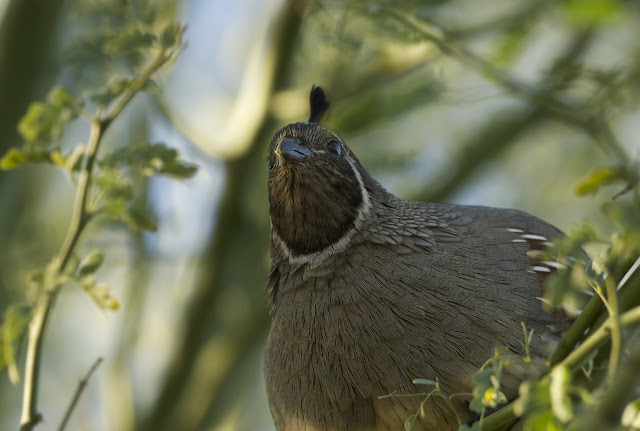
Yes the answer is Quail, Gambel's Quail. Timid like most Quail species, GAQUs also become very tame and confident in the right setting, probably also like most Quail species.

Curve-billed Thrashers also take to the trees in groups, gregarious behavior untypical of the family. Although that may just be circumstantial because these Thrashers were obviously a family, with the two younger birds following the presumed parent around incessantly. The mature adult had a shorter, stubbier bill than many CUBUs I've seen. I have no idea if this is entirely random or may be a way to sex the birds, like with Curlew and Dowitchers? 


Cactus Wrens are notoriously hardy birds. They may not be as tough as Gray Jays, per se, but are nonetheless able to withstand living in areas entirely without free-standing water and can also withstand living in the middle of Phoenix suburbia--provided the landscaping suits. They are also highly territorial during nesting season and will chase reptiles and mammals either away or into cholla cactus snares near their nesting sites, like clever and less passive clown fish. They also destroy other bird nests and bust eggs. What a jerk. Pretty great state bird eh?


Tuesday, February 18, 2014

Working Out a Work Patch

Working a 7am-4pm job can be hard on a fellow's birding, especially when the sun sets early and there's still prep work to be done for the following day's grind. It's often a tight, sweaty squeeze--like to many suits on an elevator--but the weekend outlet isn't always enough, and sometimes you've got to fit in some weekday birding, even if it's just a quick fix, a supplementary high. It doesn't matter if they're mostly trash birds; they've got feathers and they move, so it's still birding. 

Black Phoebe by the parking lot irrigation gate? Hell yeah!!!
Many people have the benefit of yard birding of course, but for us apartment dwellers that doesn't amount to much, so the next option is finding a local patch around home or work, usually a park or something similar. Phoenix has some decent birding parks, like Encanto downtown or Grenada Park more central, but these require a bit too much rush hour driving for me to hit up on a weekday evening. The campus where I work has actually turned up a couple of decent birds for me--American Robin and Peregrine Falcon, and Lark Sparrow, which are uncommon in central Phoenix--but I can't well use my place of work as my work patch; that'd be distracting for me and everyone else there who knows me and sees me walking the grounds with all the gear, plus there's not much water. 

So, I decided to head a few blocks northeast to the SRP Arizona Falls canal spillway, a nice little attempt at a canal filtration/regulation gate with some walking paths and water works. It's very small--easily covered in 10 minutes--and also adjacent to Herberger park, which has some grass and a few pine trees, as well as tamarisks, that have already produced Red-naped Sapsuckers and maybe some migrants in a month.

The spillway itself is a nice little construction, and its various channels provided a nice break up of the monotonous brown trench canal scene. The higher concentration of birds here, like these Mallards seconds that motion.
It's funny how starting a new patch list, especially one for a small patch with little going for it other than location, readjusts expectations. Once again I'm really looking forward to a Kestrel Sighting. Red-naped Sapsuckers were a treat and I haven't even recorded House Finches yet in two tries! Yes indeed, I'm only at 21 species for the lil' place, and the proudest sighting of all is a skittish Spotted Sandpiper, along with an unseasonably early Cliff Swallow (it's also unseasonably warm, friggin' 88 today!).


Like the other park birding scenes in Phoenix, the lessened variety compared to proper nature preserves or refuges is made up for, in small part, by much closer looks at those species that will still abide the heat and noise, and now peeping tom birders, of the city.


At any preserve in Maricopa County, Wigeon are pretty near the bottom of the totem pole in terms of commonality and appearance among waterfowl, but along a canal, man, they're hot commodities!


A Neotropic Cormorant is a bird I will not stop to observe at during my weekend treks at Tres Rios, where they numbers in the 100s as can the site species count on a good day, but it's another solid find for a little patch in central Phoenix.


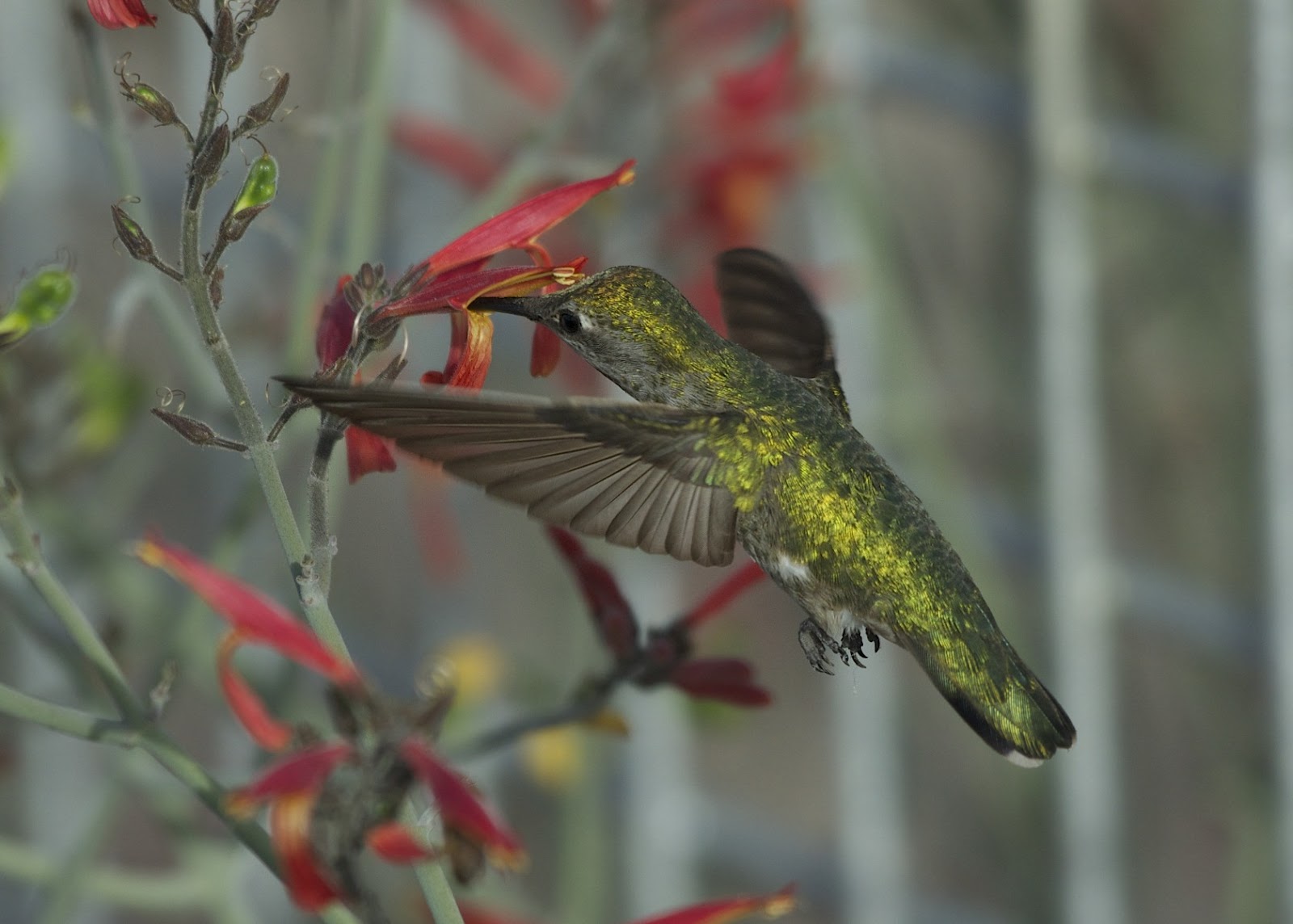
So, finding the little birding patch by work helps not only to satisfy that birding addiction--and really, satisfy is a generous word--it helps to numb expectations and encourage an appreciation of what would be considered lesser or duller birds in more grandiose birding settings. And hey, who knows when something rare will turn up? In the mean time, for even 20 minutes on a Tuesday, being a few feet from a feeding Anna's will do just fine.