Oh, hello there dear readers, critics, and lost orphans of the internet. It has been too long. I could list some excuses here, including blogger deleting some photos and a post at one point as well as the increasing pleasure I have been taking from birding exclusively with binoculars, the west Phoenix Fulvous Whistler continuing to elude me (and everyone else) over the past few weeks, and rainy weekends. Instead of elaborating and whining on those things though we'll try to get back on track here with BB's first post of 2015.
However, we're starting with a Song Sparrow that many would recognize as not being the "sandstone" subspecies of Song Sparrow we have in Arizona, but the buffier east-coast variety. This bird was one of several other county birds I picked up in Wayne, NC, at the end of December, 2014. I fell (6) short of claiming the All-Time eBird #1 spot in Wayne County before heading back to Phoenix (although being the only person to submit a list there in 2015, I'm sitting pretty right now), and am currently riding in 2nd with 90. Someday...

In contrast, this weekend I made it back to west Phoenix to resume searching for the lifer Fulvous Whistling-Duck that disappeared from the radar a couple of weeks back. It may well be gone now, but searching around the Tres Rios riparian and agricultural areas where it was last seen was also a great way to kickstart the 2015 birding year, and I put up 95 species in about 4 and 1/2 hours. The diversity is pretty impressive, even if some birds prefer their solitude. It ain't easy being great.

"I am a rock. I am a island" --Paul 'Egret' Simon
The Tres Rios area mixes riparian with desert habitat beautifully, but a fair portion of the complex is permanently fenced off-limits. While leaning against the Bird-lin Wall at different points searching out the Fulvous Duck, I recorded such solid-for-Maricopa-birds as Wood Duck, Hooded Merganser, Brown Pelican and Storm Wigeon. A Western Screech Owl calling from within the pre-dawn hours rubbed salt in the wound. This is all to say, I really wish they'd open up that prime real estate. It's a friggin' treasure trove, and I bet if they let people in for a fee, they'd come out well ahead vs. the liability. Work what you got Maricopa Gov.!

Massive flocks of Ibis and Blackbirds also made the morning hours pretty eventful while scanning the small retaining ponds for Fulvous-type birds. It is a veritable Eden there, where lions lay down with lambs, eagles nest with pigeons, and Pelicans swim peacefully with Wigeon as Carp swim below and gobble up everybody's shit.

Even such blissful scenes as this were not without orneriness. Some White Pelicans were partaking in a game of "Wigeon-Dwarfing," wherein they'd swim up behind AMWIs and make them look very, very small. I have also seen Canada Geese participating in this sort of bullying throughout Phoenix golf courses. The natural world is a cruel mistress indeed.

But she's seductive though ain't she? Don't take my perverted word for it, ogle this Cinnamon Teal for a little while and then go apologize to your significant other.

Some birds are poorly named, and some birds are poorly colored. This is not one of those birds.


Party Don't Stop Jen has been doing some beastly good owling up in the Northwest of late. I can't hang with it, not even close, but this weekend did bring the small consolation of turning up another Burrowing Owl haunt. I don't mean to brag (actually I do a bit), but I've got quite the portfolio of very crushable BUOW spots in West Phoenix so...all you millionaire owl enthusiasts out there who are also lazy...hit me up.


It's been over a month now, and I'm daring to admit that this Fulvous Whistling-Duck might well be gone. What is one to do when one has been stood up repeatedly by a rare duck? Psht, score another one on the rebound of course, one that's sexy and easy.
Cue the a Eurasian Wigeon drake that's been at the Dos Lagos park in Phoenix for a couple of weeks now--wintering here--and like most ducks hanging out at small urban parks, this fellow is tame. He has learned well from his AMWI accomplices how to eat the fresh winter-lawn tips, and just as eagerly approach pedestrians in case they have hand-outs.

Of course, this sort of plebeian behavior denotes that the EUWI has sold out a little bit. I know, and when left to his own recognizances he clearly feels a little bit guilty about it too.

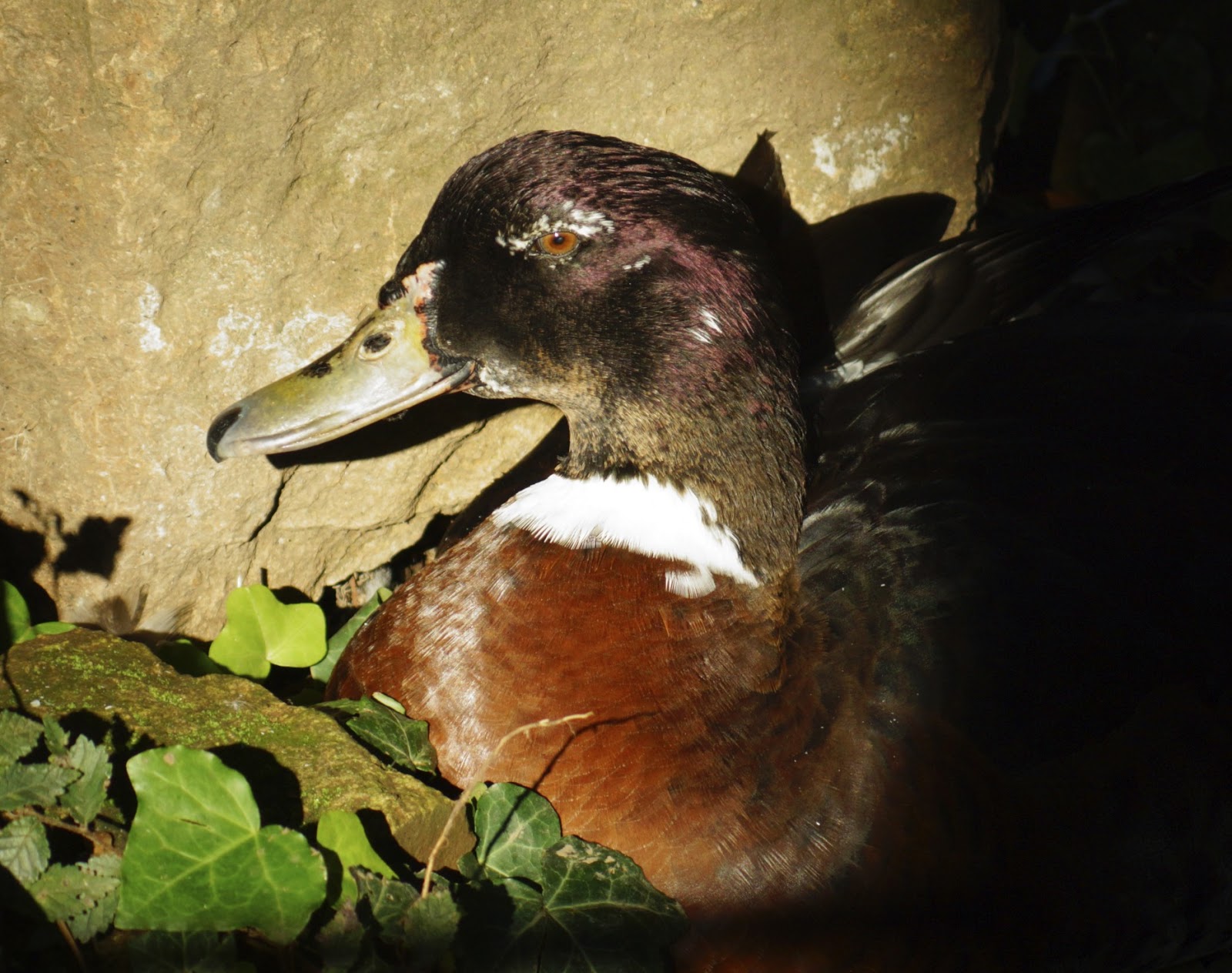
One or two EUWIs seem to turn up in Maricopa every winter, but this one has by far been the most accommodating of the birds I've seen. Also of interest on this little pond was a lone Muscovy Duck, rocking 'the ugly' loud and proud. Now, I know what everyone is thinking, "THAT'S A DOMESTIC!!! THAT'S NOT COUNTABLE YOU GIANT BAKED PIE OF IGNORAMUS!!!"
Well, I cannot refute your accusation, but all I'm saying is this: as far as domestic Muscovy Ducks go, this fellow looks pretty good. The facial growths I've seen on pictures of wild birds show predominantly blackish, so obviously that's a giveaway here, but the otherwise dark body and iridescent wings are much cleaner than on other specimens I've seen.

It even had the white localized to its wing patches. So, don't worry, I'm not ticking it, but drop this duck off somewhere in the Rio Grande Valley or south Florida, and I bet it would be spurring a much larger discussion, and a few more people might be won over eh?

Anyhow, back to what we know. American Wigeon drakes fulfill a look that many 1970s shag carpets sought, but of which they often fell far short. I know AMWIs are a golf course duck, which puts them just about on the bottom of the pile in the winterfowl hierarchy, above only domestics, Mallards, and Coots, but they reproduce fructuously for a reason y'all.

Seagull Steve recently got very crushy with the EUWIs in California, and so once again aspects of this post seem mere after-shocks of the various quakes that left the bird blogosphere rocking, but why not indulge some more? Why not have seconds of that 3-layer carrot cake?

Aww yisss...flash that speculum baby.

I left the Wigeons all strutting their stuff, but the waterfowling was not to end. In fact, there was some fowl play going on right next to my car. Two Mallard drakes were fighting for the affection of a hen standing off to the side, apparently used to if not bemused, by this sort of occurrence. Notice how the drake on the right is more handsome than patch-eye on the left. Furthermore, he is much more photogenic; it's like the fight doesn't bother him at all and he wants to maintain eye contact with the camera--pretty studly. Naturally, we're all rooting for him.

The manky, domestic drake tore at his chest but the handsome drake simply flexed the ol' pectorals and advanced, without seeming to break much of a sweat.

With some conservative positioning, the handsome drake gained the better position and basically subdued the other drake without using much more than his chest. Name one other action hero character who's won duels in such a way. He squished the other male and then walked away with his lady, while I went to get lunch.
*It is also possible the handsome drake didn't want to fight at all, but was making advances on the the other male of a different sort.

The waterfowl are great right now, but it is also that dreaded time of year when I go in search of a Sprague's Pipit. If you don't hear from me in a while again, it's because I've thrown any and all gear into a ditch somewhere in frustration.