The Texas Birding Adventure was a large endeavor, large enough to require reinforcements to split some motel costs, intimidate away highway brigands, and also enjoy the birds. Mike from The Iowa Voice postponed his date with the Supreme Court to join in the Texas birding experience for a few days. It is unhealthy, after all, for one to go too long without Scissor-tailed Flycatchers in one's life.

Our first stop was at the birdiest site in all of Texas, which puts it high in the running for birdiest spot in North America, with over 370 recorded species. It is also the famous wintering grounds for a majority of North America's Whooping Crane population. Pretty impressive credential yes?
Well, truth be told, Aransas NWR in June is pretty disappointing, unless one is hoping to lose a pint of blood or two to mosquitos. We did still have some good bird sightings, and plenty of other nifty wildlife. Behold, a Six-lined Racerunner, with battle damage, and a fecund family of javelinas.


Aransas is a massive space and within its birders one encounters a multitude of habits. We were mostly out of luck with timing. The grasslands, the exceedingly buggy forest, and even the shoreline portions were all pretty mellow. Migrants had moved on and residents, other than Turkey Vultures and Northern Cardinals, were few and far between. It was a bit of a let down, given the earlier success and momentum of the trip.
Perhaps the best sighting of the day was this ridiculously tall trail sign. It had normal trail sign info on it, stuff about the grassland flora and what not, but it this information, apparently, is only intended as accessible for the very vertically gifted.

In a similar vein of photographing tall and graceful things, the white morph Reddish Egret was also pretty inspiring, even from a distance. They are among the more spastic and entertaining feeders of the heron/egret group. Their 'shadow-wing' feeding technique (not pictured) was the inspiration for at least two different forms of Kung-Fu and probably a few more bad movies about said disciplines.


The main disappointment at Aransas was that all of the birding trails within the deciduous growth were absolutely swarming with mosquitos and relatively birdless. Passerines and Woodpeckers were almost none to be found, and even though migration had moved through, we expected more activity. The birding was probably best at turn offs from the auto-loop, where clearings allowed one to look and listen for birds like White-eyed Vireo in the liminal brush, and other critters in the grass.
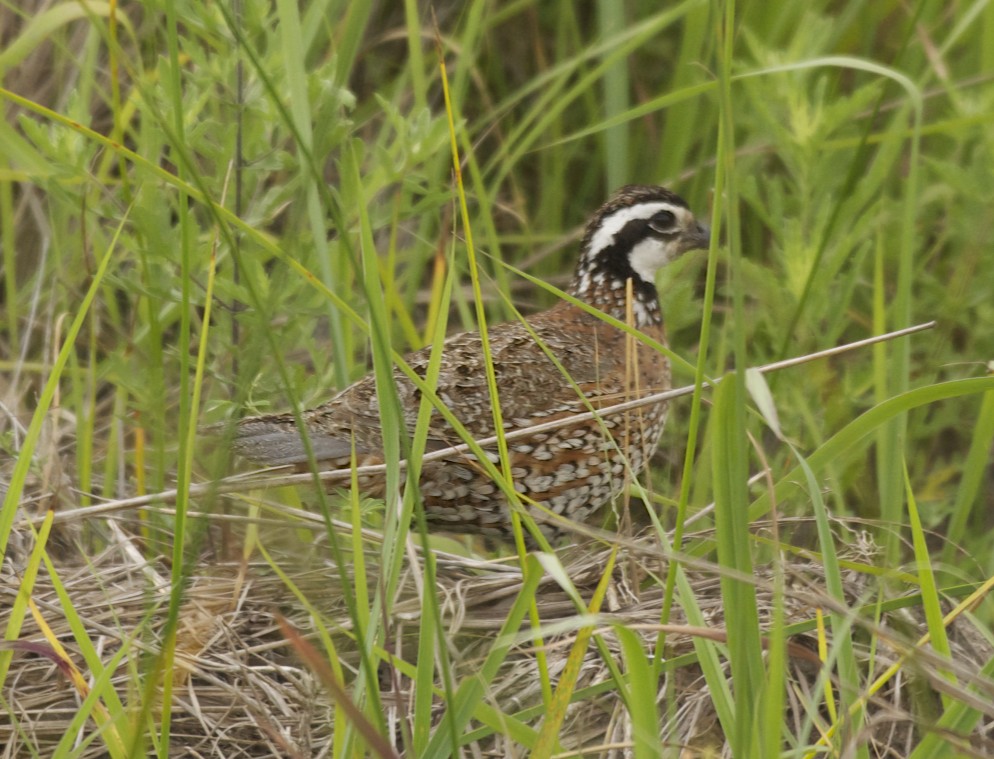
All my whining aside, picking up a lifer Northern Bobwhite compensated for the other shortcomings.

Alas, we were not position in a nifty bird blind by a watering hole, so there will not be finely detailed images of this intricate bird to enjoy, but rather blurry, cropped photos of a fairly secretive bird going about its business.
A couple of weeks later I was able to observe these birds vocalizing from high in coastal pine woods in Carolina, which was much cooler than one might expect on paper.

In the game-birds category, we also had some of the more conventional quarry, lots more, in fact. A rafter of 19 Wild Turkeys included about a dozen chicks, a form of turkey I had not yet experienced in life. It was purdy cute.


Fueling up in the various senses around Goose Island SP provided more gulling and harbor-birding opportunities after lackluster Aransas. Groups of Laughing Gulls are always good for a pose.

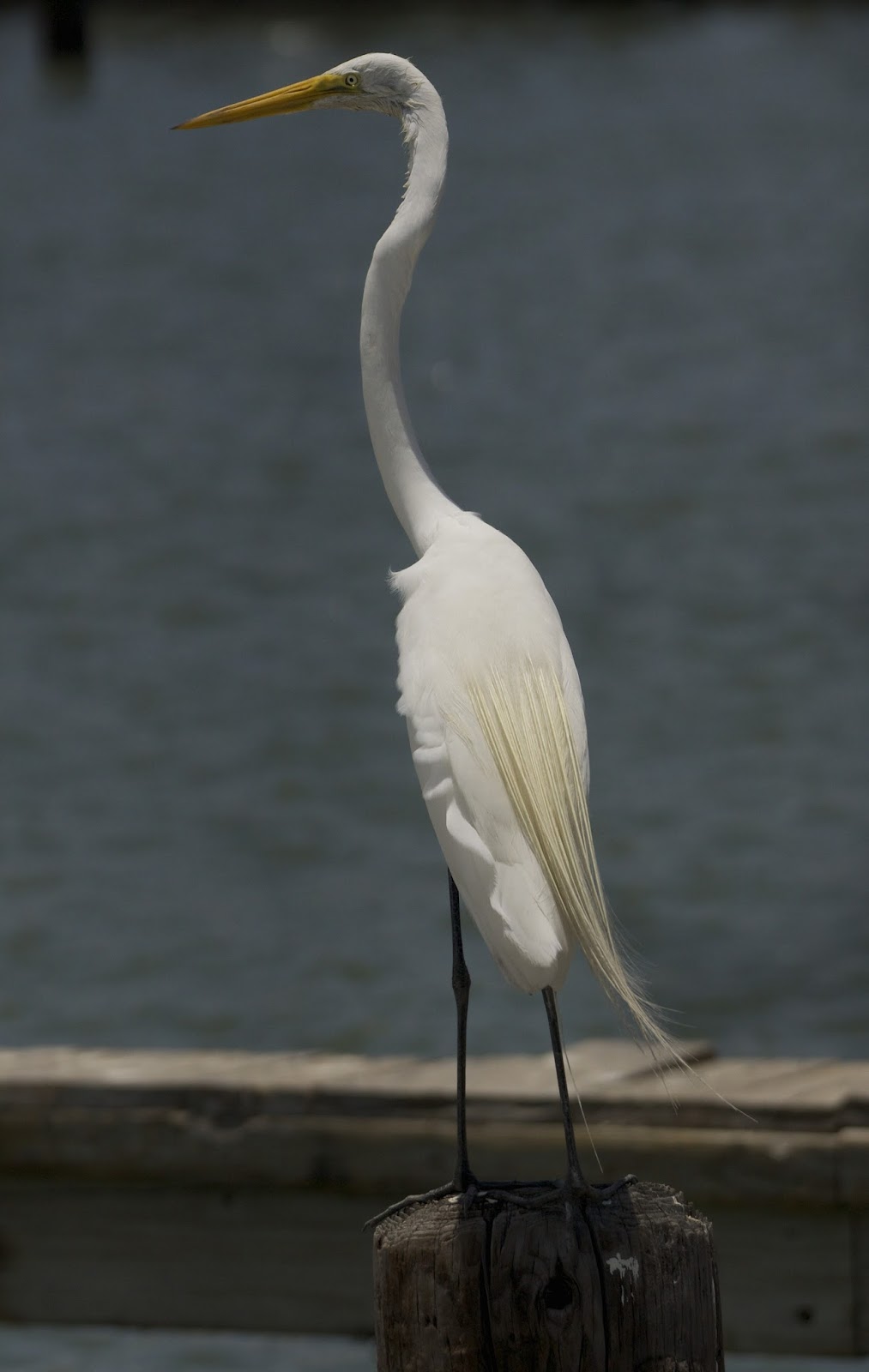
There was a fair amount of fishing boat activity around Goose Island harbor, and of course this in turn brought in all manner of birds both grungy and well-groomed. In the well-groomed department, this Great Egret, white as snow:


Less well groomed, this immature Brown Pelican, who just needed a bit more time.

The Port Aransas area also coughed up some shorebirds for the trip list, even if it didn't have quite the scenic beach landscape one might also hope to combine with maritime birding. The general abundance of scraps in that setting also brought in other carnivores and scavengers. For once I was able to check out a Caracara while not driving 80 miles and hour (or even 60mph).


We headed south in the afternoon for Harlingen, and decided to stop back in Corpus Christi, on the way down the coast, at Mustang Island SP. The beach was carpeted with soft seaweed of some kind, more of which was continually brought ashore by the heavy-laden tide. These kelpy masses were teeming with minnows and other edibles, which in turn attracted the attention of those bold enough to plunge-dive or dip precisely at water level, a la Sandwich Terns.

We were surprised to see many dozens of Black Terns in area, having thought they were mostly migratory in the area and would have moved on (maybe they move much later than I was thinking). These birds are seldom seen in breeding plumage in Arizona, and it was very pleasing to see them fulfilling their bold namesake.


Some of the mid-molt birds hung out with Sanderlings, apparently self-consciousnbess of their disappointing plumage. Royal, Elegant, Bridled...Terns are a pretty aristocratic group of birds and they seldom tolerate ugliness, but Sanderlings won't judge.

The kelp piles attracted several different species (Sandwich and Forster's below), and just above the main breakers,hundreds of Terns joined together, fighting to stay stationary above the break point, where their prey would become exposed.


Some of the more diminutive Terns, like this here Least fellow, were pretty impervious to people, while others like the occasional Gull-billed always kept a distance.

Some Terns were way too busy being demonically possessed to have much concern one way or another. This bird later went and projectile-vomited to its young.

Sometime at the beach was perfect for clearing heads and finding footing. The next day in Harlingen saw one of the most satisfying thus far, and is coming up later this week.


