Showing posts with label Neotropic Cormorant. Show all posts

Tuesday, April 29, 2014

One Hand Empty, One Shaking Fist

The lesser weather god whose jurisdiction reigns over Phoenix has a cruel sense of humor. With temperatures in the mid 90s through the last two weeks, we sends merciful reprieve only on the weekends--the last 3 weekends in a row--with heavy clouds, slight rain and plenty of wind. It's gloriously comfortable, encouraging weather for just about everything...except for birding.

Knowing that this weekend would be another struggle, I decided to try for some late-night owling on Saturday, when the weather wouldn't matter so much, and maybe pick something up at the Papago Ponds on Friday after work. I never did find the confiding Sora I was hoping for at Papago, nor get visual (or photos) on the nocturnal targets, so both of those pursuits will carry over into next week. So, instead of cool stuff, here's some boring stuff from a local city park near you. 

Cooler than Coots but not as cool as Purple Gallinules, the widely distributed Common Gallinule occupies an existentially aggravating level of the gallinaceous waterbird hierarchy. This is, most likely, why they vocalize so often and with such angst in their voice.

I've been reaching a slow realization through my park/canal birding over the last several months. In any given Gulp (that's the real term) of Cormorants, it's now 95% Neotropic (this is a percentage I just made up). I hardly ever see Double-crested around town any more, and the big colony at Tres Rios is predominantly Neotropic too. I have no idea of these two similar species are competitive nesters, if the Double-cresteds just wander continually farther inland and the Neotropic come in their wake, like large-family farmers moving west after the pioneer mountain men. Anyway, I'd be curious for any other Phoenix-area birder's thoughts or observations on this. What's happening to the Double-crested, once the famous rebel of the Cormorant group, raider of the inland waterways, scourer of countrysides?

The longer tail, mottled brown, pale (non-yellow) lores, white border on the chin, behind the lower mandible, all indicate that this bird is yet another Neotropic. Behold the vacant, dead-eye stare of a monumental usurper.

Perhaps as a side effect of the humidity and wind in recent weeks, there are some pretty bold algal blooms in many of the city ponds right now. The prematurely warm temperatures this winter pushed most of the waterfowl north several weeks ago, but the resident birds are making the most of it.

Pied-billed Grebes do not mind Algae. Pied-billed Grebes do not mind anything.

Many American Coots, being good Americans, have lots of big fat babies roaming the ponds now too. I do enjoy when the spontaneous Coot fights break out--this species seems to have a greater propensity for violence than most other birds--and how embarrassingly long it takes them to get airborne.


Coot chicks...these flame-kissed bald headed things are somewhere between hideous and endearing, both of which are stronger reactions than often invoked by an adult Coot. Science has no know explanation for why they look the way they do. Too unappealing to eat?


Part of the American Coot's key to success is that it's a very unscrupulous eater. It's not an om-nom-nomnivore or anything, but they eat lowest common denominator stuff, such as algae and pond slime. With this recent algae bloom around town the Coots, no doubt, are feasting well. This adult was diving to bring up big swaths of the gunk for its chicks. In the photo below of the submerging birds you can see how green the disturbed water is, showing the super algae saturation in the ponds right now.


Most of the chicks waited helplessly for their meal, feigning ignorance and/or inability. But some chicks are straight up precocious, like this man-child here. 


And now I must apologize--but not too much--because I'm about to run a series of Great-tailed Grackle images. I don't feel too badly about this for a couple of reasons:
1) Great-tailed Grackles are cool birds for east-coast visitors.
2) Great-tailed Grackles are hardy, cool birds in general, as long as they're not too urbanized such that they've lost their glossy iridescent sheen.
3) Great-tailed Grackles have a glossy, iridescent sheen.


This dude was being all Green Herony near one of the run-off points where I was waiting for a Sora to reveal itself. 

Whenever one gets a chance to capture nictitating membranes in action, it's also worth sharing. I don't know what all this fellow was fishing for: garbage, algae, minnows, larvae...he probably didn't care.


Did you ever have that one friend in high school who was really shameless, dirty, irresponsible, crafty, guileful, and affecting all at once, probably an Italian? He was abrasive and obnoxious, but every once in a while you had to stand back and just admire his incredible good looks and admirable success, even despite how bothersome he was?
Yeah, I didn't have a friend like that either; I don't even think that's a sterotype. But if it were a real thing, it might fit the Great-tailed Grackle pretty well.

"I'm my own stereotype, a really cool one, way better than any you can think of because of your narrow life experience, punk."

Alright then, I solemnly swear on the little dust pile that's left of my birding and bird blogging reputation never to post Great-tailed Grackle again, even if I see one riding a tiny motorcycle through a ring of fire. Step lightly; step boldly. Drink Bulleit bourbon. This grackle does.

Tuesday, February 18, 2014

Working Out a Work Patch

Working a 7am-4pm job can be hard on a fellow's birding, especially when the sun sets early and there's still prep work to be done for the following day's grind. It's often a tight, sweaty squeeze--like to many suits on an elevator--but the weekend outlet isn't always enough, and sometimes you've got to fit in some weekday birding, even if it's just a quick fix, a supplementary high. It doesn't matter if they're mostly trash birds; they've got feathers and they move, so it's still birding. 

Black Phoebe by the parking lot irrigation gate? Hell yeah!!!
Many people have the benefit of yard birding of course, but for us apartment dwellers that doesn't amount to much, so the next option is finding a local patch around home or work, usually a park or something similar. Phoenix has some decent birding parks, like Encanto downtown or Grenada Park more central, but these require a bit too much rush hour driving for me to hit up on a weekday evening. The campus where I work has actually turned up a couple of decent birds for me--American Robin and Peregrine Falcon, and Lark Sparrow, which are uncommon in central Phoenix--but I can't well use my place of work as my work patch; that'd be distracting for me and everyone else there who knows me and sees me walking the grounds with all the gear, plus there's not much water. 

So, I decided to head a few blocks northeast to the SRP Arizona Falls canal spillway, a nice little attempt at a canal filtration/regulation gate with some walking paths and water works. It's very small--easily covered in 10 minutes--and also adjacent to Herberger park, which has some grass and a few pine trees, as well as tamarisks, that have already produced Red-naped Sapsuckers and maybe some migrants in a month.

The spillway itself is a nice little construction, and its various channels provided a nice break up of the monotonous brown trench canal scene. The higher concentration of birds here, like these Mallards seconds that motion.
It's funny how starting a new patch list, especially one for a small patch with little going for it other than location, readjusts expectations. Once again I'm really looking forward to a Kestrel Sighting. Red-naped Sapsuckers were a treat and I haven't even recorded House Finches yet in two tries! Yes indeed, I'm only at 21 species for the lil' place, and the proudest sighting of all is a skittish Spotted Sandpiper, along with an unseasonably early Cliff Swallow (it's also unseasonably warm, friggin' 88 today!).


Like the other park birding scenes in Phoenix, the lessened variety compared to proper nature preserves or refuges is made up for, in small part, by much closer looks at those species that will still abide the heat and noise, and now peeping tom birders, of the city.


At any preserve in Maricopa County, Wigeon are pretty near the bottom of the totem pole in terms of commonality and appearance among waterfowl, but along a canal, man, they're hot commodities!


A Neotropic Cormorant is a bird I will not stop to observe at during my weekend treks at Tres Rios, where they numbers in the 100s as can the site species count on a good day, but it's another solid find for a little patch in central Phoenix.


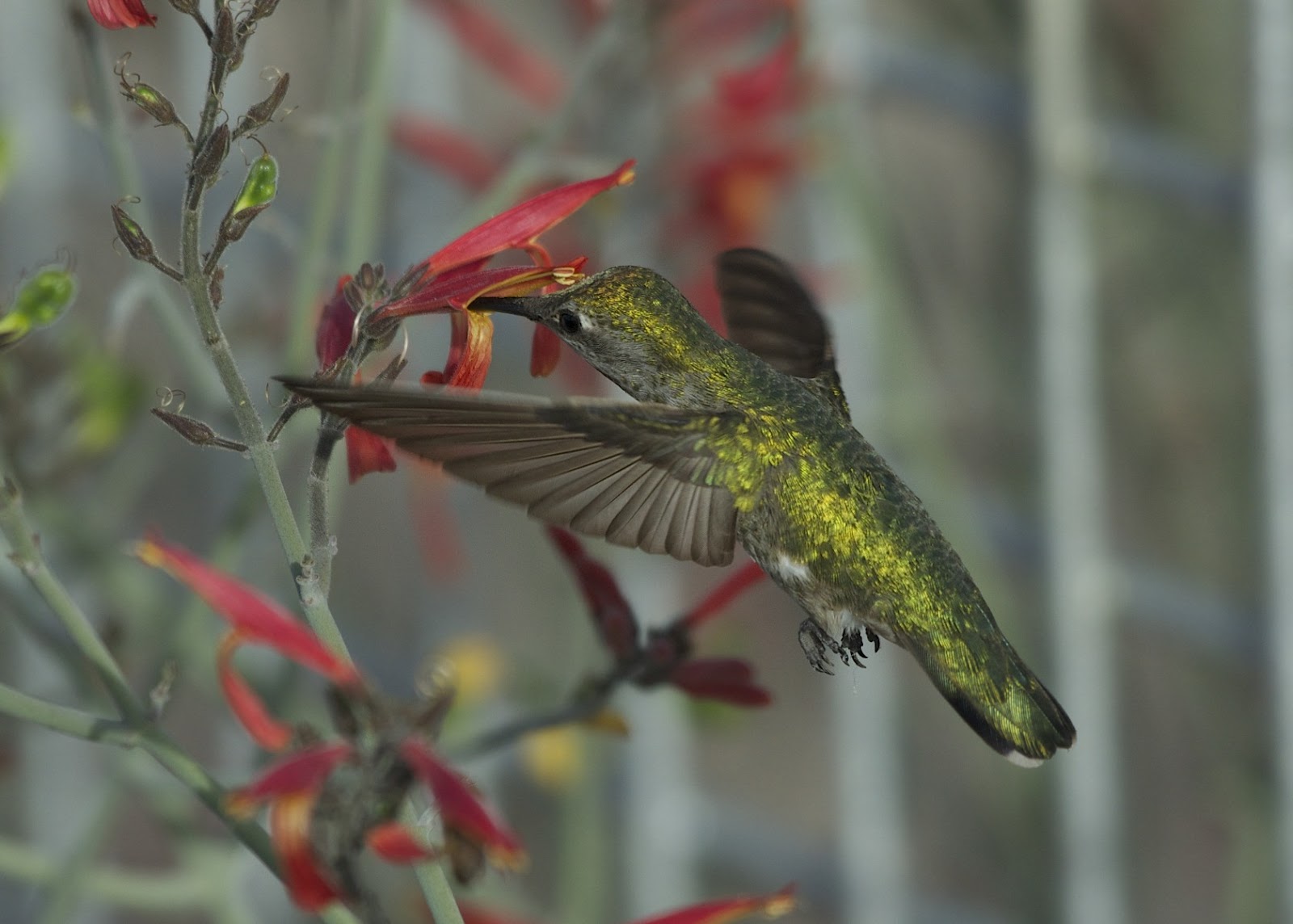
So, finding the little birding patch by work helps not only to satisfy that birding addiction--and really, satisfy is a generous word--it helps to numb expectations and encourage an appreciation of what would be considered lesser or duller birds in more grandiose birding settings. And hey, who knows when something rare will turn up? In the mean time, for even 20 minutes on a Tuesday, being a few feet from a feeding Anna's will do just fine.

Saturday, November 5, 2011

Neotropic Cormorant

I have a really hard time telling the Neotropic and Double-Crested Cormorants apart. In Texas it was easier, but here in Arizona, it's possible to find both inhabiting the waterways, and I see Cormorants all over the city.


The difficulty of classifying them aside, I love to get a good look at Cormorants. It's fun to watch them swim with their somewhat serpentine bodies, and it's downright comical to see them hanging their wings out to dry, like a kid that just got his t-shirt all soaked. I also think that Cormorants have some of the most stunning eyes in the avian world (granted, I haven't seen a White-Eyed Vireo yet). Raptor eyes are large and piercing, but there's something about the aqua blue in the Cormorant eye that's totally transfixing (click for a larger view).


I believe that the strong white border behind the beak, along with the near lack of orange towards the front of the beak make this a Neotropic Cormorant (let me know if I'm wrong). Concealed behind a palm tree, I got to take a few nice shots and stare into the blue Cormorant eyes that take you away to a distant sea.