Showing posts with label Papago Ponds Birding. Show all posts

Tuesday, April 29, 2014

One Hand Empty, One Shaking Fist

The lesser weather god whose jurisdiction reigns over Phoenix has a cruel sense of humor. With temperatures in the mid 90s through the last two weeks, we sends merciful reprieve only on the weekends--the last 3 weekends in a row--with heavy clouds, slight rain and plenty of wind. It's gloriously comfortable, encouraging weather for just about everything...except for birding.

Knowing that this weekend would be another struggle, I decided to try for some late-night owling on Saturday, when the weather wouldn't matter so much, and maybe pick something up at the Papago Ponds on Friday after work. I never did find the confiding Sora I was hoping for at Papago, nor get visual (or photos) on the nocturnal targets, so both of those pursuits will carry over into next week. So, instead of cool stuff, here's some boring stuff from a local city park near you. 

Cooler than Coots but not as cool as Purple Gallinules, the widely distributed Common Gallinule occupies an existentially aggravating level of the gallinaceous waterbird hierarchy. This is, most likely, why they vocalize so often and with such angst in their voice.

I've been reaching a slow realization through my park/canal birding over the last several months. In any given Gulp (that's the real term) of Cormorants, it's now 95% Neotropic (this is a percentage I just made up). I hardly ever see Double-crested around town any more, and the big colony at Tres Rios is predominantly Neotropic too. I have no idea of these two similar species are competitive nesters, if the Double-cresteds just wander continually farther inland and the Neotropic come in their wake, like large-family farmers moving west after the pioneer mountain men. Anyway, I'd be curious for any other Phoenix-area birder's thoughts or observations on this. What's happening to the Double-crested, once the famous rebel of the Cormorant group, raider of the inland waterways, scourer of countrysides?

The longer tail, mottled brown, pale (non-yellow) lores, white border on the chin, behind the lower mandible, all indicate that this bird is yet another Neotropic. Behold the vacant, dead-eye stare of a monumental usurper.

Perhaps as a side effect of the humidity and wind in recent weeks, there are some pretty bold algal blooms in many of the city ponds right now. The prematurely warm temperatures this winter pushed most of the waterfowl north several weeks ago, but the resident birds are making the most of it.

Pied-billed Grebes do not mind Algae. Pied-billed Grebes do not mind anything.

Many American Coots, being good Americans, have lots of big fat babies roaming the ponds now too. I do enjoy when the spontaneous Coot fights break out--this species seems to have a greater propensity for violence than most other birds--and how embarrassingly long it takes them to get airborne.


Coot chicks...these flame-kissed bald headed things are somewhere between hideous and endearing, both of which are stronger reactions than often invoked by an adult Coot. Science has no know explanation for why they look the way they do. Too unappealing to eat?


Part of the American Coot's key to success is that it's a very unscrupulous eater. It's not an om-nom-nomnivore or anything, but they eat lowest common denominator stuff, such as algae and pond slime. With this recent algae bloom around town the Coots, no doubt, are feasting well. This adult was diving to bring up big swaths of the gunk for its chicks. In the photo below of the submerging birds you can see how green the disturbed water is, showing the super algae saturation in the ponds right now.


Most of the chicks waited helplessly for their meal, feigning ignorance and/or inability. But some chicks are straight up precocious, like this man-child here. 


And now I must apologize--but not too much--because I'm about to run a series of Great-tailed Grackle images. I don't feel too badly about this for a couple of reasons:
1) Great-tailed Grackles are cool birds for east-coast visitors.
2) Great-tailed Grackles are hardy, cool birds in general, as long as they're not too urbanized such that they've lost their glossy iridescent sheen.
3) Great-tailed Grackles have a glossy, iridescent sheen.


This dude was being all Green Herony near one of the run-off points where I was waiting for a Sora to reveal itself. 

Whenever one gets a chance to capture nictitating membranes in action, it's also worth sharing. I don't know what all this fellow was fishing for: garbage, algae, minnows, larvae...he probably didn't care.


Did you ever have that one friend in high school who was really shameless, dirty, irresponsible, crafty, guileful, and affecting all at once, probably an Italian? He was abrasive and obnoxious, but every once in a while you had to stand back and just admire his incredible good looks and admirable success, even despite how bothersome he was?
Yeah, I didn't have a friend like that either; I don't even think that's a sterotype. But if it were a real thing, it might fit the Great-tailed Grackle pretty well.

"I'm my own stereotype, a really cool one, way better than any you can think of because of your narrow life experience, punk."

Alright then, I solemnly swear on the little dust pile that's left of my birding and bird blogging reputation never to post Great-tailed Grackle again, even if I see one riding a tiny motorcycle through a ring of fire. Step lightly; step boldly. Drink Bulleit bourbon. This grackle does.

Friday, December 27, 2013

A Hoody Home Coming

Phoenix area birders and photographer and photograbirders all eagerly await the winterfowl arrivals through December. They bring extra color and flavor to our ponds as well as the occasional rarity--most recently a Long-tailed Duck in Gendale. I was looking forward to the return of one particular bird this year, a juvenile Hooded Merganser that had wintered through his awkward adolescence at the Papago ponds last year. If he returned this year, he'd be in his sexy adult plumage. 
Of course, all the usual suspects were out in the nice sunny weather too. 


The gang of female Canvasbacks continues to swell this winter, with no males yet anywhere in sight.


Mangy Northern Shovelers have now arrived in force too; many of these birds still need to fully change out of their eclipse clothes.


The Merganser was reported several days ago, and has since attracted constant attention from the Phoenix photogs. It's a gorgeous bird and a pretty unique specimen of waterfowl. Most impressively, the Papago Ponds are tiny, and Hoodies are usually found out on the big deep lakes in Fountain Hills, where photos are much more difficult.


This tall, dark, and handsome male has now been the subject of many the photo shoot in recent days. Even when I arrived at 10am there were four other photographers positioned around the pond, and, thankfully, he didn't seem to mind at all.


He spent time preening in the shade and foraging amongst a powerful flotilla of Ring-necked Ducks.


He didn't spend that much time above water, and seemed to be playing a switcheroo game with his Ring-neck buddies. He'd dive down and then, after a ten second delay, it was not the Hoody that resurfaced, but a Ring-necked, Ring-billed proxy. 


Or sometimes a Ring-neck's coy mistress, with her snow-flaked chapeau.  


The Hooded Merganser wasn't a life bird, state bird, or year bird, or even a month bird, but an up-close encounter with this sharp-looking saw-bill carries the weight and satisfaction of a much more noteworthy sighting. I'll take him up close over a distant female Long-tailed Duck any day. Well, maybe not any day...

Saturday, December 7, 2013

Floating Feathers and Easy Pickins' at Papago

It's that dreaded final month...people in curious clothes are rushing all over at absurd times of day to fill out their lists before it's too late. No no, it's not holiday shopping season (ok, that too). It's December, and all the Year listers are scrambling to boost their numbers before 2013 is expired. Whether it's another surprise chase or finally catching that elusive annual, birders are kicking it into high gear as the weather cools down and the sun hesitates more and more to rise. With so much going on at work and elsewhere, I'm afraid I've thrown in the towel for big chases in 2013 or trying to actively grow a bigger Year list. There have been plenty of great sightings this year and I have no complaints. In fact, just birding the local dives around Phoenix the other evening was all the more rewarding. It was calm; there was no requisite consideration of time or gas money. It's always good to get back to some seasonal basics every once in a while, especially before a new birding year begins...


The Papago Park ponds are now well-stocked with their predictable winterfowl, as are the other bodies of water around Phoenix. The birds are fairly acclimated to people and they're right out in the open. After many chases and photo-attempts on rare and skittish birds in hard-to-reach places, birding around town feels shockingly and sinfully easy. Of course, it doesn't award one many points on the Global Birder Ranking System, not like turning up a gorgeous Fork-tailed Flycatcher in Connecticut does, but these simple stops come with their own reward.


Instead of stopping to smell the roses, stop to wink at the Wigeons (don't bother smelling the Wigeons, it's uncomfortable for all involved). Pause and ponder their nice nose-whistling sounds and their awkwardly wide proportions.


Seriously, look at how wide and stable of a platform this duck is. You could play jenga on its back no problem. It's like the aircraft carrier of waterfowl.


It's been said a thousand times before, but the Ring-necked Duck, a very decent duck, is probably the worst-named bird in North America. Yeah yeah there's a ring on the neck, but it sure isn't a Ring-necked Pheasant. If we're going with the ring motif, maybe mention that it's the only North American duck with a (very prominent) ring on its beak? I mean, Mallards have ring-necks too...
Anyway, it's always a treat when these guys return en masse. I never get tired of photographing them. They're the perfect combination of accommodating but also difficult to properly and angularly expose. I think I nailed this gentleman though, if I do say so myself.


The females are a'ight, but even less noticeably ring-necked (still ring-billed though, er hem...).


And of course the backbone of every avian painter, except for Painted Redstarts, is the Canvasback. Last year there was a cooperative male at Papago. At first he was very skittish, but after a few weeks at the ponds he became more accustomed to the foot-traffic and I was able to get satisfactory shots. I'm hoping he returns this year to find a pretty, demure lady a-waiting for him.


Green Herons are one of those very cool, common birds that I never stop to appreciate anymore unless I'm otherwise making myself stop and appreciate such stuff--like wintering ducks. As soon as I see one hunting again, up close and without also wondering how much time I have to get to the next site, I'm reminded, "Wow, what a gorgeous bird. Where in the world do they put that neck!?"


Even with the purdy ducks now arriving, the Green Heron will likely stay the most colorful overall bird at the Papago Ponds, or if not then at least the coolest. 


And sometimes the most goofy.


I'll be getting back out into the desert this weekend after some Sagebrush and Bell's Sparrows, as well as any Thrashers that have arrived. Hoo knows, maybe even a Snowy Owl will turn up (ok, probably substantially farther north). 

Tuesday, February 26, 2013

Back to Basics

The last several posts have featured either the frozen tundra that is Iowa in winter or some of the singular vagrants that have turned up around Phoenix this winter. Given the combination feelings of  cold and strange that those themes can bring, it's been nice lately to indulge in some of the warmer, more familiar places and faces around Phoenix. 
The Papago Ponds between Phoenix and Tempe host plenty of winterfowl, along with the year's first Swallows. The ponds aren't deep or wide enough to attract Goldeneye and Buffleheads, but for photographing Pintails, Wigeons, Ring-neckes, and even Canvasbacks, there's no place better. 


As far as waterfowl goes, these ducks are all pretty plebian. That doesn't mean they're not gorgeous.


I admit, on my weekend birding expeditions now I often skip over the waterfowl if I've seen them before. Time is precious and the winter months bring so many other attractions to in Arizona. Every now and again it is very nice to make a specific point simply of visiting again with these docile and beautiful birds, in no small thanks to the fact that, compared to vagrant Warblers ethereal Kites, they're really accommodating subjects for observation and photography.


In addition to the predictable and silly palm trees, there are lots of low-lying, now leafless scrub trees around the ponds, and these provide excellent viewing points for the expected desert birds. Some are boring, common, and even slightly deformed.


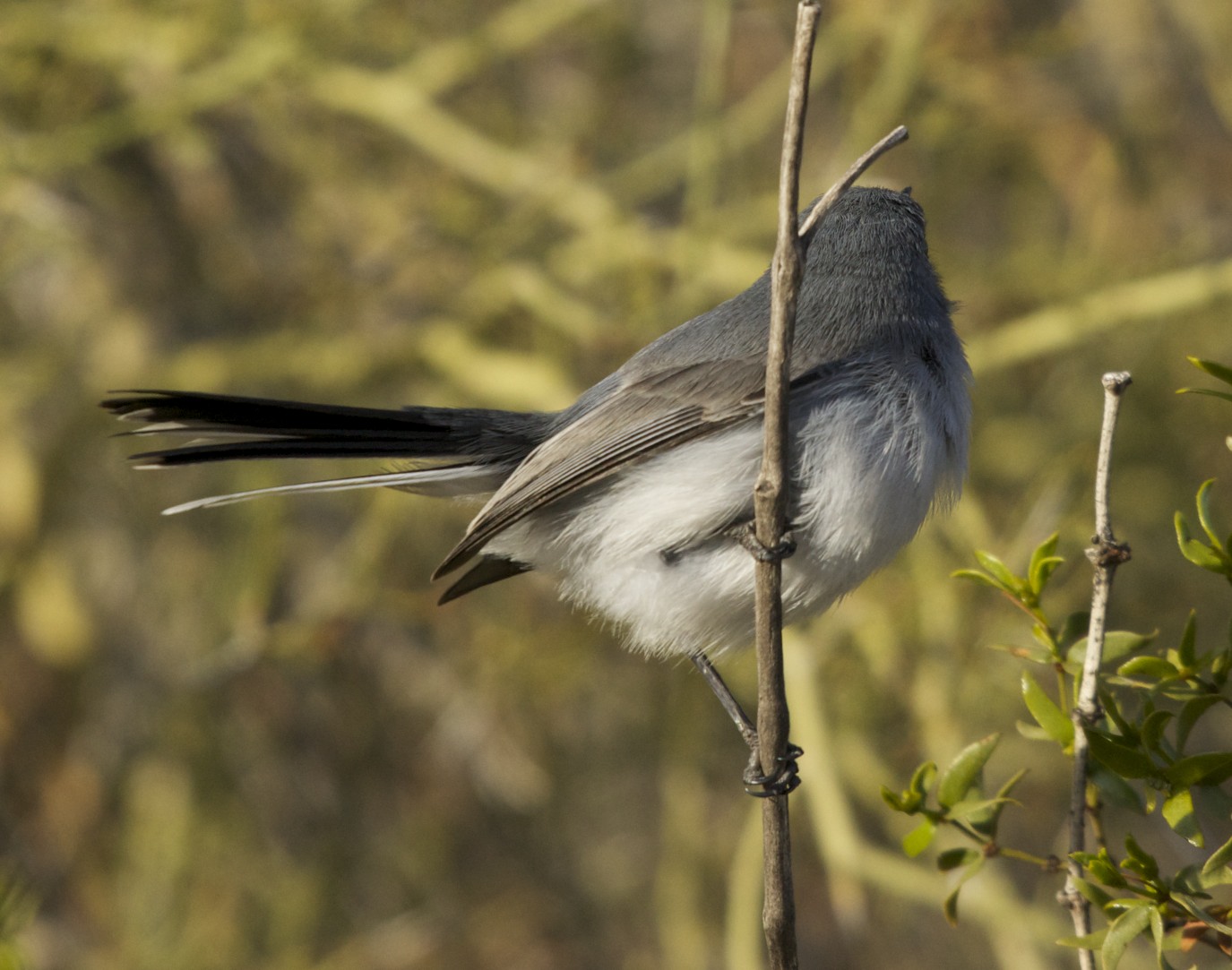
Some are still pretty common, like this Blue-gray Gnatcatcher, but are much more fun. These birds are already operating in couple throughout the Papago creosote patches. They don't mind people getting up close and personal, but they don't sit still either, so it's a fair trade. 


The short vegetation also provides welcome perches for Northern-rough Wing Swallows. While these Swallows won't win the 'Most Colorful Swallow' award, they do win the punctuality award in Phoenix for being the first Swallows back in town, usually by mid-February. 
The Papago mesquites are some of the best places to see these guys perch and preen. The namesake rough out coverts/shoulder on the bird's wings are even somewhat visible here.


 It's not often that a Swallow stops to take a break, but when the bugs are abundant and the weather is mild, there's no hurry. Sometimes I feel exhausted just watching them dip and dive all day (in fact, it's so exhausting, I've never even watched a Swallow all day); it must be nice for them to have a breather.


As one might expect of such ebullient aviators, they're also prodigious eaters. It's hard for scientists to estimate how many things these acrobatic Swallows kill and eat in their lifetime--far more than any Raptor or Tern--but at least from the small, flying insect perspective, this round fluffy head, with its vacant expression and stubby bill, is neither cute nor endearing, but is in fact the head of a mass murderer..bum...Bum...BUM!

Saturday, October 6, 2012

Better Go to Papago

I'm still on a high from this morning's birding. Waking up at 6 am, this morning did not feel any more glorious than Saturdays past, and with my intended destinations being the Desert Botanical Gardens and Papago Ponds--two areas I had birded very often and with few surprises--there was little reason to expect anything but the usual. I'd been on some great birding trips recently, but my photography is always lacking when I visit knew areas. The plan today was to focus on some local spots and get some better shots of common Phoenix birds. The temperature had dropped a little bit, winterfowl were starting to arrive, and there's always the off-chance for a vagrant.


American Coots are not rare vagrants, and in fact descend on Phoenix by the thousand each autumn.

Since the DBG does not open until 8am, I pre-gamed at the Papago Ponds. The Papago Park has some nice rock formations, but the three little ponds are not very scenic. Even so, they are one of my favorite places to view waterfowl in the Phoenix area as they're fairly narrow and allow for closer looks without spooking the birds. This was my first trip out in several months, and I was immediately greeted by some Northern Pintails, Coots, and three Ring-necked Ducks. The Ring-necked Ducks were already in their breeding plumage but the Pintails were still being all solar-eclipse.


Floating out with the Ring-necks was a different, curiously shaped specimen. It had a spiky, erect tail, and since its head was tucked away I wondered if it might be some weird Ruddy Duck. As the bird turned around though and revealed its slender beak, revealed itself to be some sort of Merganser.


This was exciting! I'd never seen a Merganser in Phoenix before, although it's not a super uncommon sighting I'm sure. I knew that Common Mergansers turn up in the fall and winter--I'd just never seen them--and Red-breasted sometimes migrate through. But this bird was smaller than those other possibilities. At maybe eighteen inches, with a dark grey and yellow beak (as oppose to the pinkish-orange Common Merganser) and white showing on the primaries...this was a female Hooded Merganser. Hey, it's not a jaw-dropper, but it's uncommon enough that I knew eBird would flag it, and don't that sort of thing just make a birder feel like a million bucks?


After observing the Merganser for some time, watching her dive, bathe, and preen like some sort of creepy person, I headed down the canal to the DBG. I still consider the Botanical Gardens to be one of the best desert birding areas in Phoenix, but today they were a total bust. I saw eight species inside the grounds. Eight! Not a single Lesser Goldfinch, Cactus Wren, or even a Mourning Dove!!! It was very weird. There were lots of people there already, in part due to the late opening time and there seemed to be some sort of upcoming feature event. Whatever the reasons, the birds were nowhere to be found. Despite the DBG being largely deserted, I did see a Yellow-breasted Chat in the Wildflower Garden, which was a very pleasant surprise, especially given the otherwise low turn out.

The birding was much better at Papago so I decided to walk the desert trail out of the DBG and back to the ponds, thinking maybe I'd find a Rock Wren or Roadrunner along the way. About a quarter mile in I flushed a long-winged gray bird--clearly some sort of goatsucker. Without too much hope, I watched it fly away, expecting it to disappear into the distant hills. To my surprise, it only flew a short distance before landing in a creosote bush.


I had not seen distinct white flashes when the bird flew, and it seemed a bit small to be Lesser Nighthawk. However, the bird clearly had a long tail, too long for Common Poorwill. Regardless of the final ID, I was very giddy. I'd been wanting one of these sightings all summer, to be able to finally study a stationary goatsucker in the daylight.


I'd always loved watching these birds hunt in the twilight hours, appreciating their physique and dexterity even before I was an obsessive birder. But only with better light could I finally see the incredible feather detail and all the subtle coloration. Totally stunning.


Eventually the Nighthawk noticed that I'd noticed, and it took off. I felt bad to flush the bird a second time, but at least no one else would be passing through for a while, so it'd get some peace and quiet for the rest of the day.

Back at Papago the Merganser was still cruising around (in fact, the earlier photos were taken on this second visit). The Finches, Towhees, and Thrashers that should've been partying at the DBG were all crowding around the ponds too, while skulking Green Herons stood watch in the trees.


A few dozen White-throated Swifts flew overhead and spent a few minutes snatching invisible bugs out of the invisible air. It was neat to see them in action so (relatively) close and I was able to snap a few distant shots of these fast flyers.


I left Papago feeling totally rejuvenated. It had been a few weekends since I had a really good bout of birding and photogrpahy, and the aftershock of this morning will keep me going for a while. Picking up Hooded Merganser, Lesser Nighthawk, and White-throated Swift puts me at 253 species identifiably photographed, passing the 250 goal I set for this year. Good birding!