The Gilbert Water Ranch provided the setting for another excellent day of birding with some good pictures, some bad pictures, some easy IDs, some tricky IDs, some heavy clouds, and some direct sunlight. The only consistent characteristic of the day, other than the fundamental reality that birding is fun, was the 40 degree temperature.
I postponed this excursion since Saturday was overcast and rainy. Even though the rain clouds were supposed to clear up, their lingering presence made my first couple hours at the ranch somewhat nerve-racking. The last time I was in Gilbert, I saw several new species and would have had some good photo-ops, but the overcast weather severely limited any photography. The cloud cover was less thick today, and there would even be periods of open sunshine! These brief bursts of light energized all of the birds and watchers alike that abounded at the Gilbert Water Ranch this morning.
As you approach the wildlife ponds from the northern entrance, you can feel the mist in the air, and the tang of cattle farms further south just begins to sting your nostrils. As you come upon the first pond, everything seems still, even deserted, but this is the Gilbert Water Ranch, and you know better! After a moment, all of the different bird shapes begin to materialize out of the morning mist, and the birding begins!
Far in the foggy distance, atop his own little mountain in perfect peaceful solitude was the first bird of the day, a Least Sandpiper. Truth be told he was not actually as isolated as the picture makes it seem, but he was the only Least Piper that I could see. At these inland ponds, they're usually in groups of 2-8. This guy must've had some serious thinking to do this morning, so he set off alone to his hill of contemplation.
Not far from the Sandpiper was a timid gang of Dowitchers. They were thoroughly silent--perhaps because it was still early and they don't drink coffee--and this made identification pretty difficult at my distance. At this point in the morning, most of the ducks and shorebirds were still curled up and tucked away, so for the time being I decided to search the chaparral and see which sparrows were out and about.

I was on a role with sparrows earlier this fall, when I got about 6 new species in a two-week period. Since then, things have settled down substantially. The Water Ranch becomes the dominion of the White-Crowned Sparrows in winter time, and in fact there may be more of them residing there than all the other birds combined. There is constant movement into and out of every bush, beneath every shrub, and always just enough to lead you on. Sometimes they stay hidden and silent, keeping their identity a secret until the last second. Sometimes they'll take seed right out of your hand. Other times they'll bolt before you've even raised your binoculars. All that being said, I didn't actually get a good picture of an adult today, but this juvenile posed nicely with the rising sun.

Danger lurks around every corner with these foggy mornings at the Water Ranch. Sometimes you have to watch your step. Although the rising sun somewhat illuminated the landscape, it took a while for the fog to clear out from the ponds and declivities. With predators like this Green Heron waiting to ambush their unwary prey from out of the morning mist, I may well have been lucky to escape alive...
The ducks seemed to feel uncomfortable with the deeper ponds until the fog cleared out, but that did not stop this Osprey from trying her luck. Although she was unsuccessful here, I like the rich colors in the background foliage and the steamy pond. It reminds me of a 500 piece jig-saw puzzle for some reason.

When the sunlight finally started to cut through the clouds, it was time to revisit the duck ponds. I've been anxiously awaiting the full arrival of this year's wintering ducks. From previous experience, I knew that all of the different Teal, along with the Pintails and Shovelers, would be inbound to the Ranch. I didn't see much when I visited 3 weeks ago, but now they were all represented. The number and diversity of waterfowl that the GWR draws is pretty incredible. However, it's also somewhat difficult and frustrating to get good pictures of all the ducks. They like to stay far out in the middle of the ponds, and most of the observation areas are on the east side, which means the sun is usually against you. I've been hopeful that some of these beautiful winter migrants will move in to some of the other water features around Phoenix (as is the case with
Ring-Necked Ducks and
Wigeons at Grenada Park), but for now I must stay content with what the Ranch provides.
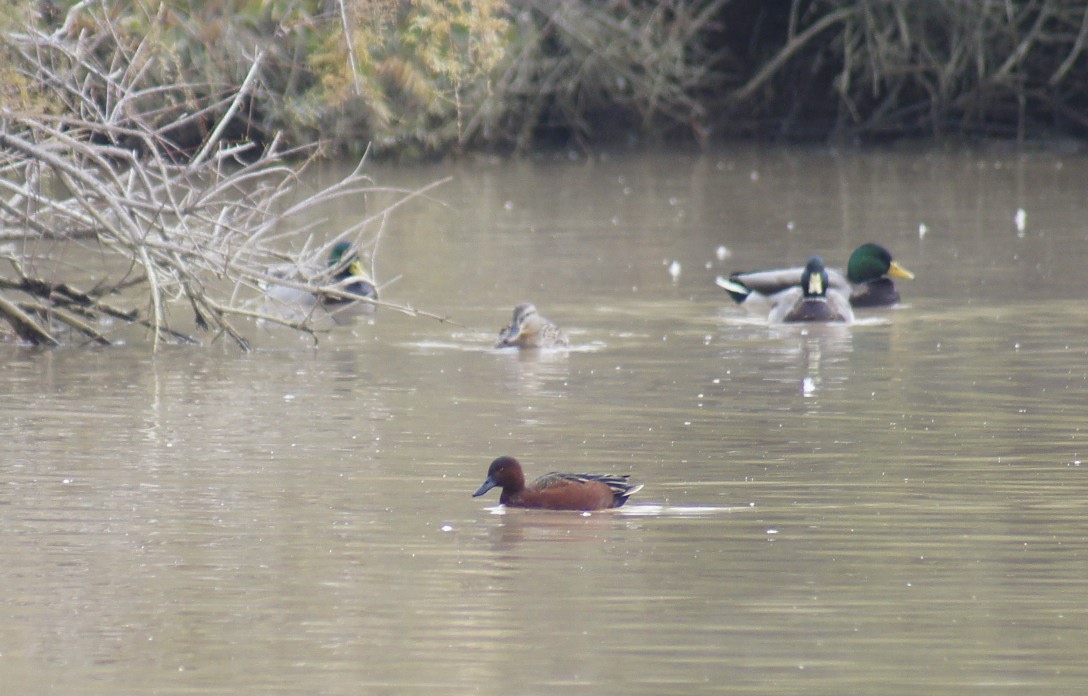
Here is the first Cinnamon Teal I've seen this winter:
And the first Green-Winged Teal:
And the first Northern Shoveler:
At certain spots throughout the Ranch, you can find tidy colonies of Black-Crowned Night Herons. At one point I've seen as many as 11 crammed into one tree. Today there were a half-dozen or so on display, including 1 juvenile. When you've got a big bird in dense foliage, it's hard to get a full and unobscured body shot. While trying to maneuver for a better view, I knocked into a lot of plant growth that was still retaining the night's rainfall. The resultant wet chiding was excellent encouragement for me to stay on the trail. It's probably lucky my camera was unharmed, and I was also lucky not to startle the Herons. Night Herons are such suspicious and grumpy birds. More that most, they're prone to sit hunched up for hours and hours on end. I wonder what they think about...
This sulking juvenile was in some sort of time-out, forced as he was to inhabit his own, separate tree.
Occasionally I'll give in-flight photography a try. It is seldom fruitful for me, but it's definitely an area where I want to improve. Unfortunately, I clipped this poor Egret's wing. I'm glad he can still fly.
After playing paparazzi to the herons and egrets for a while, I wandered back to the northern and sunnier portion of the GWR. The increase in foot traffic and fishermen here means there are fewer of those uncommon and less gregarious birds, but it does mean that those birds you find are more used to people. They'll tolerate a closer approach and You'll usually have a great look at them.
Sometimes, that's not enough, and here's the tricky ID of the day. Given that it's December and most Warblers should be gone, what could this be? Is it a Female Wilson's? Female Yellow Warbler? Immature Yellow Warbler? Fall plumage Wilson's or Yellow? I see little yellow birds like this pretty
often, both at the GWR and at the Desert Botanical Garden. For a while I figured them to be either female or immature Yellow Warblers? Nowadays I readily admit that I just don't know. Any and all suggestions, if not identifications are much appreciated.
Find the dullest, most sleepy Hummingbird you can, and it's still a treat to see from any angle (and how they appear certainly does depend on the angle). This male Anna's was putting on quite a show from his proud perch. Like the Anna's I
photographed a couple weeks ago, I couldn't quite get that perfect shot where you see the full brilliance of the bird's gorget. I can understand though if he wants to save it for the ladies.
Birding is full of watershed moments. Once you get that first sighting, it seems like the 2nd and 3rd sightings come right after. You might go years without seeing a certain bird, and then all of the sudden you'll get 4 in a week. For me, the most recent synchronicity is with blinking birds. Last week I captured a blinking
Ring-Necked Duck, and then photographed a blinking
Coot almost immediately afterwards. This male Anna's was in a blinky sort of mood as well, and I have to say it's pretty darn precious when he does it.
Despite my most polite requests and entreaties and pleadings that he turn his head ever so slightly, this haughty Anna's was determined to look west. I do believe that at this point he was just mocking me.
Magnificent though they are, Hummingbirds are not the only splashes of color around the GWR. There has been an incredible expansion in the wild Lovebird population over the last 5 years or so. While they can now be found in nearly every city park across the Phoenix metroplex, The Gilbert Water Ranch was probably the site of one of their first colonies, and they're still a reliable sighting there throughout the year.
A little bit more surprising was this immature Moorhen standing out in the open near the entrance to the Ranch trails. This was only my second sighting of a Moorhen, but if they're this brazen now, I expect there will be many moor in the future.
On the main entrance pond nearby was this sadly single female Ruddy Duck, who may not have moved since I last saw her 3 weeks ago. I can't wait to see some Ruddy ducks in their spring plumage. Is there any other bird whose bill changes colors like that? There wasn't too much color on display here, but you can see why they're in the stiff-tailed duck tribe.
Once again the Water Ranch provided a great day of birding fun. The female Northern Harrier was still terrorizing the field birds (I didn't even try for a picture), and there were also some Scaups and even a leucistic Say's Phoebe reported in the area. While the drive out is daunting at times, the Ranch is definitely still the premier and preferred birding hotspot in Phoenix.
If you're in the area, Red Mountain Park is just a couple miles north, and it is the reported nesting area for wintering Yellow-Headed Blackbirds (or was a few years ago). I had no such luck today, and in fact it appeared that the entire lake area had been thoroughly conquered by quibbling Coots! I did add a new bird to the ol' Life List though, courtesy of this female (or immature?) Canvasback who had sequestered herself in the middle of the pond. If I'm not mistaken, it's somewhat unusual to see them very far inland during the winter. Success!