Showing posts with label Arizona falls. Show all posts

Wednesday, April 2, 2014

Looking for Cliffs under the AZ Falls

It had been a few weeks since visiting my cozy little work patch, so this past week I returned with a specific goal in mind. Having scoped out most of the likely species for this little site, last time here I made specific and successful efforts for Red-naped Sapsucker. This time around I was pursuing a more mobile quarry. I had a single Cliff Swallow back in February, flying around where the canal falls drop down several dozen feet to continue on their westward course. This was a very early sighting for Swallows, and I didn't see that bird upon further visits but it keyed me in to the possibility that in a month or two, they might take up nesting under the Arizona Falls Bridge. Cliff Swallows nest colonially under bridges near water, and are in that sense predictable to find. However, these elevated colonies and the subsequent shade that comes with them means that photographing these birds satisfactorily is a challenge.
Best of all, trying to find the Cliff Swallows at AZ Falls would let me revisit my favorite sign/water fountain placement situation maybe ever.


All of the winterfowl, even the Ring-necked Ducks, in this strip of water are gone, but Cormorant numbers were up. They're mostly Neotropics, but Rhinoceros Cormorant (front) and Headless Cormorant (back) also turn up this time of year. 


The main advantage vis-a-vis Swallowing is that the AZ Falls has a walkway and adjacent slope right next to the elevated plane at which the Swallows are building their muddy manors. This means that without rope ladders or cherry-picker trucks, eye-level viewing is somewhat possible.


With a small amount of trepidation and a certain amount of balance and control, positioning oneself on the dirt and cement slope seen on the left of the picture above allows for fantastic, eye-level views of the busy birds, even if the problem of photographing in the shade can't entirely be avoided.


And as for the Swallows themselves...they couldn't care less. Joggers and cyclists are often passing by on the walkway above their nesting site, and my increased attention did not deter them in any way. Clinging to vertical walls and building a house entirely out of mud and spit requires plenty of concentration, and worrying about the clearly out-of-its-element biped nearby is not high on their priority list.


It was a real treat to watch them working up close. One Swallow would often stay in the nest, molding  the inside no doubt and handling the decoration.  It would then emerge, apparently, to give direction to its partner, who would make the frequent trips down to collect more mud. Have we not all experienced this dynamic, in some sense or another, on a moving day?


And as a further point of relating and sympathizing, Swallows seem to lose patience too during these onerous exercises. Or maybe Cliffs just have a grumpier disposition than cavity-nesting Violet Greens, who find most of their domestic organizing done for them.  


It is interesting also to observe these groups of swallows and compare them to other colony birds. European Starling flocks and Blackbirds fly together and seem similarly sociable, but with the impressive Starling flocks, a sort of a common collective mind seems to pervade the group's movements (even though this likely isn't the case, they just operate, necessarily, under stricter rules that come with being in a larger group). With the gregarious Cliff Swallows, the community is central to everything the birds do--there are seldom any outliers or loners, any separate nests or pariahs. These Swallows are even known to move their eggs from one nest to another if a clutch fails or its own nest is deemed inadequate. 


Swallow crushing is not the easiest of pursuits, but if you can't bring Mohammed to the mountain...then find a way to get up the side of the mountain, lean over some railing, get a bit dusty, and take a few pictures. Everybody's happy.

Tuesday, February 18, 2014

Working Out a Work Patch

Working a 7am-4pm job can be hard on a fellow's birding, especially when the sun sets early and there's still prep work to be done for the following day's grind. It's often a tight, sweaty squeeze--like to many suits on an elevator--but the weekend outlet isn't always enough, and sometimes you've got to fit in some weekday birding, even if it's just a quick fix, a supplementary high. It doesn't matter if they're mostly trash birds; they've got feathers and they move, so it's still birding. 

Black Phoebe by the parking lot irrigation gate? Hell yeah!!!
Many people have the benefit of yard birding of course, but for us apartment dwellers that doesn't amount to much, so the next option is finding a local patch around home or work, usually a park or something similar. Phoenix has some decent birding parks, like Encanto downtown or Grenada Park more central, but these require a bit too much rush hour driving for me to hit up on a weekday evening. The campus where I work has actually turned up a couple of decent birds for me--American Robin and Peregrine Falcon, and Lark Sparrow, which are uncommon in central Phoenix--but I can't well use my place of work as my work patch; that'd be distracting for me and everyone else there who knows me and sees me walking the grounds with all the gear, plus there's not much water. 

So, I decided to head a few blocks northeast to the SRP Arizona Falls canal spillway, a nice little attempt at a canal filtration/regulation gate with some walking paths and water works. It's very small--easily covered in 10 minutes--and also adjacent to Herberger park, which has some grass and a few pine trees, as well as tamarisks, that have already produced Red-naped Sapsuckers and maybe some migrants in a month.

The spillway itself is a nice little construction, and its various channels provided a nice break up of the monotonous brown trench canal scene. The higher concentration of birds here, like these Mallards seconds that motion.
It's funny how starting a new patch list, especially one for a small patch with little going for it other than location, readjusts expectations. Once again I'm really looking forward to a Kestrel Sighting. Red-naped Sapsuckers were a treat and I haven't even recorded House Finches yet in two tries! Yes indeed, I'm only at 21 species for the lil' place, and the proudest sighting of all is a skittish Spotted Sandpiper, along with an unseasonably early Cliff Swallow (it's also unseasonably warm, friggin' 88 today!).


Like the other park birding scenes in Phoenix, the lessened variety compared to proper nature preserves or refuges is made up for, in small part, by much closer looks at those species that will still abide the heat and noise, and now peeping tom birders, of the city.


At any preserve in Maricopa County, Wigeon are pretty near the bottom of the totem pole in terms of commonality and appearance among waterfowl, but along a canal, man, they're hot commodities!


A Neotropic Cormorant is a bird I will not stop to observe at during my weekend treks at Tres Rios, where they numbers in the 100s as can the site species count on a good day, but it's another solid find for a little patch in central Phoenix.


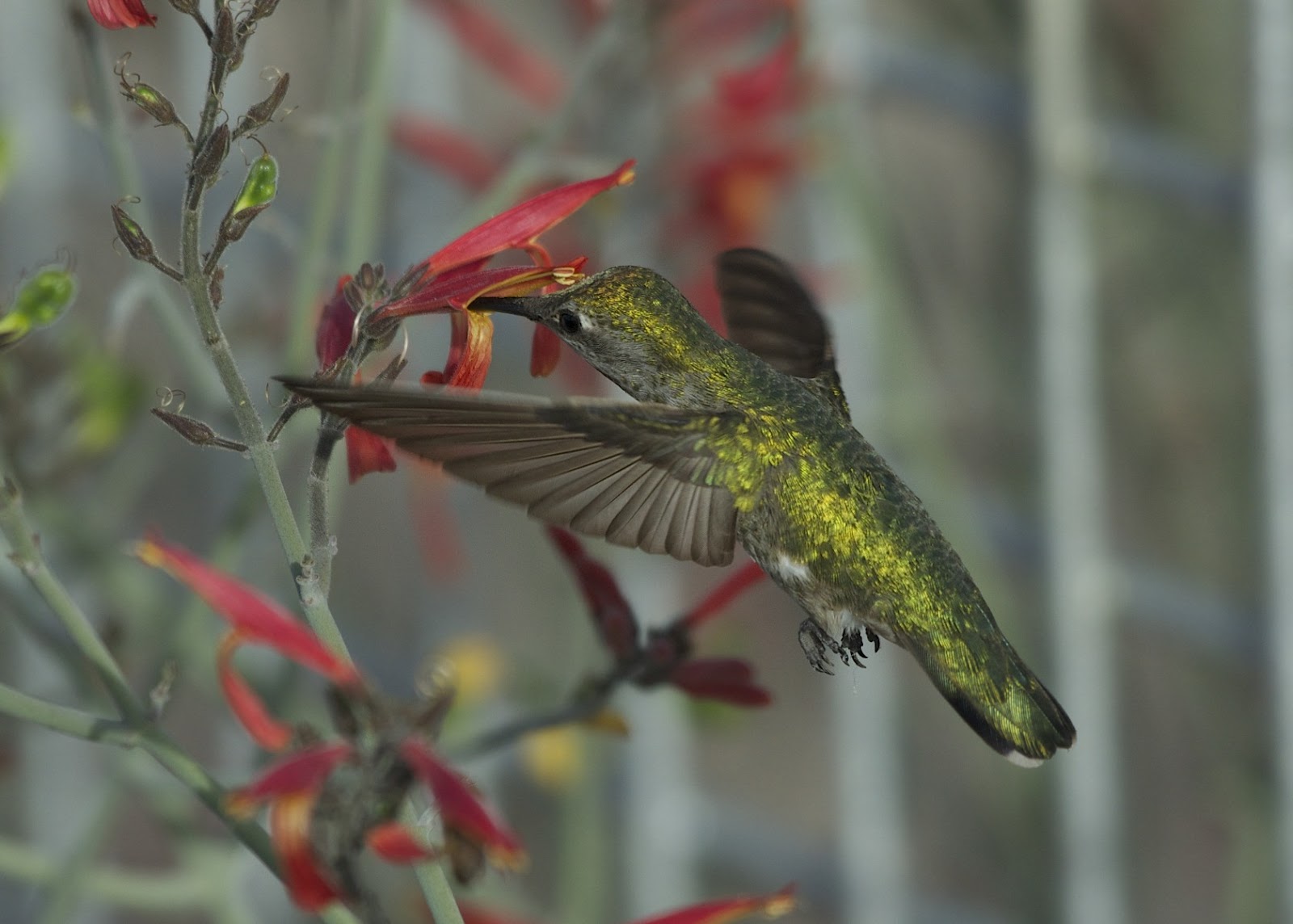
So, finding the little birding patch by work helps not only to satisfy that birding addiction--and really, satisfy is a generous word--it helps to numb expectations and encourage an appreciation of what would be considered lesser or duller birds in more grandiose birding settings. And hey, who knows when something rare will turn up? In the mean time, for even 20 minutes on a Tuesday, being a few feet from a feeding Anna's will do just fine.