Friday, November 23, 2012

Eared Grebe

While on a trip to Fountain Hills a few weeks ago I obtained my first presentable photos of Eared Grebes. We do fairly well with Grebe species in Phoenix, and there are usually four of five species present, if in small numbers, throughout the area. Arizona itself can host all seven North American species, and last year I managed to see all seven within a month of each other. 

Behind the Pied-billed Grebe, which can be found in small quantities on just about every gold course pond, city park pond, and water treatment/reclamation area in Maricopa, the Eared Grebe is the second most common. But like the Western Grebe, these birds seem to stay in very specific areas throughout autumn and winter, earning them the very nebulous and dreaded notation of "locally common."


They can be found at the Tempe Town Lake, Fountain Hills, and some other areas in west and east Phoenix, such as the Glendale and Avondale Recharge Ponds and Granite Reef Salt River sites. But there are other areas, seemingly just as large and deep, when I never see them nor have seen them reported. As such. they're not an uncommon bird, but it's always a treat to see them, even though they seldom come close enough to shore for photos.

Sunday, November 18, 2012

Early Birds

Here are some of the Arizona backyard desert scrub essentials, photographed din early morning light. These birds are part of the staple base for good desert birding. The boost daily birding lists and provide the foundation for less frequent but more exciting findings. They're the staples that hold everything together, and even though staples are, let's be honest, one of the less-fun office supplies both to shop for an to use, these staple birds are still pretty important. And they still look pretty good too.

Gamble's Quail are about as handsome as they come, and their chicks are some of the cutest too. They nest in oleander hedges and other concentrations of vegetation all around town, and their anxious clucking fills the evening air.


 Northern Mockingbirds need no introduction. They're sharp birds, both in their aesthetic and in their attitude. They're pretty big jerks actually, and seem to prefer making enemies to making friends or allies, but hey they're successful, so much so that they're the official state bird for Florida, Arkansas, Tennessee, Mississippi, and Texas.


I probably post too many Verdin photos here, if that's possible, but they're basically the only little pretty desert Warbler-esque (they're not actually Warblers of course) birds that are found year round and are pretty cooperative photo subjects. Interestingly enough, the name 'Verdin' translates to 'yellowhammer' in french. The Yellowhammer is also another (antiquated) name for the Northern Flicker here in the U.S., and there's a whole different species of bird called Yellowhammer in Europe. Curious.


Curve-billed Thrashers are expected anywhere around Phoenix except, oddly enough, at the famous 'Thrasher Spot' west of the valley which is the only place to see Le Conte's, Bendire's, and Crissal Thrashers--all the rare ones. Though they reside the less wild/more boring areas of the state, they're big fans of dramatic posing, so it evens out in the end.


Mourning Doves are common everywhere, and I do get sick of seeing them or flushing them from a bush when trying to track some other less usual species. They're pretty in their own right though, and sometimes they can be downright delightful, which I guess goes for just about anything in the natural world. Hope y'all saw some good birds this weekend!

Thursday, November 15, 2012

Monday, November 12, 2012

I'm So Full Of Egret...

This past weekend I made a series of stops at some sweet waterfowl areas around Phoenix. The objective for the day was to see some male Hooded Mergansers, but that is a story for later this week. I've often found that when I set out with a specific goal in mind, I usually get lots of good stuff, even better stuff, on the side.

The partly cloudy, mostly chilly Saturday started off with an elegant Snowy Egret hunting before the sunrise at Papago Park, the first of several Egret encounters I had throughout the day.


This is not the first time I've been able to photograph a Snowy pretty close in the pre-dawn light. Of course, with little light there is little color and little feather detail to pickup in the photos, but as far as dark blue photography goes, I must say that the Snowy Egret is an excellent subject, especially because I always blow the whites with too much exposure in the full sunlight anyway.

I like how the curvature of the bird matches the outline of the rocks behind its head and neck here. Patience paid off for this silent assassin. Every minute or two it'd snap and swallow a little minnow. Alas, high shutter speeds and good light are essential for photographing those moments. Regardless, it's not too hard to appreciate the bird's aesthetic.


Snowies are exquisite birds, but they're not the biggest Egret on the block. My quest for Mergansers took me out to the lovely Fountain Hills Park in northeast Phoenix, and there, where everything is on a magnified scale, there are plenty of superlative Egrets on display.

"Great? Me?"

Like their smaller, snowier cousins, the Great Egrets sometimes prefer the shade too, especially when they need to get their...umm...affairs in order.


The Kayan people of Burma revere those who have very long necks. The women wear neck rings in increasing increments as they grow up, elongating their necks to the point where they can't support the weight of their heads without them. I bring all of this up only to wonder aloud, what might they think about Great Egrets? They've got it goin' on.


These lanky stalkers will stand poised and patient for minutes on end with their heads cocked back, ready to strike. While watching them at times, I even began to wonder if they were really hunting anything at all, or if they were just having a staring contest with their own reflection, and then SNAP!


Torsion, power, speed, and pinpoint precision...I wonder if that little fish's life flashed before its eyes? I suppose, if it did, one day would look much like any other. Egrets are of course not the only animal, bird, or even wader to feed with this quick-fire strike. But as delicate and dainty as these birds seem at times, all of the impressive muscle movements in their lunges are impossible to see with the naked eye, at least for someone with naked eyes like mine.

I enjoyed watching the Egrets hunt, and they enjoyed eating, so it was a win-win at Fountain Hills Park. They're not the biggest type of Heron nor the prettiest, but they're still pretty Great.


I came away with a lot of material on Saturday and I'll be trying to publish every three or four days. There will also be a longer compilation of the day's expedition over at Birding Is Fun on Thursday. Cheers!

Wednesday, November 7, 2012

Scootin' Coots and Sinister Cowbirds

The weather is finally behaving now in Phoenix, and Sunday evening I walked around Steele Indian Park just to enjoy the temperate outdoors...and to see what'd arrived at the local pond. Unlike some of the other Phoenix parks such as Grenada and Papago, I've never seen anything unusual or uncommon and Steele Indian. There are usually a half-dozen Wigeon and Ring-necked Ducks, along with about a dozen Mallards and two dozen Coots throughout the winter. Unlike the other parks though, Steele Indian often hosts a flock (swarm) of Brown-headed Cowbirds.


This doesn't seem noteworthy on the face of it, but I must admit that I don't actually see Brown-headed Cowbirds that often. They're certainly not uncommon, but compared to the Grackles and Blackbirds their urban presence is relatively light. But like other icterids they can be sinister. They're brood parasites, meaning they lay their eggs in other bird's nests sometimes, and they have a mean streak in em' even within the flock. This plain and pleasant female here is about to be ambushed by the jealous neighbor rising up in the background, while a male looks on complacently.


But the real action of the day, the BIG action, came when a quartet of clumsy Coots decided to enter the pond in as ponderous a way as possible--much to my delight. It might be a mean streak in me, but I find great pleasure and chortling satisfaction in observing the awkward machinations of American Coots. They have the shape of Guinea Fowl, which is to say, like a football, with big clown shoes and plodding personalities. And every once in a while they'll build of a head of steam running across a pond just to attack some other Coot that seemed to be minding its own business.


The first pair of Coots cleared the ledge with confidence, even panache.


The second team were a bit more hesitant, and they kinda flubbed it.


So yeah, pretty exciting stuff. They may be grumpy ol' Coots by nature, but every once in a while they can still be spry.

Saturday, November 3, 2012

Tricks and Treats at Tres Rios

I did absolutely nothing for Halloween this year, and ya know what? It was great. That being said, I don't have kids or friends or good costume ideas, so the potential was never great. Anyway, my trick for good birding this weekend was getting some on-loan Swarovski binoculars in the mail, and the treat would be Tres Rios, one of my all time favorite Phoenix birding spots. A friend and fellow teacher Joe Swope also joined me on this chilly and birdy morning. We saw at least sixty-eight species of birds--an excellent count for November--and I even pulled an unexpected lifer.

Like a champ, Joe biked over to Tres Rios (91st ave and Broadway) from 24th street and Indian School. That's about two hours and over twenty miles. My bike had a flat tire and, not being one to let adversity overcome me, I drove :) Before the sun was fully risen, I drove down the old canal road that's about a quarter mile north of the Tres Rios site. This strip of shrub opens into farmland and is a very reliable place to see Burrowing Owls, along with Raptors and other telephone wire birds.


While Joe was still en route, I started driving along the mesquite and sage strands searching through the Sparrows. As one would imagine in November, it was ninety-five percent White-crowned Sparrows with a few Vesper and House Sparrows mixed in too. Now, I really like my Bushnell binoculars. They've served me well for years, and like those old Nokia cell phones, they're pretty much indestructible. But when it comes to picking out fine details and distinctions with mixed flocks of Sparrows...they can't hold a candle to the Swarovskis. The resolution and clarity with the Swarovski glass is incredible, and even at the same magnification as other binoculars, I was able to pick things out much more quickly and definably. With Swarovskis in hand, I noticed this skulking White-throated Sparrow, an uncommon bird for Phoenix and a new one for the ol' life list.


I don't want to go too head-over-heels, but I don't know if I would've picked this bird out of the pile without the new nocs'. The bold white throat is a giveaway with the golden lores, but when you've also got twenty White-crowned Sparrows tearing around and everything is thirty yards away, it's hard to tell.
I had been hoping to see a White-throated Sparrow in Arizona this winter, but the odds of finding one at the massive Tres Rios site were low, so I'd relegated it from the realm of possibility. I guess that's the Tres Rios trick, and my treat.

Speaking of tricky, here is a Great Egret scratching its own back.


The Tres Rios site combines lots of different habitats and, at its best, can supply an energetic birder with nearly one hundred species in a day. The trade off is that with the thick brush along the rivers and wide open spaces in between, it's terrible for photography. The birds are plentiful but very unused to people. They're extra skittish and likewise the photographer has few places to hide. I am continually frustrated with my photographic attempts there, but that frustration, in part, keeps me coming back to try again. Now having some swanky Swarovski specs helped with the distant birding, but unfortunately most images from today are of the 'little bird on a fence/twig variety'.


This shouldn't mislead from how excellent the birding really was. There were more Great Blue Herons and Great Egrets and Night Herons than we could track. We had five or six Osprey, Red-tailed Hawk, Kestrels, Pelicans, and plenty of Waterfowl. Common Yellowthroats, Yellow-rumps, and Orange-crowned Warblers were out in force, and three Belted Kingfishers always make for a good day. Here's Joe, first-time-birder-extraordinaire, checking out a Green Heron.


The solution to the photography problem is, of course, picking a nice spot and staying put. But with so much space and many different habitats around, it's hard to stay in one area, especially if you're going for variety. The one surprising dearth for the day was in the Waterfowl department--we didn't see that many ducks. However, we did see evidence of an intricate Heron/Egret dance number in some of the muck, which was pretty cool. 


It was great to get back out into the Arizona birding scene this weekend, and there are few places better to do so than at Tres Rio. The scale and scope of the site are huge. In fact, I really need a scope to make the most of it, especially because there might've been some Longspurs in the nearby agricultural fields. 

Tuesday, October 30, 2012

Coming and Going at the Ranch

I stopped by the Gilbert Water Ranch for a few hours of birding on Saturday. As expected, the place is teeming with White-crowned Sparrows, far more numerous than the combined waterfowl or even Great-tailed Grackle/House Sparrow/Starling/Pigeon combination of sooty city birds. It's a tough call whether or not the Sparrows or the Waterfowl are a more exciting aspect of autumn. I guess for now it's the Sparrows, since there are still new Sparrows for me to see in Phoenix but I'm got most of the expected ducks covered. At any rate, let me both apologize and warn that you'll likely be seeing lots of these White-crowns in the next few months.


The Water Ranch has played host to some interesting migrants/vagrants the last week or two. I dipped on the female Chestnut-sided Warbler there (which is still around, apparently) but did see a pair of American Redstarts. Warblers are hard enough to photograph and rarer Warblers all the more so. Instead I came away with shots of this mangy young male Costa's Hummingbird. Costa's Hummers aren't rare, but they're not overly common, especially late in October.


I think the white thing on the leaf is pocket lint, or maybe wadded up spider web. Always nice to see these guys, especially amidst the inundation of Anna's around Phoenix.


The Costa's Hummer looked very dainty, very petit atop its little leaf. This Great Egret, in contrast, looked chunky and uncomfortable. Come to think of it, Great Egrets often look this way.


And here is perhaps the only stage of the Black-crowned Night Heron life cycle wherein the bird is actually camouflaged. Clearly he thought it was a good-enough disguise to sit out in the open, which is pretty uncharacteristic for the GWR Night Herons.


There wasn't a whole lot to show for the trip, but it'll get me through the week. My two month loan Swarovski nocs' should arrive this week and I'm going to take them and a buddy to Tres Rios next Saturday. I expect it will ruin me.

Saturday, October 27, 2012

Birdin' The Boot

Last week I found myself in Rome. While admiring the spectacle of the ancient sites, the renaissance sites, and the baroque sites, as well as the modern sites (and modern cuisine!), I snuck a little bit of birding in too. Unfortunately, the one excursion I made exclusively for birding was rained out almost immediately, but during this wonderful sojourn abroad I did see some new and interesting species. 

Old, New, and in between...it's all crammed together in Rome

To be honest, my birding enthusiasm wanes a bit when I head out of the country, at least regarding listing and finding new species. Part of it is an anxiety about opening the flood gates too wide. The quest to see every North American species is reasonable. Opening myself up to European or South American birding is...dangerous, with so many new species to see, so many of which I've never even heard. At any rate, it was nice to also find a few species that also turn up or have small populations in the U.S.

In lieu of Chickadees, the European canopies are adorned with Tits. Yes, there's not really a less awkward way to say it. The Great Tits are the most visible (obviously) but Eurasian Blues and Long-tailed can turn up as well.


The Tits' cheery and chittery companion is the European Robin. They're all over the Italian Peninsula (and Europe at large). I saw them at every single site we visited outside of Rome, including up high in Orvieto and Assisi as well as the ancient ruins of Ostia.


White Wagtails are another fairly common sight in the urban greenery. Without ever compromising their excellent posture, they run around the freshly mowed park lawns and gardens, murdering many insects and staying wary of the camera.


The Hooded Crows are the corvid creme de la creme around the Ancient City. Larger and meaner than Jackdaws, they boss the garbage cans and gutters in superlative fashion. Perhaps their success is in large part due to their ability to stand up very tall.


Though corvids are regarded as very intelligent birds, these Hooded Crows had moments when they seemed to exude profound unintelligence. To be fair, I have those moments too.


However, the creepy blank stare of a Muscovy Duck is no more reassuring. These funny-faced birds have established colonies in Texas and other parts of the U.S., and are now spreading into Europe as well. If I had to pick one species that possibility germinated the avian pox and/or bird flu, I'd vote Muscovy Duck. Look at this sinister thing...


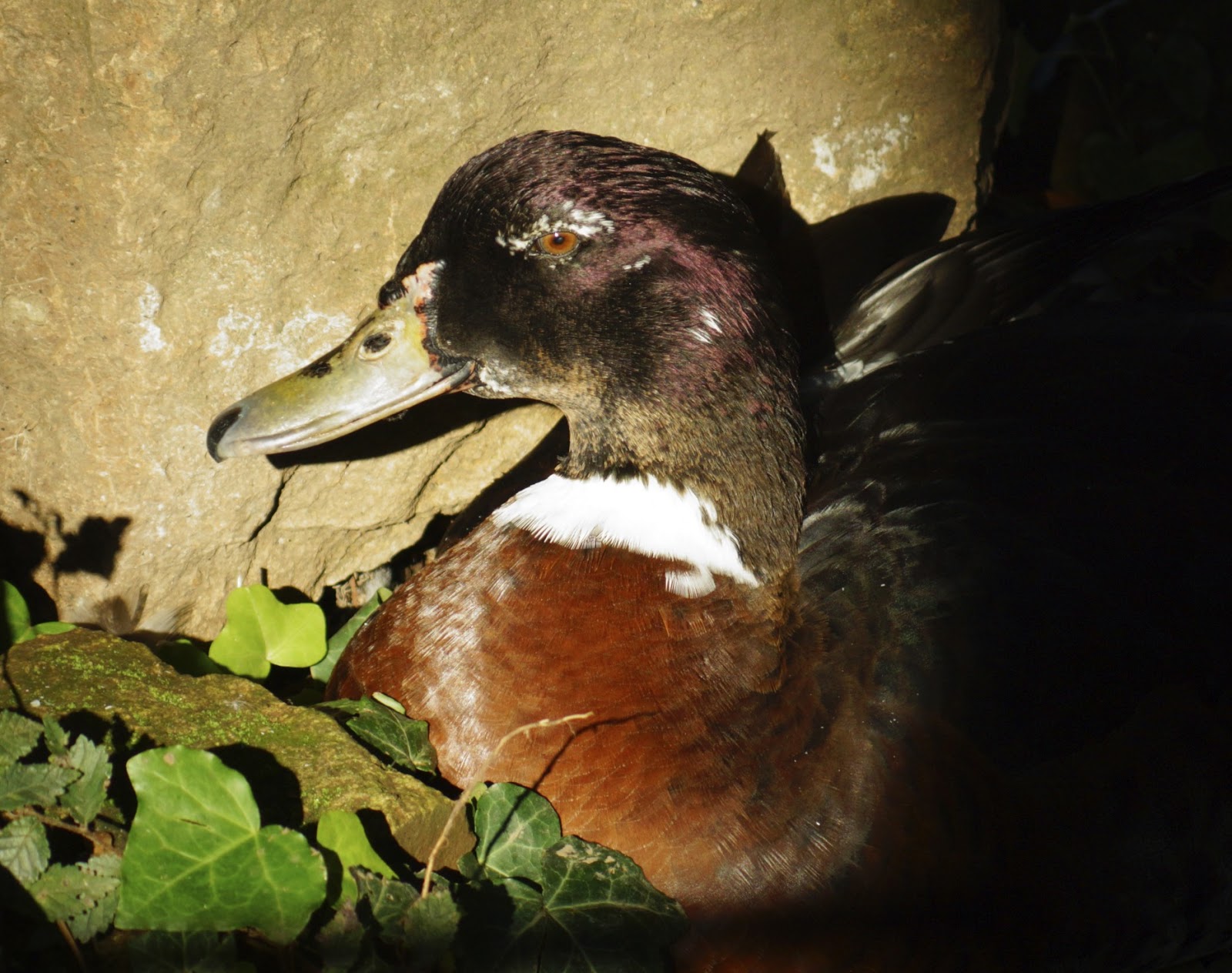
As in the U.S., Mallards still comprise 85% of the waterfowl around urban Roman ponds. Also like the U.S., there are some interesting, colorful varieties and hybrids around the urban ponds. This crusty-eyebrowed fella here, only half exposed to the light, was the size of a goose.


Luckily the manky Mallards and un-listable Muscovy Ducks weren't the only waterfowl around. Ruddy Shelducks occasionally turn up in North America. From what I've read, no one has definitively confirmed they are of wild origin, and even in their native Eurasia their populations are declining. As such, I considered myself lucky to find a pair at the Borghese Villa park in north central Rome. 


The Shelducks were probably my favorite birds of the trip. There's just something so satisfying about seeing big and new Waterfowl (and they're a mercifully straightforward lot to identify).


Perhaps the most fitting sighting of the trip was this Monk Parakeet outside of St. Paul's Cathedral. The Monk Parakeets were actually all over Rome, but always streaking by at considerable speed and with awful shrieking. 


The Rome birds were nice--a great bonus to an awesome trip. But I am really looking forward to North American birding again, particularly because it's waterfowl and sparrow season now. Yee-haw!

Wednesday, October 24, 2012

IDing Challenge: It's time to do or Dowitcher

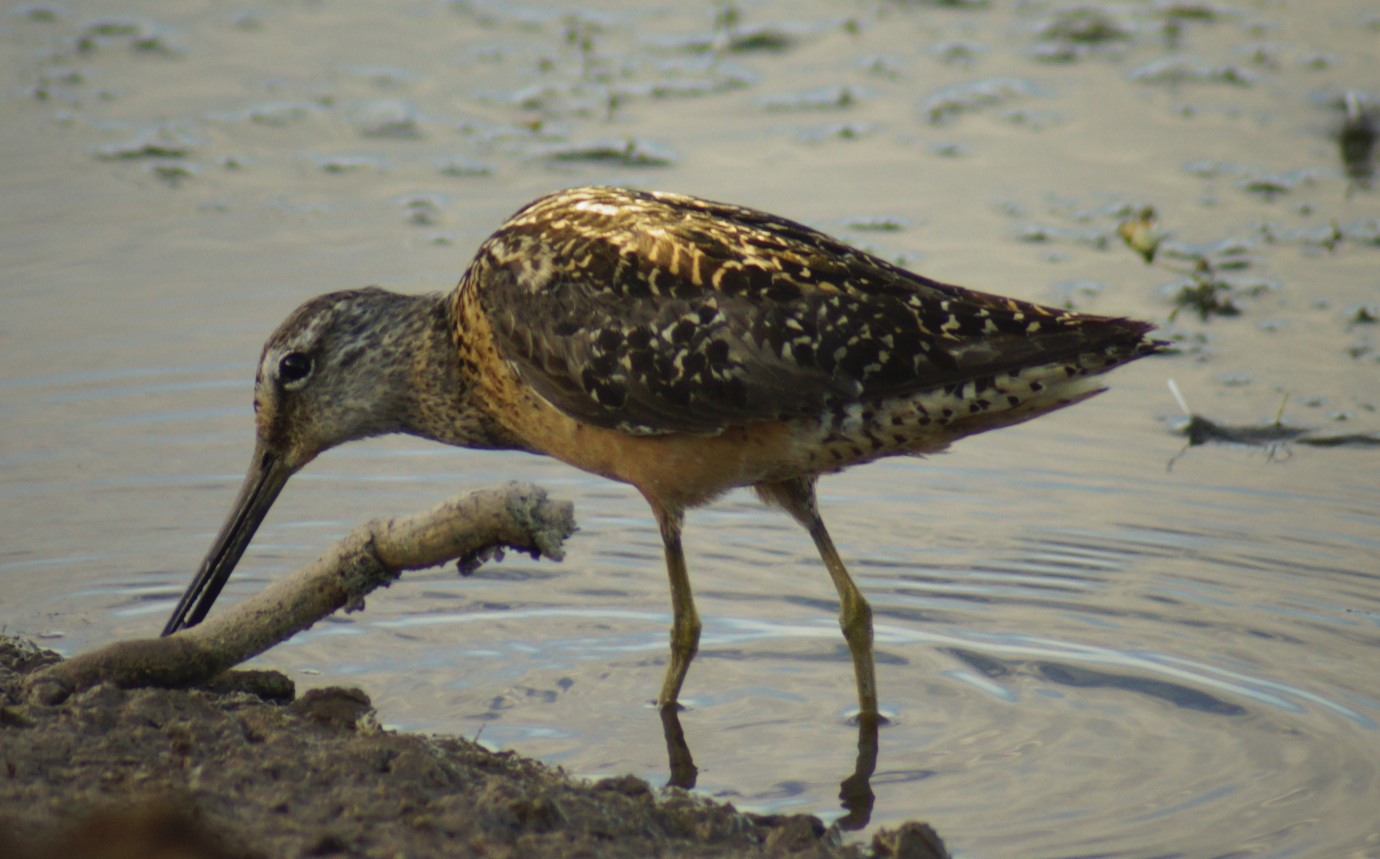
This is the ultimate for me. It's not that the Dowitcher complex (Short-billed vs. Long-billed) is the most difficult to discern in the bird world. Differentiating silent Trail's Flycatchers or Pacific-Slope/Cordillerans in overlapping range can be more challenging, or at least there's less to tell them apart. And yet when trying to compare these two Dowitchers in photos and field guides, in the wild and in memory, I cannot keep them apart. Living in Phoenix, I have it pretty easy. There's a 99% chance that any Dowitcher in the middle of Arizona is a Long-billed. 

But earlier this autumn I went to the Salton Sea, where the two species are known to intermingle in this overlapping range. With excitement and trepidation, I set out to tell the two apart, and to definitively add Short-billed to my life list. It is now at great risk and with much anxiety that I submit these photos to you all. For my money, they're all still Long-billed...