Showing posts with label Desert Birding. Show all posts

Monday, May 25, 2015

Organ Pipe National Monument (More like Organ Grinder)

It's a beautiful site, hosting some of the most pristine Sonoran Desert habitat and rock formations in Arizona. Being two hours away from Phoenix, it's also not quite as demanding a trek as some other natural destinations for those originating in the middle of the state. 


Organ Pipe is reputed to be one of the better spots in AZ to find Ferruginous Pygmy Owl. I had a few friends head here two years back and have one such endangered owl calling from near a campsite restroom as soon as they got out of the car. In the five different visits I have made to this site, I have had no such luck. I've come in before sun-up and birded through the morning, in the afternoon, and in the evening without one little 'peep' or 'toot' for a small rusty owl. 
To be fair, this bird is endangered and sparsely distributed, so this it may not be of fair 'nemesis' status yet, but these annual searches throughout Organ Pipe each spring and summer have become pretty beleaguering. These attempts are additionally taxing because there's not a lot of bird diversity otherwise, so dipping on the owls also comes with few consolation prizes. So, without further adieu, let's look at what those consolation prizes are!

When driving around Arizona, I'm always on the lookout for the perfect saguaro. The Perfect Saguaro is the paradigm of pulchritudinous cactus. It has two arms, unevenly staggered, with a full trunk. Many saguaros have more than two arms, or none at all, or the arms are of uncouth length, or there are other growths atop the main trunk. This candidate at Organ Pipe is the closest I've come to finding The Perfect Saguaro. It's not there yet--it needs to fill out a bit more--but maybe in 10 years (when I finally find that stupid Owl) it'll be ready. I shall pin a bio-degradable blue ribbon on it. 


The saguaro and organ-pipe cacti are the most dominant and imposing lifeforms in the area, but there is plenty of dimunative-but-tough salt-brush, creosote, and cholla as well. This scrub provides the equivalent of a deciduous forest canopy, sort of inverted, and holds most of the avian life. Sado-masochistic Cactus Wrens and spherical Black-tailed Gnatcatchers are among the most audible and noticeable.


Organ Pipe's cup also doth overfloweth with myiarchus Flycatchers, with the numerous Ash-throated Flycatchers ceding the vocalization contest to their bigger, yellower, Brown-crested cousins.


The flowering saguaros sustain their own small ecosystems with many species of bee and other insects, as well as birds and bats all revolving around these dainty flowers. Scott's Orioles are big fans of the flowering saguaro, though they eschew the Woodpecker preference for living (and doing other things) in the same place they eat, so instead nest in the palo verde and mesquite, especially the trees have a nice mistletoe infestation.  


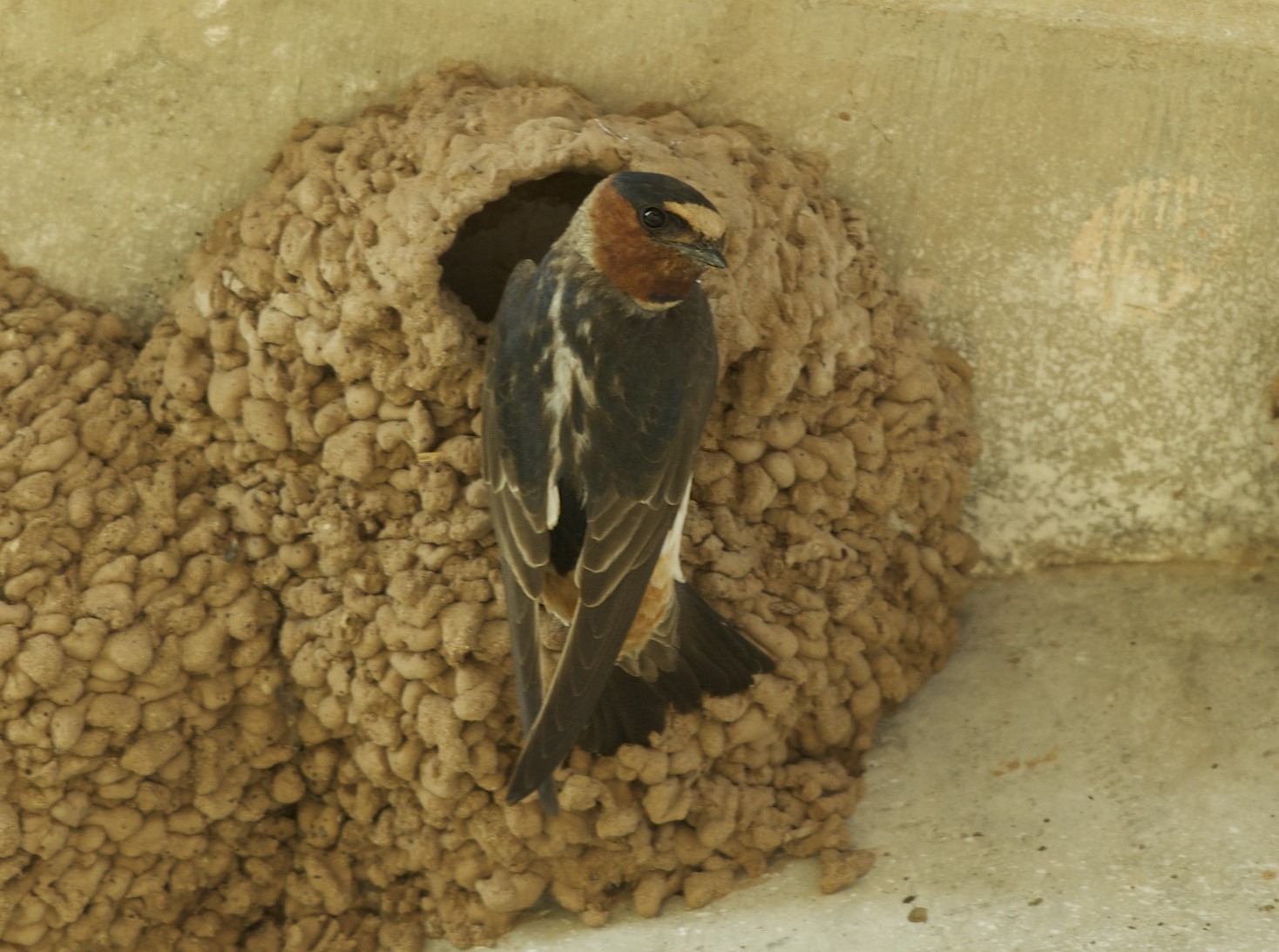
On the most recent return home from Organ Pipe, I made a quick stop at Base Meridian WMA in west Phoenix, still trying for that nifty Ridgway's Rail shot. This trip was also a bust, respective of the objective, even if there were hundreds of nesting Cliff Swallows and a weirdly active Lesser Nighthawk.

The B&M Meridian is great for Cuckoos later in the summer, as well as Least Bittern, and it also is/was one of the better areas in Phoenix to see Barn Owls. And Barn Owls are cooler than Ridgway's Rails anyway right? Well, that argument is moot if the Owl is dead, and the only bird I could find at B&M had caught such a case. This brings the tally of dead Barn Owls I have seen to 5, more than twice as many as I've seen alive.


And yet, despite these recent disappointments, I am not depressed. Despite the knowledge that bird-blog-culture-defining people are currently galavanting through the Maine forests and coastland, racking up lifers and tails most glorious, I am not disturbed with envy nor pangs of inadequacy. Why not? Because there are breeding Flame-colored Tanagers AND Tufted Flycatchers, to say little of Elegant Trogons and what not, in Ramsey Canyon right now, and I will be cutting loose to that feather-friendly Mecca on Thursday. How's that for consolation?

Wednesday, May 21, 2014

Magnolia in the Evening: Winning on Wednesday

Wednesday was a double victory. The last week of school is now more than half over, and while I will not yet think about the gross amount of things I have yet to grade and evaluations to write, climbing over that hump is encouraging. This Wednesday evening also brought another boon, the opportunity to chase and fine spring vagrant, one both uncommon and bodacious.
A male Magnolia Warbler was found by several birders on Monday morning just outside of the Desert Botanical Gardens, presumably during the weekly bird walk. The bird was relocated photographed on Tuesday in the same area, feeding near some acacia and mesquite trees adjacent to the canal walkway that runs parallel to the DBG. Dios mio it looked good. Warblers are bad enough at staying still even in their appropriate range so I wasn't overly optimistic about a Wednesday chase, but the DBG is only 6 minutes away from work, so if I passed up that possibility than I really wouldn't be any sort of birder at all. I was also joined on-site by Pops, and this would be a coveted and rare weekday lifer for both of us. 

There were plenty of meetings after school but I'm a good Bird Scout with several make believe preparedness badged, and thus my birding junk was in the car, along with some dynamic swim trunks. We actually got there with plenty of daylight left. In fact, there was too much daylight. It was still quite hot and the bird activity was initially low, so we had to make do with other critters, like this Desert Spiny Lizard.


Another cool find early into the birding (really before there were any noteworthy birds) was a Giant Desert Centipede. This dude was about seven inches long and just hanging in the open. I can handle, literally, spiders and roaches and leeches and internal human organs, but I'll be honest in saying centipedes creep me out a bit, and not just because of the innovative surgeries and subsequent films they can inspire in some people.


So on a hot spring (summer) afternoon with little shade, what else does one do? Check out the Rough-wing Swallows being all dramatic on the utility lines, for one.


And observe the local but kinda boring Gilded Flickers for another.


if you're really desperate, you can even creep on shadowy female Lesser Goldfinches, some of the dullest birds in town.


After about forty-five minutes of patrolling the acacia and mesquite trees along the canal, Pops finally had a sighting. A small, darkish bird with white flashing on the tail skipped into a mesquite from across the fence in the DBG area. The yellow was initially covered but pretty soon we were getting semi-obscured but continuing looks at a gorgeous lifer. Magnolia Warbler on the up and up!


The Warbler, unlike those of use who were chasing it, was wise enough to wait on its evening forays until after the sun had drifted below the horizon. Our binocular looks were fantastic; the bird didn't care about we quiet bystanders, though frequent cyclists and joggers would give him a scare.
Shooting warblers without direct light and in a bushy mesquite tree is a losing battle, so I was satisfied with the great visual and some diagnostic photos, especially considering that this was a bird, up until a couple of days ago, that wasn't really on my 'expected vagrant' AZ radar. This is only the second or third record I've seen in the last few years.
After several minutes a couple of bikers flushed the bird across the canal and that was that. There's a certain temptation to try again in the morning with better light, but the foliage on the other side of the canal is much broader and nicer, featuring some dense transplant pines that are actually more in-line with its usual habitat, so there's also a worry that the bird won't bother coming back.


We had just enough time with the Warbler and the residual heat to melt our faces pretty well, no complaints about a near-chase, Wednesday evening lifer.
On the way back to the cars, we were treated to darting Nighthawks and a few other desert species perched atop their respective thrones.


So is the birding luck used up, or is this a powerful omen for the weekend? Only time and terrible tasting, brittle, gimmicky, thyroid-shaped cookies will tell.

Monday, January 21, 2013

Birding Buddies: The Colorado Connection

A few weeks ago I received a message from Larry and Linda Schmidt, lovely people and great birders who'd be coming to my part of town from Colorado. Our paths had first crossed in the Facebook Birders group, where Larry had noticed some of my posts and, knowing they were heading that a way, gotten in touch. This was my first pre-planned experience of meeting up with out-of-state birders and acting in a sort of local-guide capacity. It was all a great prospect, as sharing the birding opportunities in central Arizona and doing it with folks from outside of the area have both been driving goals behind Butler's Birds.  


So, where does one take nice people from a beautiful state full of snow-capped Rockies and alpine forests to really showcase the rustic, natural beauty of Arizona? Why, one takes them to the middle of nowhere in the arid desert of course, where the broken glass shimmers in the sunlight and you can see so far into the nothingness that you look all the way around the world and back at yourself!
 I refer, of course, to the infamous Thrasher Spot in Buckeye/West Phoenix, where the elusive Le Conte's, Bendire's, and Crissal Thrashers may all be seen in one bleak but productive trip. Although this little patch is one of the less attractive options at the Arizona birder's disposal, it holds several possible lifers that can't be easily had anywhere else. 

The first bird to greet us on this chilly Sunday morning was not a Thrasher though, but a fancy-free Gnatcatcher, followed by many dozens of White-crowned Sparrows. Although White-crowned Sparrows are not easily confused with Thrasher, their movement on the ground and in the obscuring scrub bushes combines with the distractions caused by Abert's Towhees to lead one on more than a few embarrassing goose chases (now, turning up a goose out here really would be something to brag about). 


I've always had success finding the Le Conte's and Bendire's Thrasher in the trips I've made out here, but the Crissal Thrasher has proved to be the most stubborn (seen only once in the last three tries). My hope, in taking the Schmidts out to Buckeye, was that they'd bag 3 lifers and I'd get some better photos of these cool Thrashers. We saw two of the three Thrashers, and I did not improve my photo-log of these species at all (in fact, I'm borrowing a couple images from a much older post). Still, 2 out of 4 ain't  bad if you're a professional baseball player, and birding is basically the same right?

The shorter-billed Bendire's, usually the most common and vocal of the three, were in short supply.
While we didn't get as close of views as this fellow provided last winter, we did all get good visuals and audio on at least one bird.
This shows the ethos of last year's brazen Bendire's.


This is the disposition of the current crop of 2013 Bendire's. Sulky and mostly silent...it's no opera. 


Bendire's Thrashers also turn up elsewhere in the valley, particularly out in Mesa and Chandler, so there was less of a sense of urgency with this bird. However, this site in Buckeye is about as far east as the Le Conte's Thrashers come, which makes them the most sough after Thrasher in town. Last time out I met up (at the site) with an older gentleman from Wisconsin who had flown out and rented a car specifically to see this species that would've been ABA area number 800 for him.
He even brought an old, massive, panasonic tape cassette player with scratchy Le Conte's recordings. Helping him find the bird was pretty thrilling, and I was very optimistic for my and the Schmidt's chances once again. In Fact, the Le Conte's was the first of the Thrashers we saw, and we counted at least three different individuals within a one hour period. Not bad!


And we didn't even need one of these to get the birds singing a little bit!


Heading east back into town, we decided to swing by the Tres Rios Wetlands, even though it was the middle of the day. The weather had become surprisingly warm, and the sun was unsurprisingly overbearing. We kept it to a shorter walk but still recorded some forty or more species, including Sora, Least Bittern, and all three Teal. Being hardcore, intense birders by nature, the Schimidts and I were all powering through our natural, mortal desires for lunchy sustenance. This romping chomping Common Gallinule, however, did wonders to damage our mental fortitude. 


The beating sun didn't help much either. The only thing affording us shade was the occasional White Pelican flyover.


We did run into Tommy DeBardeleben and some other birders out on the trail, but all in all the Tres Rios scene was comparatively muted. Most of the vegetation along the Gila River was desiccated and unpopular with all but the occasional Red-tailed Hawk, and the Tres Rios flow was very overgrown with reeds, which facilitated lots of Sora and Least Bittern action but obscured views of everything else.


On the way back towards the cars, I was recounting some of the cool birds we had seen with the Schmidts, and they were likewise telling tales of their visits to Spain and Finland. Just as I was commenting on how we had not seen any Wrens except for Marsh Wrens (it's an off-day indeed when that happens), this Belted Kingfisher decided to perch on a wire and give us his best impression of a Winter Wren. Preciate' it Bro.


I'd call it a successful day of birding. The Schmidts were a great birding team and, just as importantly, were really terrific company. I wish there was more time to visit some of the other Maricopa sites, but as Linda Schmidt liked to remark, "There's just more reason to come back soon." Cheers to that!
I had a marvelous time sharing the central Arizona sites and birds with the Schmidts, and hope to have another opportunity soon.

Sunday, November 18, 2012

Early Birds

Here are some of the Arizona backyard desert scrub essentials, photographed din early morning light. These birds are part of the staple base for good desert birding. The boost daily birding lists and provide the foundation for less frequent but more exciting findings. They're the staples that hold everything together, and even though staples are, let's be honest, one of the less-fun office supplies both to shop for an to use, these staple birds are still pretty important. And they still look pretty good too.

Gamble's Quail are about as handsome as they come, and their chicks are some of the cutest too. They nest in oleander hedges and other concentrations of vegetation all around town, and their anxious clucking fills the evening air.


 Northern Mockingbirds need no introduction. They're sharp birds, both in their aesthetic and in their attitude. They're pretty big jerks actually, and seem to prefer making enemies to making friends or allies, but hey they're successful, so much so that they're the official state bird for Florida, Arkansas, Tennessee, Mississippi, and Texas.


I probably post too many Verdin photos here, if that's possible, but they're basically the only little pretty desert Warbler-esque (they're not actually Warblers of course) birds that are found year round and are pretty cooperative photo subjects. Interestingly enough, the name 'Verdin' translates to 'yellowhammer' in french. The Yellowhammer is also another (antiquated) name for the Northern Flicker here in the U.S., and there's a whole different species of bird called Yellowhammer in Europe. Curious.


Curve-billed Thrashers are expected anywhere around Phoenix except, oddly enough, at the famous 'Thrasher Spot' west of the valley which is the only place to see Le Conte's, Bendire's, and Crissal Thrashers--all the rare ones. Though they reside the less wild/more boring areas of the state, they're big fans of dramatic posing, so it evens out in the end.


Mourning Doves are common everywhere, and I do get sick of seeing them or flushing them from a bush when trying to track some other less usual species. They're pretty in their own right though, and sometimes they can be downright delightful, which I guess goes for just about anything in the natural world. Hope y'all saw some good birds this weekend!

Friday, July 27, 2012

Foothills of the Santa Ritas

Last week Pops and I embarked on a birding excursion to southeast Arizona that had the potential to be marvelous, with a chance of becoming epic, and that ended up being legendary for Butler birding. With only half a day at our disposal in the Santa Rita Mountains, we had to hit the ground running. We planned to check out the Montosa Canyon on the southwest side of the mountains first, and then explore the Kent Springs trail before moving to the upper Madera sites. It was a complicated itinerary with little room for error--clearly a two-man job. 

We reached Montosa Canyon by 6 am, optimistic that we might find a lingering Plain-capped Starthroat seen visiting a feeder near the canyon wash. The Plain-capped Starthroat is not as excitingly colored as the name implies, but it is one of the rarer Hummingbirds to stray into Arizona. 

We drove a ways into the canyon seeking out this oddly placed but well-attended feeder. It was moved from its original location, and so Pops and I had to do some splorin' (isn't life hard sometimes?). Before we found the feeder, we were treated to some excellent views of Broad-billed Hummingbirds, Canyon Wrens, and Cardinals. We were also pleasantly surprised to see Varied Buntings off and on throughout the morning, though only the drab females stopped for a picture. 


The songs of various rufousy desert Sparrows echoed in the morning air, interrupted by the occasional outburst of Mexican Jays. Although the canyon was very birdy, we did not locate the feeder by 7 am, and I began to get antsy. We needed to see the Starthroat and get up to Madera before it got too late in the day, or so went my worrying. To add to my anxiety, this little female Black-chinned Hummingbird landed nearby and tempted me to turn her into a female Lucifer. Nice try Black-chinned, but you're too big and gray-cheeked! Plus the throat's wrong. Really I don't know what she was playing at...


The hummingbirds weren't the only little birds playing mind tricks. With its more gradual inclines and thick scrub, Montosa Canyon is one of the most reliable areas in the U.S. to see Black-capped Gnatcatchers. Pops and I spent a fair amount of time, really at all of our stops, trying to turn Blue-grays into Black-capped. The best way to ID a Black-capped, especially a silent female, is by the underside of the tail, but even there they look very similar to female Blue-grays. I am afraid the Black-capped Gnatcatcher still eludes me.


Apart from the no-show Gnatcatchers, the day was a great triumph. Pops, who is far more patient than I, found the feeder farther east of our original area, but by that time some other birders and beaten us to the good spots. After about fifteen minutes of waiting and a few twitches brought on by other Hummingbirds, the Starthroat finally made an appearance. It stayed only for a moment and as far as I'm aware did not reappear that day. While hovering near the feeder, Pops and I had great views of the bird's white back, and this blurry photo helped us note of the the proper facial markings. Oddly enough, the other birders in our little cul-de-sac convinced each other that they had, in fact, only seen a Broad-tailed Hummingbird. I don't really see Broad-tailed at all in this bird, and I'm not one to make declarations too soon. I guess some folks are just hard to please. Truth be told I was ready to leave Montosa before Pops found the feeder. I'm very glad that we stuck it out and the virtue of patience was once more reinforced for me.


From Montosa we drove north again, up Madera Canyon road to the Bog Springs campsite. From Bog Springs we took the steep rocky trail towards Kent Springs, hopeful of a few more new birds, some of which were common to the area and others not so much. Sulphur-bellied Flycatchers were one of my 'must-see' birds this summer, and they did not disappoint. The first half of our ascent was fairly quiet and fairly hot. While we did get some great looks at a family of Arizona Woodpeckers in the scrub oak, the initial trek was on the unenjoyable side of arduous. But as we approached the Kent Spring intersection we were ambushed!

The Flycatchers flew back and forth across the trail, shrieking their battle cries with great temerity and daring us to fight them for their territory. We were lucky they did not unleash any face-curdling, sulphur-tinted belches (from which these birds obviously get their name), because they're pretty face-meltingly beautiful already. Arizona's version of the Great Kiskadee, these magnificent flycatchers shown brightly even in overcast weather.


Though the Flycatchers were a definite highlight, they were not the primary objective of our Kent Springs excursion. This semi-obscured House Wren wasn't the primary objective either; it's just cute.


No, the main attraction of Kent Springs this summer is a half-mad half-insane Scarlet Tanager that has been living near the Kent Springs/Bog Springs intersection since the end of May. It had been my hope to see my first Scarlet Tanager this year, presumably when visiting family in Pennsylvania this past June. I did not expect that my first Scarlet Tanager would be in southeast Arizona in July, about 1,200 miles west of its normal range.


Lunatic birds are some of my favorite birds, and the Scarlet Tanager was no exception. As one might expect, this canopy dweller was a real lame-o about getting his picture taken, but the sensory overload when that Scarlet caught some sunlight...it's seared in my brain forever. Every summer Madera Canyon pulls in specialty Hummingbirds, Flycatchers, and Elegant Trogons, but a Scarlet Tanager too? Truly this must be one of the best birding sites on the surface of the sun (Arizona).


The birds received most of our attention, but they were not the only attraction. With its different elevations and ecosystems, Madera Canyon is also a herpetological powerhouse. This Yarrow's Spiny Lizard served as a reminder that superb coloration isn't just the domain of birds and butterflies. If only the birds had this guy's mellow attitude.


Kent Springs wasn't the last stop of the day. Pops and I still had a score to settle with the Elegant Trogons of upper Madera. We backtracked to our vehicle and drove further up the canyon towards the Super Trail (a fitting name for an epic showdown eh?). The stage was set for a great reckoning, like the kind of reckoning that must be immortalized in a special-effects laden, over-the-top Michael Bay movie, but more on that later.

Wednesday, May 23, 2012

A Wash Before Lunch

This past Saturday my family and I decided to do some morning birding and a picnic lunch at Mesquite Wash, a great little birding spot just northeast of Phoenix. The Mesquite Wash is fed by Sycamore Creek, and while there wasn't a lot of water, there was enough to keep things green and cool.

Mesquite Wash is accessible between miles 207 and 208 off the AZ-87 (beeline) highway. There is a parking area to the west of the AZ-87, which didn't give me a great first impression. There was lots of dust and litter, but even as we pulled in we could hear birds singing from the nearby trees, and we caught glimpses of Western Tanagers and Yellow Warblers while still getting stuff out of the car!


From the parking lot, we made the short walk down towards the creek. Along the way we had good looks at some of the desert chaparral birds, including Black-Throated Sparrows, Lucy's Warblers, and Cardinals (which can also be found everywhere else).


Although it was a short walk to the stream, it was also pretty hot, and the discomfort was exacerbated by dust-stirring motorbikes passing nearby. The sound of trickling water was very welcome, and the sight of running water was a little piece of heaven.

The water at Mesquite Wash sustains the cottonwood and willow trees, which reflected their green off its glassy surface and shaded the bathing Lesser Goldfinches.


The birding was good and the environment was very enjoyable--everything was going according to plan. The big surprise came when we spotted this fatty Gila Monster slinking its way up from the water, trying to make a daring 0.024 mph escape back into the bordering grass.


This is the first Gila Monster I've seen in the wild. I must admit, the lizard's comical proportions and plodding pace largely offset its infamous reputation (it is one of only two venomous lizard species). It was very tempting to try and pet his bumpy hide, but getting bitten would've ruined our outing...prudence can be such a difficult thing.


After about half a mile the wash starts to narrow, and the desert canyons become more prominent. This provided a welcome diversity in habitat and birds. We were able to alternate between viewing Yellow Warblers, Warbling Vireos, Wilson's Warblers in the canopies and the Phainopeplas and Lucy's Warblers in the chaparral.

I will not apologize for this photo because it's my first and only Lucy's picture.


I will not apologize for this picture because Phainopeplas are awesome and should be viewed in any way, in any quality, as often as possible.


We also spent some time checking out this flycatcher. Unfortunately, I couldn't get very close for a better photo, and the bird stayed stubbornly still. It did have a notched tail (so no Western Kingbird, it was also too small and slender) but not enough yellow on the breast to be a Tropical Kingbird. My vote is Dusky-Capped Flycatcher, but I am very open to suggestions.


After checking out the desert scene, we stopped to observe a little holding pond. The stagnant water here was very popular with Red-Winged Blackbirds and lots of insects, including this nifty dragonfly which I will not attempt to identify.


We continued down the wash, knowing that soon it would be time to turn back for lunch, but also wanting to explore the liminal space where the water thinned out and the tall trees transitioned into tall grass. The last few trees played host to some Bronzed Cowbirds, one of the cooler kinds of Cowbirds and a species I do not see very often.


The tall grasses below the trees formed a charming little prairie, and it was there that we found the birding highlights of the day. You need a big beak and a big head to eat these mighty grains. This was Grosbeak territory. This male Blue Grosbeak was a lifer for me, one that I have been hoping to see for a long time.


It was only while reviewing photos later on that I discovered he had a female friend, whom you can see in the background. Birds feeding in tall grass make for great binocular looks but less than great pictures. I cared not a lick; the Blue Grosbeak is "epic," to use the buzzword of these last few years.


This azure all-star ascended to the treetops for a brief surveillance before departing. My jaw hurt from hanging open for so long. While crawling along the wash, trying to keep low and small, I had collected quite a few scrapes and scratches, as well as a lovely collection of gravel and pebbles in my pants.  Birding can be dirty, dusty, even painful business. I often feel like those stingy scrapes and after effects make a first-time sighting all the better. Getting a good look at the bird and having a bit of lingering pain...it's like a good stiff drink right afterwards (obviously, having a few scrapes and a stiff drink right after is best). It makes me feel like I've earned it. Anyone agree? 


The Blue Grosbeak was probably the most beautiful bird in the grass, but coming close is second was the male Black-Headed Grosbeak. He too was enjoying the unlimited buffet, and it was at this point that our grumbling stomachs and satisfactory sightings prompted a return to the cars.


On the way back we found lots and lots of tiny frogs in the wash gravel. They were not there when we first proceeded, so we developed the theory that some of the dirt bikes that had earlier gone roaring through had upturned the gravel and disturbed these tiny amphibians. I must admit, I was pretty irked at the dirt bikers for interrupting the serenity of the Mesquite Wash setting, especially because there was plenty of space for them to ride around that was within their limits. That being said, these frogs were pretty cute, and I'm glad I got to see them. This guy was maybe the size of a dime.


We decided to take out picnic lunch to the nearby Saguaro Lake, where we could eat on ridiculously undersized picnic tables (for me anyway) and enjoy some shade that wasn't in the water. In addition to providing a comfortable setting that went very well with our avocado, turkey, and munster cheese sandwiches (score!), Saguaro Lake had a few cool birds too, including a late Yellow-Rumped Warbler, Wilson's Warblers, and Vermillion Flycatchers:


This teasing jelly-belly wouldn't give me a look at his front, but seeing a Vermillion is undoubtedly a great way to end a birding trip, even if it's playing hard-to-get. I'm planning a return to Mesquite Wash later this summer. It was a great birding site by all accounts, and is supposed to be a good location to find Yellow-Billed Cuckoos, another one of my 2012 target birds. The summer is just starting to heat up!