Sunday, June 14, 2015

A Bit Red in the Face

Earlier this June I made a somewhat unsuccessful trip to the Bradshaw Mountains south of Prescott, AZ. This relatively accessible range offers excellent pine, spruce, and oak habitats favored by some pretty magnificent montane species. I arrived around 6pm, hoping to find a few promising spots in the daylight that might produce Mexican Whips and Flammulated Owls a few hours later. With this primary objective I was semi-successful. I found an area that offered great audible and visual access to Whips, (this didn't pay dividends with photographs), but busted on the tiny and timorous Flamms. The saving grace was that the Bradshaws are infested with Red-faced Warblers. 


And I really mean infested. Most ranges in Arizona above 5,500 feet have populations of RFWA, but in my experiences I'll see between 1 and 5 birds in a given 4 hours hike. At one spot in the Bradshaws I had 5 RFWAs in the same tree. They were singing, gathering nesting material, and foraging all low to the ground. Did you know RFWAs make cup nests on the ground? I did not, but I had to be grateful to the cloudy skies and onset sunset for diminishing the light, lest everything I owned become melted. 


Luckily most things became only half-melted, and once the sun was down the Warblers dissipated, things cooled, down, and things reformed Terminator 2 style. I had some of the best looks I've yet managed at Whips up in the Bradshaws, and hopefully can find some time to try again for the Flamms before end of June, by which time they tend to stop vocalizing. I'm getting more and more into the nocturnal birding in Arizona, especially this time of year, but there is a reason why diurnal birding is still the third most popular sport in the world, behind bowling and hornussen. 
Logically, it's best when both worlds can collide, which means getting up even earlier and staying out even later by birding standards. It is worth it. Just make sure you get enough rest so that you're up for a rollicking game of hornussen midday. 

Friday, June 5, 2015

Ramsey Canyon Seizure-Inducing Rarities

Also known as another installment of that the most bittersweet (mostly sweet) series: "Awful Photos of Amazing Birds; Not Brought to You by National Geographic."
As you may or may not have heard, there's been some crazy stuff happening in Ramsey Canyon of the Huachucas Mountains. Now the Huachucas are probably the best birding destination in the whole state, but usually it's Miller Canyon stealing the show with its panoply of Hummingbirds and Owls, or Huachuca Canyon itself with wayward tropical Wrens and Redstarts. This spring/summer it seems to be Ramsey Canyon's turn to shine, as some very impressive vagrants were not only seen well in the canyon, but confirmed to be nesting. Of course, when one rarity is found, that draws in more birders, who find more birds. The Patagonia Picnic Table Effect, as it's been called, has been rocking the SE AZ birding scene (again).  

After several tense non-birding days, brought on by the necessities of moving and continued work, I was at last able to chase after the Ramsey Canyon rarities. The birds were good enough that even Pops Butler had to get in on the action. This necessitated stopping first, of course, at Ft. Huachuca to check in on the Sinaloa Wren. The Wren was a no-show, as it has been for the last week or so, but there were lots of Montezuma Quail in the surrounding grassy slopes, and plenty else as well. *Remember the description of this post; here is one such Quail. Probably four or five times, one or two would take off from mere feet away, scaring the expletives out of me and making me look and feel the fool.


The dally in Huachuca Canyon was also a stalling tactic, since the Ramsey Canyon preserve doesn't open until 8am. This gateway can be circumvented by hiking Carr Canyon next door and then looping down into Ramsey Canyon, allowing for an earlier start but a longer hike. There are many options, and all of them are good. This time of year, the oak, pine, and sycamore canyon slopes are bursting at the seems with Tanagers and Flycatchers, as well as croaking Trogons. Those are the normal breeders. 


After hanging in the mild and birdy Huachuca Canyon until 8am, the steep and scree-ridden trail up Ramsey was a comparative challenge. One of the Ramsey rarities can be seen on the Bledsoe Loop fairly near the visitor center, but we elected to bypass it in pursuit of the rarer bird up canyon. 


In addition to a Scarlet Kingsnake (also less cooly called a Milk Snake), we enjoyed nifty birds up the trail. Red-faced Warblers were buddy-buddy with Painted Redstarts. Three species of Vireo chimed with two species of Nuthatch (it was a definite cacophony). Cordilleran Flycatchers were gathering nesting material and they weren't the only ones, but more on that later.


Along the way we came across an intriguing Hummingbird. Black-chinned would be the statistical bet in Ramsey, but this bird has some dark cheek patches and some buffy flanks, as well as the elongated and decurved bill. Kinda maybe sorta good for female Lucifer's eh? Like the number of licks required to get to the center of a tootsie pop, we may never know (although apparently it's 364).


After hiking 2 miles and gaining 1000 feet we came upon a group of excited nerds patting backs and shaking heads, gaping and chirping like hungry Robin chicks. It was a big enough deal that even Neil Hayward of recent Big Year fame was hanging out with the bunch. Rightly so:


Indeed, the small cinnamon-flavored thing is a code 5 Tufted Flycatcher, only the 7th or 8th confirmed member of the species to visit North America. The odd turtle-shell thing on the branch below? Yes indeed, that is the Tufted Flycatcher's stately nest, quite possibly the first ever recorded in North America.


The hike up the mountain was a satisfactory travail and the birds along the way were hella splendid, but it all just sort of melted away when we saw this little buggar, rarest of buggars, quite possibly the rarest buggar currently in the ABA area right now, setting up his homestead.


 For the hour or so we lingered the TUFL stayed pretty high in its pine or gathered lichen from the nearby oak trees. It didn't allow for much by way of photos but it was pretty dynamic stuff. We figured with the group of birders being the size it was, the bird wasn't going to come much closer and this proved true for the afternoon.


It would have been a good time to dawdle with the TUFl. A male Trogon even flew up the canyon and overhead head as we watched, but the desire to remain could not countermand the desire to see another vagrant, half as rare (which is still pretty damn rare) and twice as gorgeous (which is very doubly damn gorgeous). Also, it stayed even doubly higher, which was very aggravatingly damn high.


A pair of Flame-colored Tanagers has been nesting in the Bledsoe Loop for the last 3 or so weeks. The male, at least, is a clean specimen with none of that icky, quotidian Western Tanager mixed in. These lovebirds were the original draw to Ramsey Canyon, and by coincidence or causality someone hiking casually farther up canyon soon afterwards found the nesting TUFL. 


It was then revealed, though 10 days after the fact, that someone also found and photographed a friggin' Blue Mockingbird at the Ramsey Canyon Folklore Center just farther down the canyon. Yeah yeah with a bird like that provenance comes into questions, but just consider all those rarities and be at peace. 

Normally a crazy or not-crazy person would make a trip down to the Huachucas just for Sulphur-bellied Flycatchers and Trogons. On a trip when those are only the 4th or 5th coolest birds, something is egregiously unbalanced in the universe. Somewhere in tropical Mexico there is a 2 mile patch without any cool birds at all.


No one in the entire world knows that a SBFL nest looks like, though this is not so much due to great secrecy on their part but more so their exclusive proclivity for nesting in cavities. It's the only place that's safe from marauding, dive-bombing Black-chinned Hummingbirds.


It isn't Tufted or Flame-colored, but its belly is noxious and its call is one of the best to echo in the canyons. There will not be any of these birds in the mountains of Tennessee and North Carolina to which I soon depart, nor will there be Black-headed and Little Gulls nor Spruce Grouse. We who are the rest of the bird blogosphere do the best we can, dammit!

Monday, May 25, 2015

Organ Pipe National Monument (More like Organ Grinder)

It's a beautiful site, hosting some of the most pristine Sonoran Desert habitat and rock formations in Arizona. Being two hours away from Phoenix, it's also not quite as demanding a trek as some other natural destinations for those originating in the middle of the state. 


Organ Pipe is reputed to be one of the better spots in AZ to find Ferruginous Pygmy Owl. I had a few friends head here two years back and have one such endangered owl calling from near a campsite restroom as soon as they got out of the car. In the five different visits I have made to this site, I have had no such luck. I've come in before sun-up and birded through the morning, in the afternoon, and in the evening without one little 'peep' or 'toot' for a small rusty owl. 
To be fair, this bird is endangered and sparsely distributed, so this it may not be of fair 'nemesis' status yet, but these annual searches throughout Organ Pipe each spring and summer have become pretty beleaguering. These attempts are additionally taxing because there's not a lot of bird diversity otherwise, so dipping on the owls also comes with few consolation prizes. So, without further adieu, let's look at what those consolation prizes are!

When driving around Arizona, I'm always on the lookout for the perfect saguaro. The Perfect Saguaro is the paradigm of pulchritudinous cactus. It has two arms, unevenly staggered, with a full trunk. Many saguaros have more than two arms, or none at all, or the arms are of uncouth length, or there are other growths atop the main trunk. This candidate at Organ Pipe is the closest I've come to finding The Perfect Saguaro. It's not there yet--it needs to fill out a bit more--but maybe in 10 years (when I finally find that stupid Owl) it'll be ready. I shall pin a bio-degradable blue ribbon on it. 


The saguaro and organ-pipe cacti are the most dominant and imposing lifeforms in the area, but there is plenty of dimunative-but-tough salt-brush, creosote, and cholla as well. This scrub provides the equivalent of a deciduous forest canopy, sort of inverted, and holds most of the avian life. Sado-masochistic Cactus Wrens and spherical Black-tailed Gnatcatchers are among the most audible and noticeable.


Organ Pipe's cup also doth overfloweth with myiarchus Flycatchers, with the numerous Ash-throated Flycatchers ceding the vocalization contest to their bigger, yellower, Brown-crested cousins.


The flowering saguaros sustain their own small ecosystems with many species of bee and other insects, as well as birds and bats all revolving around these dainty flowers. Scott's Orioles are big fans of the flowering saguaro, though they eschew the Woodpecker preference for living (and doing other things) in the same place they eat, so instead nest in the palo verde and mesquite, especially the trees have a nice mistletoe infestation.  


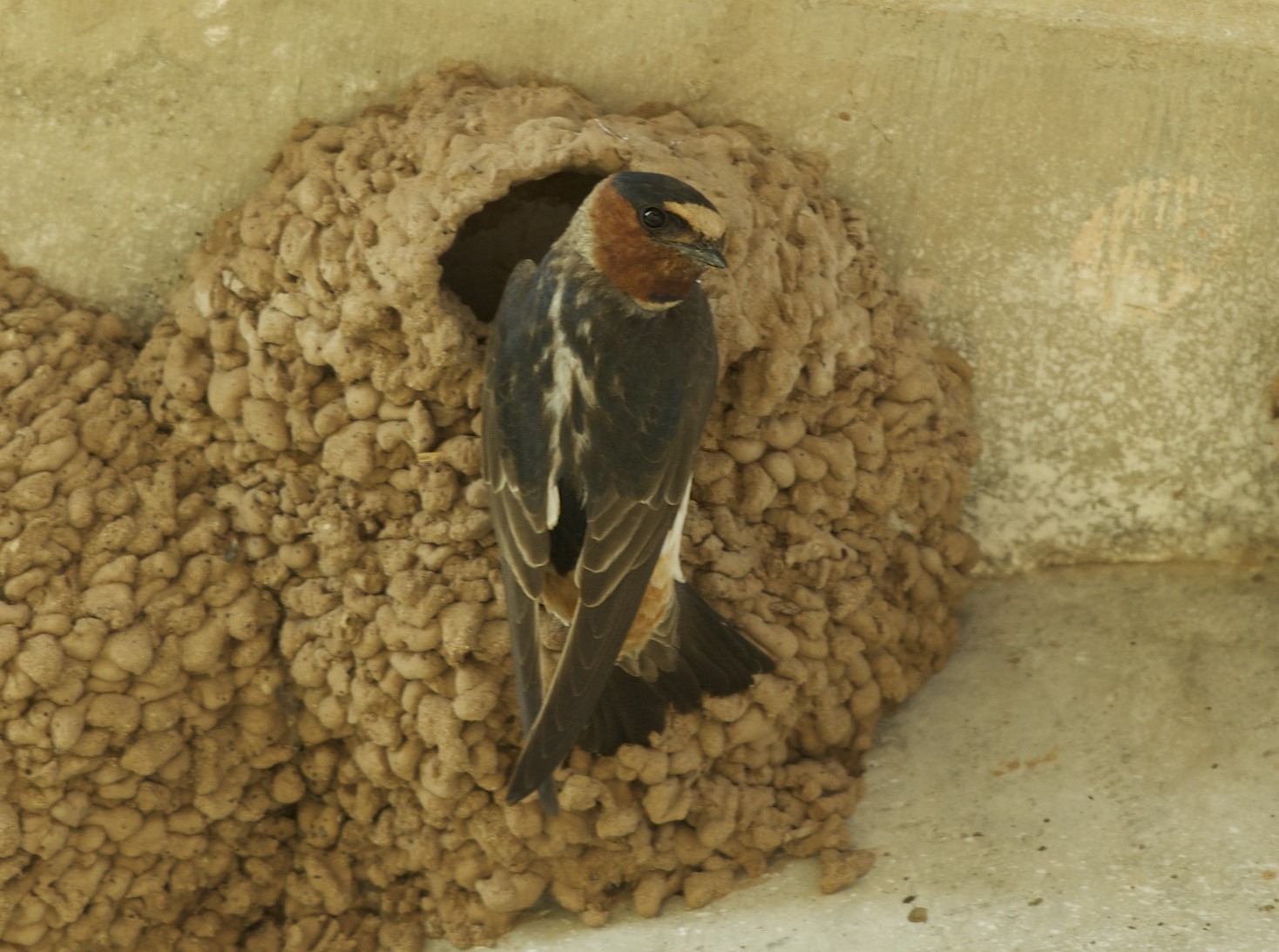
On the most recent return home from Organ Pipe, I made a quick stop at Base Meridian WMA in west Phoenix, still trying for that nifty Ridgway's Rail shot. This trip was also a bust, respective of the objective, even if there were hundreds of nesting Cliff Swallows and a weirdly active Lesser Nighthawk.


The B&M Meridian is great for Cuckoos later in the summer, as well as Least Bittern, and it also is/was one of the better areas in Phoenix to see Barn Owls. And Barn Owls are cooler than Ridgway's Rails anyway right? Well, that argument is moot if the Owl is dead, and the only bird I could find at B&M had caught such a case. This brings the tally of dead Barn Owls I have seen to 5, more than twice as many as I've seen alive.


And yet, despite these recent disappointments, I am not depressed. Despite the knowledge that bird-blog-culture-defining people are currently galavanting through the Maine forests and coastland, racking up lifers and tails most glorious, I am not disturbed with envy nor pangs of inadequacy. Why not? Because there are breeding Flame-colored Tanagers AND Tufted Flycatchers, to say little of Elegant Trogons and what not, in Ramsey Canyon right now, and I will be cutting loose to that feather-friendly Mecca on Thursday. How's that for consolation?

Thursday, May 14, 2015

Desert Birds for Dessert

The sorrow, the pain, the tragedy...this past weekend was not a birding weekend. I did spend a weeknight searching another deserty area around twilight in the hopes that I might discover Elf and Western-Screech, as well as Common Poorwill, closer to home (especially COPO, since I still need a picture), which took me to the Phoenix Mountain Preserve. But first, here's a miscellaneous Gray Vireo shot 'cause you never know WHAT is coming next on this site! Whew!


Although it had a healthy and heavily vocal Lesser Nighthawk population (and, in my opinion, the vocalizations of this bird really do not get enough recognition for how fun they are), it was once again a strike out with three nocturnal targets. It was also a little late in the season to hope for other migrant Owls. It was a very pinkish evening though, made me get in touch with my feminine side and what not.


With so much desert habitat here I know that ELOW and WESO are there, and I didn't tarry long into dark, but suffice it to say they're not as readily detectable as they are along the Salt River, which defeats the point of finding them closer to central Phoenix. What is readily detectable at the PMP is Gilded Flicker. 


Since this bird's plumage characteristics also occur in one or the other of the two widely distributed Northern Flicker populations, Gilded doesn't get a lot of special recognition by non-listers, but in many ways this saguaro-squatting fanatic is one of Arizona's most precious "specialty" (near-specialty) birds.


It doesn't have the eye-cataching appeal of a Red-faced Warbler or White-eared Hummingbird, nor the ghostly reputation of a Le Conte's Thrasher, but the GIFL, like these other birds, is also pretty hard to come by in North America outside of Arizona. They are where the saguaros are, and the saguaros aren't  everywhere. Of course, saguaros serve as multi-story tenement housing for all kinds of animals, and even multiple GIFLs, so if one finds a few big and gnarly saguaros, the GIFLs will be around.


There will also be Flycatchers, Ash-throated Flycatchers. Known in some of the more puerile birding circles as the "White-breasted Pee-pee Pants Flycatcher," this birds recognizable calls from the creosote scrub are ever-present vindication of the decision to go birding on a weekday.


Sometimes ATFLs look to their left as well, so here is a picture of that occurrence for superlatively thorough documentation of the species's behavior; making note of the head direction is something one can look for when discerning myiarchus species, though there may be better indicators as well. 

Friday, May 8, 2015

Binge Birding in the Santa Ritas

I mentioned some romping reckless birding a couple of weeks ago, where a lovely evening at a friend's house was followed by a drive down to the Santa Rita Mountains, an all-nighter sort of jaunt the likes of which would make cool cool college Butler cringe and think, "gross."
This rash decision making, and rash-making decision, was largely un-vindicated as well, since I did not get visuals on any of the nocturnal targets for which I left so early. But ya know what? I'm going to do it again anyway, and soon, because they are all still there, and probably a Buff-collared Nightjar too. 

Every dark night has its dawn, as various motivational posters around our offices remind us, and even if the dawn is still kinda gloomy and overcast, it does allow for  better overall birding. After visually-dipping on my Madera Canyon targets, I went down the block to Florida. Rufous-capped Warblers are still resident in the canyon, though seemingly higher up now than they were in previous years. I had poor looks at one individual and no photos, but the diversity at Florida Canyon was impressive. Because there's nothing more impressive than distant Canyon Towhees.


Or distant Harriers, harrying along on their way. This bird is a bit late in the season, perhaps lingering behind in search of her missing primary feathers.


In the area where I had luck with RCWAs in previous years, there was male Indigo Bunting, flagged by eBird as rare for the time and place. The bird may be a slightly wayward migrant, but rather curiously I heard the bird before seeing it, and it continued to sing throughout while I was in the area. This is uncharacteristic of migrant INBUs in my limited experience.


Lower Florida Canyon has a terrific mix of riparian vegetation and chaparral, where one can consistently see objectively good looking birds like Black-headed Grosbeak, as well as soon-to-be objectively good-looking birds, like 1st year Scott's Orioles.


Currently, the biggest buzz about Florida Canyon is not the resident tropical Warblers, but a nesting pair of Black-capped Gnatcatchers that are normally very visible near the parking area (and an on-again, off-again Rufous-backed Robin in the adjacent wash). I was not able to locate the BCGN nest (not that it would've done much good anyway), but the male and female were both actively foraging with a devil-may-care attitude, which was a cruel attitude for them to have with such poor lighting.


Inappropriate flashing is a problem with bird and nature photography as well as with city parks and gas stations late at night. But as I've been trying my hand more often at nocturnal birding, it has been something with which I've had to try and make some peace and practice, which means flashing birds in the daytime as well. The truth is, of course, that having a good flash is super useful. It gives you control over the most important and most variable element in photography--light. Too much flash just feels kinda unnatural though, especially at nicer parks or gas stations, and I also predominantly don't like the effect it has on daytime photos, but I do like the effect of getting a damn photo. Note the weak, broken eye-ring, shallow cap, and longer beak of this male BCGN as compared to BTGN. 


Now it would be foolish, committably insane even, to spend time in the Santa Ritas in late spring (or summer) and not make a concerted effort at seeing Trogons. Carrie Nation and other trails have consistent reports this year, but the Super Trail in Upper Madera Canyon has always been good to me. This time around it had to be hard-earned, and it wasn't until after a couple miles that I sighted a pair. In keeping with the damp, mellow aesthetic of the day, the birds I sighted were silent the whole time and the male pulled a quality disappearing act that belied his flamboyant coloration. Trying to track Mrs. Trogon through the dense vegetation and steep canyon walls was as exerting as it was rewarding. 


It was a little disappointing not to be treated to the enchanting, hoarse croaks of the Elegant Trogon, but  some counter-calling Greater Pewees  were compensatory. Ornithological America agrees; this bird should have been named Greatest Pewee.


Factoring in the misses and the zombified-state in which I returned to Phoenix, the trip was draining but fulfilling at the same time, gross in some ways but beautiful in others, joyful and yet somewhat dampened. But time spent in the Santa Ritas is always time well-spent; this trip was perhaps most analogous to a soggy Painted Redstart, very pretty but short of its potential.