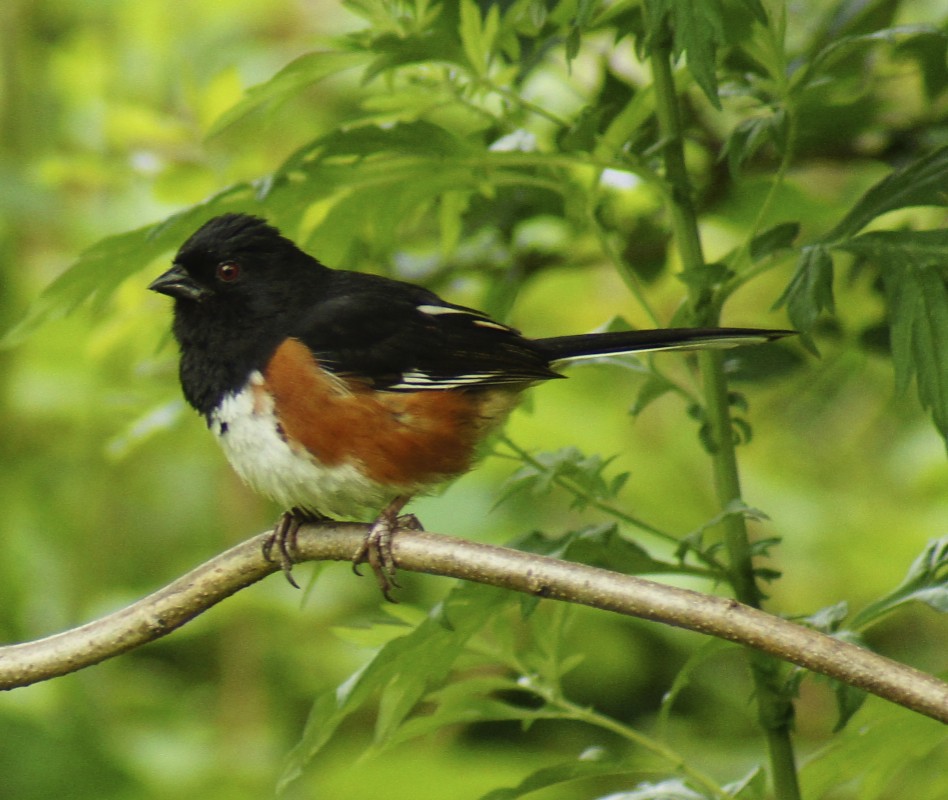
The great ire over my great Texas post being great Bloggerized (erased) has almost subsided, and I think I'll be able to get back to those tales and photos soon (and will also try to re-write the preceding post to do those sites and birds justice).
In the mean time, Butler's Birds has expanded to include North Carolina in its repetoire. While the Carolina trip is not geared towards birding necessarily--there are too many breweries and such--hanging in a place with such sumptuous bird offerings will result in some birding, even if it's a bit hung over.
Barn Swallows are the least common of the resident Swallows in central Arizona. In central/east Carolina, they are by far the most common. Never has a nest made of spit, mud, straw and poop looked so comfortable.

Of course, there are some noticeable differences birding in Carolina. There is water, a lot of water. It hangs in the air, it condenses on everything, and it seems to flow into and out of every wooded thicket between the Research Triangle and the coast. Subsequently there is dense vegetation where there are not tobacco and corn fields, and plenty of tall hardwood trees. In these woods one finds expected and unexpected things.
A Blue Jay seems very fitting, clearly in its natural habitat...

...a pay phone is not so much in its natural environment.

There are also many under-birded counties in North Carolina (and many more counties in general). In Wayne County, where Butler's Birds is based for the next little while, the highest eBird total is 56 species, of only 16 or so registered reporters.
If some of the county listing dynamics are different, some of the birds are still the same. Killdeer abound near open fields, and also still insist on nesting in the most impractical of areas.
I had one nesting in a tiny, 5 square-foot parking lot planter at work in Phoenix. This one picked a gravel driveway to lay its four eggs.

Most importantly, new regions offer delicious new birds, fantastic visual and audio beauties such as this Fish Crow, which was conspicuously cawwing in its unique nasally way.

I do not think there are any records of Fish Crow in Arizona, whereas Brown Thrashers occur in small numbers at least every other year. Nonetheless, I'll pick this as the more exciting of the two. Good looking bird!


Both of these birds are welcome sights for the out-of-state interloper, but by Carolina standards they're pretty pedestrian. To get the birders' birds of Carolina (you know what I mean), one has to get out into this stuff, the pine forest/grassland savannah.

The lower brush yields expected Wrens, Cardinals, and mournful Pewees. Young House Wrens are very crushable. Curiosity claims more House Wren lives each year than domestic cats (both meanings/interpretations intended).

Speaking of susceptible birds, Prairie Warblers are always good for a pish. They don't dwell in the low stuff quite as faithfully as the HOWRs, but they can be brought down with some enticing clicks and whistles. Unfortunately, this one was also one the other side of a stream and it was only curious so far.


Other birds that dwell in the intermediary heights, like the Prairie Warblers, include the flycatchers. Eastern Kingbirds are loud and energetic, a handsome and easy sighting on many the eastern birding trip, a bird that never bores.

Juvenile Great-crested Flycatchers are the total opposite. They just sit and space out, as if trying to blend in. This bird did not budge the entire time I observed it, and not having adult flight feathers is no excuse for being slothful and laconic. I have no feathers and still manage to shout and gesticulate wildly, especially when people are observing!


Farther away from the marshes, Eastern Bluebirds and Pine Warblers populate the pine and palm savannah (is that a habitat name?), and every once in again a Bachman's Sparrow will make an appearance. Poor Pine Warbler. They're very industrious, resilient, and adaptable birds, real go-getters, but they're just not very good-looking by Warbler standards.

As was frequently the case (and always is this time of year) the young birds of the species gave better looks than the older and wiser. Here's an immature Pine Warbler, told by its acne and petulant, rebellious attitude as well as its dumb jokes, and also everything else that's incomplete with its plumage.


All of the Warblers and Flycatchers were photographed at Croatan Natural Forest, on the Millis and Pringle Road trails. The warblers were rewarding, but the biggest draw of this massive coastal forest is its local populations of Red-cockaded Woodpecker, many of whom are sporting jewelry.


It was very cool to get prolonged looks at this American endemic. The bird itself is somewhat underwhelming, as far as woodpeckers go, but seeing a third endangered species in as many weeks brought an extra air of importance and satisfaction to the occasion. The birds, 5 or 6 in all, were very vocal and foraged actively when not busy chasing each other around their pine pedestals.

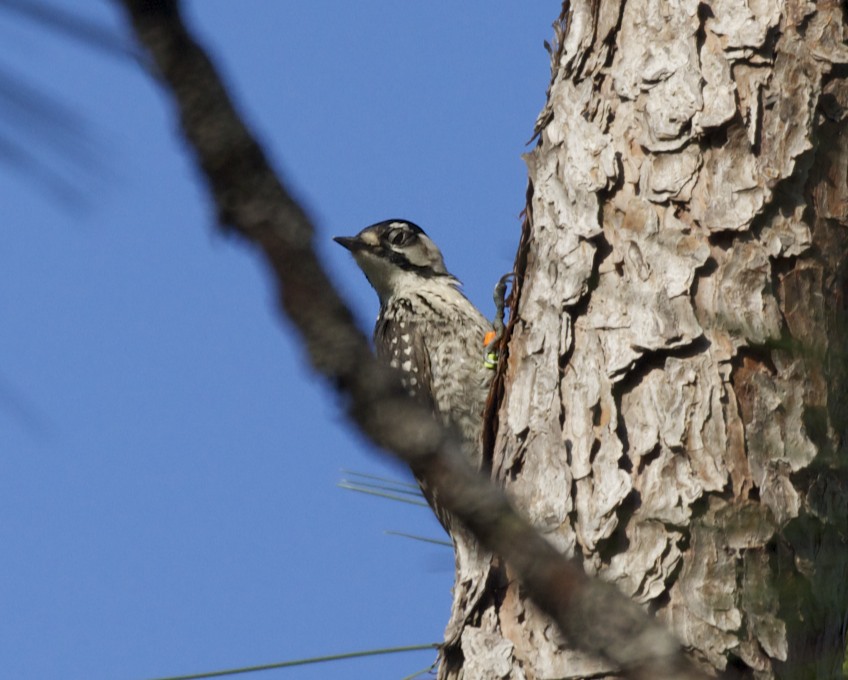
Red-cockaded is an uncommon, somewhat bland woodpecker, but a special bird nonetheless. Red-headed Woodpecker is a fairly common, somewhat breath-takingly face-meltingly gorgeous woodpecker that is also a special bird--probably the one I have enjoyed seeing most on this trip, because nice male warblers have thus far denied me many good looks.

If I were this dignified head-banger I would resent Woody Woodpecker being based on my visage. In fact, I'd become so totally vain that I'd resent probably everyone everywhere. GAZE!!! GAZE AND BURST OUT OF YOUR SKIN!!!


One final draw of North Carolina, one that has little to do with birds, is that it also hosts one of North America's best and most musical crustaceans. This fellow has been single for a long time. He ain't even ashamed.

With the right combination of brackish water, methane, and salt, these highly specialized critters can accumulate in numbers...

...very large numbers.

So hopefully some time in the mountains and local birding in Carolina will turn up some cool finds (and the very nifty possibility that I'll be a #1 county birder, with enough vanity to match a Red-headed Woodpecker and maybe contribute something useful to eBird for once). In the mean time there is much, much more to come from Texas, so it'll be alternating tropical birds with temperate, topical posts with temperamental.