Showing posts with label Black Tern. Show all posts

Sunday, July 6, 2014

Texas Birding: Average Aransas and Mustang Island, Wild and Free

The Texas Birding Adventure was a large endeavor, large enough to require reinforcements to split some motel costs, intimidate away highway brigands, and also enjoy the birds. Mike from The Iowa Voice postponed his date with the Supreme Court to join in the Texas birding experience for a few days. It is unhealthy, after all, for one to go too long without Scissor-tailed Flycatchers in one's life.


Our first stop was at the birdiest site in all of Texas, which puts it high in the running for birdiest spot in North America, with over 370 recorded species. It is also the famous wintering grounds for a majority of North America's Whooping Crane population. Pretty impressive credential yes? 
Well, truth be told, Aransas NWR in June is pretty disappointing, unless one is hoping to lose a pint of blood or two to mosquitos. We did still have some good bird sightings, and plenty of other nifty wildlife. Behold, a Six-lined Racerunner, with battle damage, and a fecund family of javelinas. 


Aransas is a massive space and within its birders one encounters a multitude of habits. We were mostly out of luck with timing. The grasslands, the exceedingly buggy forest, and even the shoreline portions were all pretty mellow. Migrants had moved on and residents, other than Turkey Vultures and Northern Cardinals, were few and far between. It was a bit of a let down, given the earlier success and momentum of the trip. 
Perhaps the best sighting of the day was this ridiculously tall trail sign. It had normal trail sign info on it, stuff about the grassland flora and what not, but it this information, apparently, is only intended as accessible for the very vertically gifted. 


In a similar vein of photographing tall and graceful things, the white morph Reddish Egret was also pretty inspiring, even from a distance. They are among the more spastic and entertaining feeders of the heron/egret group. Their 'shadow-wing' feeding technique (not pictured) was the inspiration for at least two different forms of Kung-Fu and probably a few more bad movies about said disciplines. 


The main disappointment at Aransas was that all of the birding trails within the deciduous growth were  absolutely swarming with mosquitos and relatively birdless. Passerines and Woodpeckers were almost none to be found, and even though migration had moved through, we expected more activity. The birding was probably best at turn offs from the auto-loop, where clearings allowed one to look and listen for birds like White-eyed Vireo in the liminal brush, and other critters in the grass.
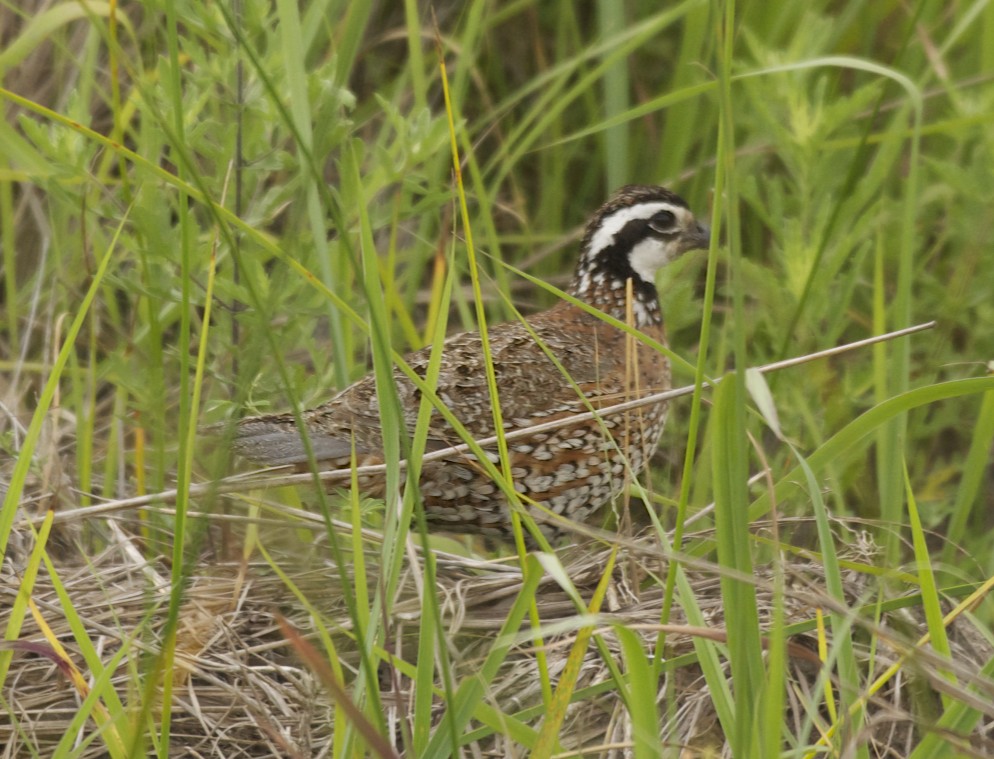
All my whining aside, picking up a lifer Northern Bobwhite compensated for the other shortcomings.  


Alas, we were not position in a nifty bird blind by a watering hole, so there will not be finely detailed images of this intricate bird to enjoy, but rather blurry, cropped photos of a fairly secretive bird going about its business.
A couple of weeks later I was able to observe these birds vocalizing from high in coastal pine woods in Carolina, which was much cooler than one might expect on paper.

In the game-birds category, we also had some of the more conventional quarry, lots more, in fact. A rafter of 19 Wild Turkeys included about a dozen chicks, a form of turkey I had not yet experienced in life. It was purdy cute.


Fueling up in the various senses around Goose Island SP provided more gulling and harbor-birding opportunities after lackluster Aransas. Groups of Laughing Gulls are always good for a pose.


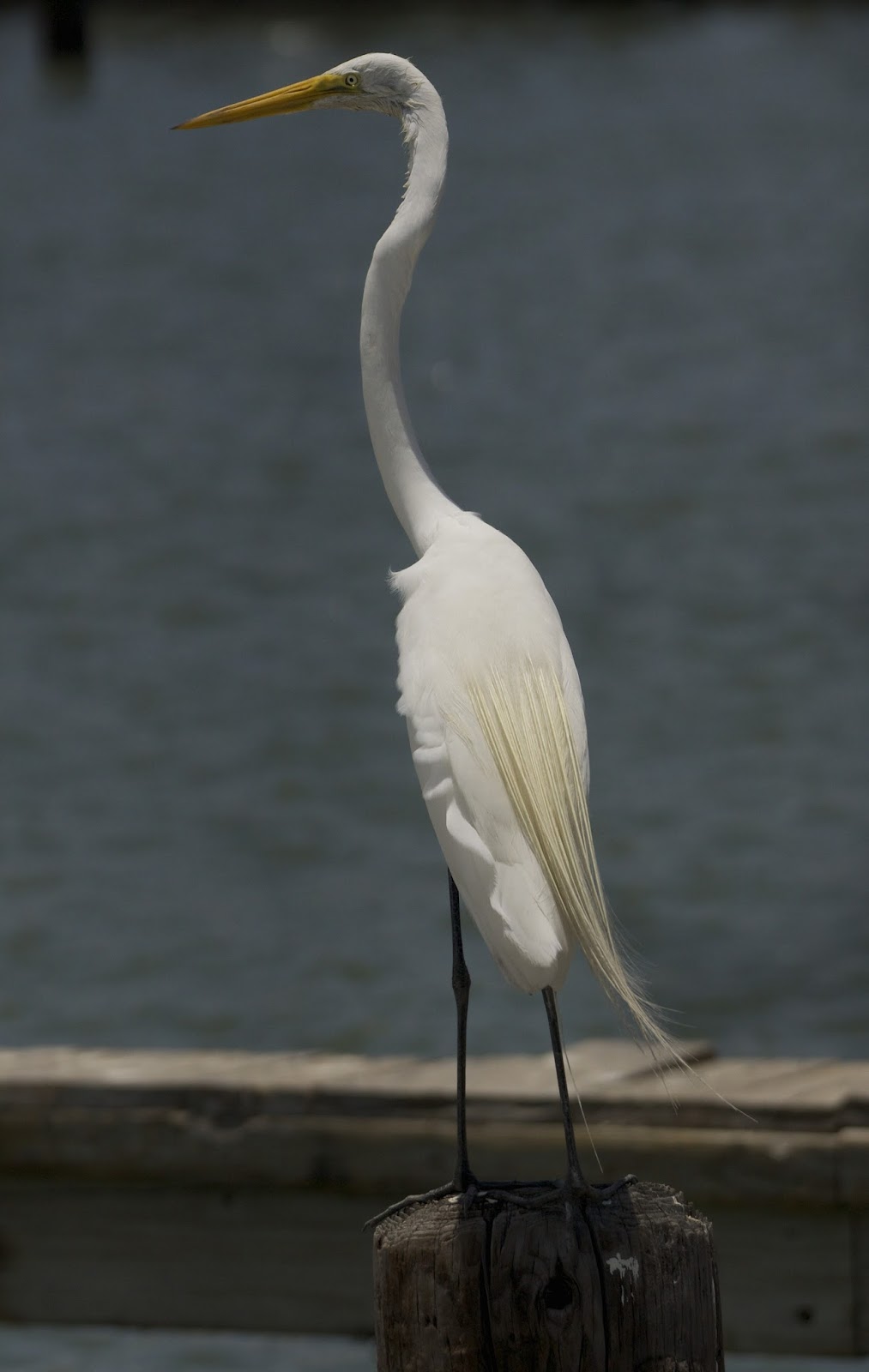
There was a fair amount of fishing boat activity around Goose Island harbor, and of course this in turn brought in all manner of birds both grungy and well-groomed. In the well-groomed department, this Great Egret, white as snow:

Less well groomed, this immature Brown Pelican, who just needed a bit more time.


The Port Aransas area also coughed up some shorebirds for the trip list, even if it didn't have quite the scenic beach landscape one might also hope to combine with maritime birding. The general abundance of scraps in that setting also brought in other carnivores and scavengers. For once I was able to check out a Caracara while not driving 80 miles and hour (or even 60mph).


We headed south in the afternoon for Harlingen, and decided to stop back in Corpus Christi, on the way down the coast, at Mustang Island SP. The beach was carpeted with soft seaweed of some kind, more of which was continually brought ashore by the heavy-laden tide. These kelpy masses were teeming with minnows and other edibles, which in turn attracted the attention of those bold enough to plunge-dive or dip precisely at water level, a la Sandwich Terns.


We were surprised to see many dozens of Black Terns in area, having thought they were mostly migratory in the area and would have moved on (maybe they move much later than I was thinking). These birds are seldom seen in breeding plumage in Arizona, and it was very pleasing to see them fulfilling their bold namesake.


Some of the mid-molt birds hung out with Sanderlings, apparently self-consciousnbess of their disappointing plumage. Royal, Elegant, Bridled...Terns are a pretty aristocratic group of birds and they seldom tolerate ugliness, but Sanderlings won't judge.


The kelp piles attracted several different species (Sandwich and Forster's below), and just above the main breakers,hundreds of Terns joined together, fighting to stay stationary above the break point, where their prey would become exposed.


Some of the more diminutive Terns, like this here Least fellow, were pretty impervious to people, while others like the occasional Gull-billed always kept a distance. 


Some Terns were way too busy being demonically possessed to have much concern one way or another. This bird later went and projectile-vomited to its young.


Sometime at the beach was perfect for clearing heads and finding footing. The next day in Harlingen saw one of the most satisfying thus far, and is coming up later this week. 

Saturday, September 21, 2013

End of Summer Recharging: Beach Boy Fantasy


August and September make for a funny, exciting time of year. Students return to school with mixed emotions from their summer, all the television networks start winding up their football programming, monsoon clouds bring their (often false) promises and, most importantly, large portions of North America experience a surge in migratory birds. When people travel, they tend to prefer visiting or at least stopping at nice pretty places throughout our trip. For Arizonans especially, that's anywhere with some water. It's the same with birds, which is why the Glendale Sewage and Recharge Ponds are the premier shore-birding habitat in Phoenix and why so many birders spend their mornings near that which they're otherwise so eager to flush away. It is a plush post-flush ocean front property, and now is the time to make one last summer beach trip! 
So take a whiff of saltwater, hold some seashells to your ears, close your eyes, and pretend you're now at the beach (don't really close your eyes; then you wouldn't be able to read the post). We're going to do some Arizona shore birding!

Here we are at the beach. The sun is beating down upon us and the warm breeze stings our toes ever so slightly as it whips along the sand. It must be low tide, for there are no waves and the water is rather shallow. Thinking little of the low water level in the ocean or the faint smell of distant sewage, we unfold our rickety beach chairs, stick an umbrella in the ground, and soak in the scenery.


Upon closer inspection, we see that the shoreline is dotted with Semi-palmated Plovers. This is an annual yet uncommon bird in Arizona, but a predictable sighting for us here on the Pacific coast, even though the sand seems to have a weird, gross green algae growing over it.


In the background, Killdeer, Yellowlegs, and Stilts are maintaining a high-pitched cacophony, but the shoreline seems pretty busy so we decide to set up the scope and do some scanning their first. Soon we pick out the tiny but plump frame of a Snowy Plover. This would be a pretty solid find in Arizona, but since we're on the Pacific Coast instead, we don't think too much of it.


Away to the east, some movement above the water catches our attention. A Black Tern is foraging over the pacified waters, looking somewhat mottled in its intermediate plumage, but still graceful nonetheless. We enjoy the sighting and the bird's antics, pondering all the while how unusual it must be to see Black Terns and tumbleweeds at the same time. We know Terns migrate great distances, and apparently tumbleweeds do too.


A flock of Black-necked Stilts fly by, hiding a few Avocets in their ranks and adding more formality to the scene with their black, white, and pink ensembles. We feel a little underdressed for the occasion, and so turn our attention elsewhere.


A single Short-billed Dowitcher, differentiated by its tiger-striped tertials, is foraging with some Western Sandpipers. Like the Snowy Plover, this would be a very solid sighting if we were inland, but here on the pristine Arizona coast we think little of it.


In fact, the multitude of Long-billed Dowitchers, much more common inland, is the far greater surprise.


To really strain our eyes, we start scrutinizing the many flocks of Western Sandpipers to turn out a Semi-palmated, looking for shorter beaks and slightly varying plumages. 


It's a painstaking task, and we can't get photos of the Semi-palmateds when they do stand out. At least the Western Sandpipers are pleasant to look at in the mean time.


Looking at tiny peeps can be an arduous thing, so we walk further down the shoreline to the salt marshes, hoping to see Pectoral Sandpipers or Saltmarsh Sparrows. Calling Soras and jittery Egrets add to the boggy atmosphere here, but the Pectorals don't come into view.


There are worse consolation prizes than a Greater Yellowlegs foraging up close. At this point, having watched so many different animals feeding, we start to feel peckish as well. It's time to head back to the beach buggy and grab the cooler, time to take a lesson from the birds knowing how to enjoy their summer beach day. 


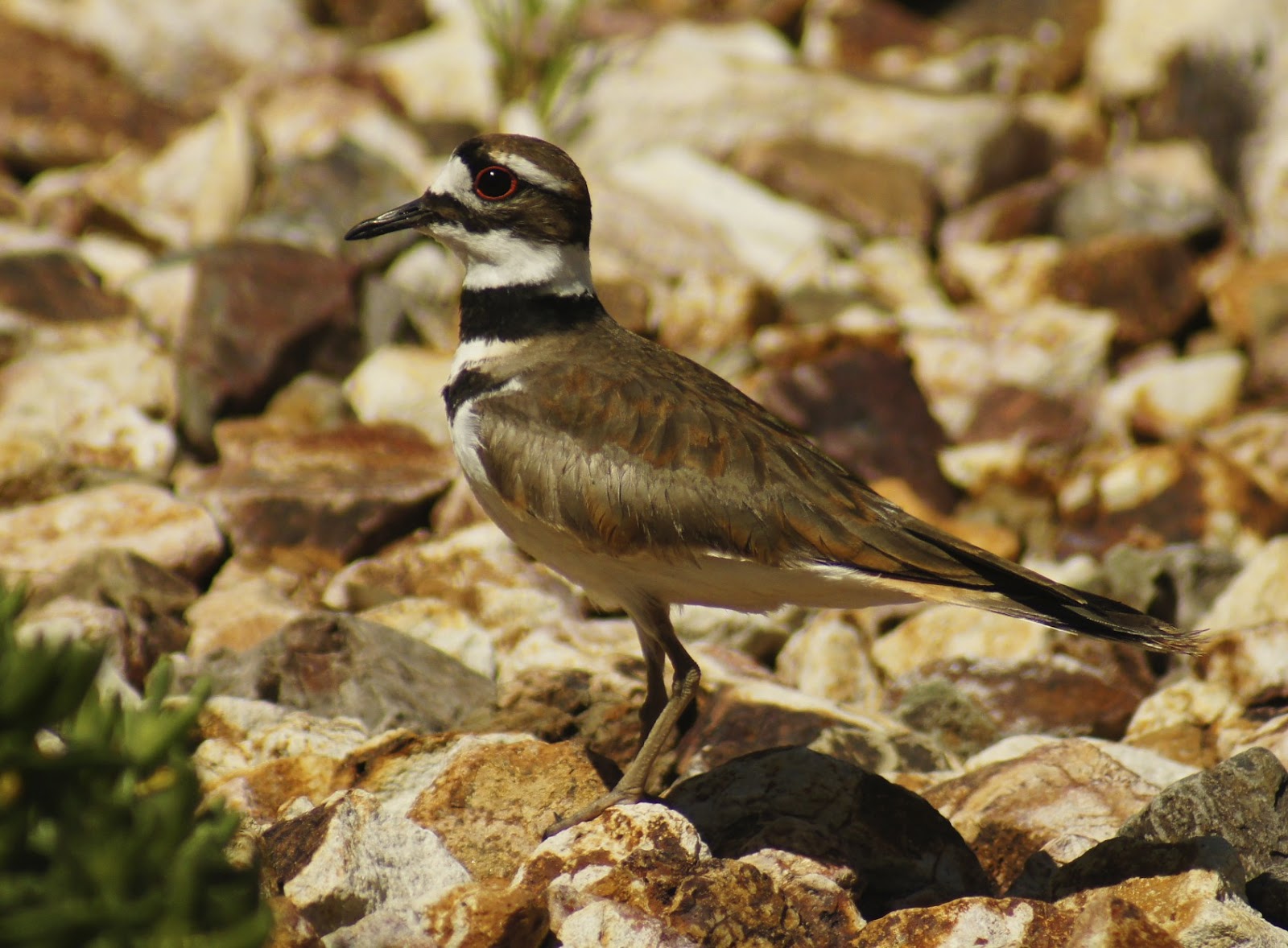
As we make the short walk down the beach, a startling cry echos from the right. Of course! It is a Killdeer, the common and noisy Plover near and dear to our hearts. He's standing along a rocky outcropping and blending in very nicely. Since this is the Pacific beach and not an Arizona sewage pond, we marvel at this unusual and refreshing sighting!


Ahh...a quick dip, some picnic lunching, some more cold beverages and it's time to pass out. What a lovely trip. If only the world, or even the universe, wouldn't mind holding still for a day or two and letting us preserve this experience. But the wind is moving, the birds are moving, and so too must we.

Saturday, September 15, 2012

Pool Skimmers

A few of weeks ago Pops and I drove out to an infamous, festering hole of satan sweat in southeastern California also know as the Salton Sea. It was a great trip jam-packed with new and interesting smells as well as sunburn and, oh yes, some fabulous birding. We saw several new species throughout the day, and among the most impressive and memorable of our sightings was a colony of Black Skimmers at the Wister Waterfowl Management Area. The Wister area was our first birding hotspot of the morning. We saw close to forty species just in that locality, and it was the Skimmers that really got things started in grand style.


As we later found out from a ranger, several hundred Black Skimmers had been using the sandbar islands as a breeding around for the last few years. In doing some research for the trip (like any good bird nerd), I had not read about this breeding colony, so it was with great surprise and enjoyment that we heard about this curious colony of coastal birds who had set up shop some two and a half hours from the Pacific shores. 


While not quite as adept in the air as Terns, Skimmers are still excellent aviators, and they were much more comfortable in the air than walking or standing on their narrow islands with those highly specialized and highly cumbersome mandibles. 


Sporting black backs and solid white bellies, these birds are some of the most formally dressed fisherman one will see around the Salton Sea. Despite their pomp and circumstance, getting close and observing these birds was not without difficulties. Pops and I arrived in the Salton Sea area on September 1st, the first day of dove hinting season. While we walked and drove around the Wister riparian area, the surrounding scrub continually echoed with errant shotgun blasts and bustled with potbellied men in camouflage constantly relocating with their camping stools. Being the only birders in the area and having a desire to get closer to our quarry, we had to keep our heads low as we drove along the Wister dikes, parallel to the Skimmer islands.


The Skimmers were not bothered by the proximal hunters, and the hunters for their part did stay in the shrub and away from the waterfowl. Pops and I sat in the car along the Wister dikes while the curious Skimmers flew around us, squawking to each other and trying to decide when it'd be best to fly down south like their recently departed neighbors, the Gull-billed Terns.


Pops and I had eaten our pre-birding sandwiches on the way over, but some of the Skimmers still had to catch their Saturday brunch. This was awesome. They skimmed the pools with such casualness and comfort. Seldom in the animal kingdom does such a dexterous form of feeding look like such a leisurely enterprise. The Skimmers turned fishing into an art. With hundreds of these birds swooping and skimming around us, it was truly a sight to behold. 

Although they were by far the most common, the Skimmers were not the only birds in the sky above the Wister area, and for that matter they were not the most boisterous either. Caspian Terns maintained a constant ruckus as they flew in between the Wister ponds and the Salton seashore to the southeast.


The Caspian Terns were joined by Ring-billed Gulls and a few other miscellaneous Terns. While on the look-out for any late Gull-billed, we also saw Forster's and a couple Black Terns (I believe that's what's pictured below). We hadn't even arrived at the Salton Sea proper yet, but already it was turning into a great day at the beach.