On a birding trek awhile back I witnessed a most curious thing, a thing that had nothing to do with birds, at least not directly. A fifty-something fellow in sweatpants and a teal windbreaker exited his compact SUV, joined by his female companion who was similarly robed. After pausing to retrieve tilley hats from their back seat and strap on their 'nocs, they applied sunscreen to their respective noses and dutifully trudged out into the scrub. We were all three in this patch of desert looking for Thrashers. They were pretty new to birding, they explained to me without invitation, and had read somewhere that this spot outside of Phoenix was great for Thrashers. They listed off some names of bone fide AZ birders who had recommended the spot and that it was also an established spot for their Audubon group. After a few minutes of pleasantries a Bendire's tune started wafting through the cool desert air. With large eyes and an anguished expression shocking away the calmness of our earlier talk the fellow said, "Shoot! I forgot the Petersen's in the car! Try to remember the pneumonics of this song!" And he dashed back to the vehicle with a fleetness of foot not often achieved in Teva sandals.


Teva or Chacos, which do you choose?
Birders are an odd bunch but we're an odd bunch with many odd oddities in common. The strangest thing about that somewhat normal birder to birder interaction recounted above was that no single aspect of it was in any way unexpected or surprising, nor even strange to me. This anecdote was merely a microcosm, too, of how avian eccentrics interact North America over while suffering and celebrating in pursuit of the same rewards. I've spent some time since contemplating the interesting organic social constructs that are bird-watching societies. By this I don't mean Audubon Societies--those will be mentioned again later--but the way in which birders, on a state by state level, organize themselves, defer to each other, respond to authority and reputation, stake out territory, and all of that. While enjoying a smoke and a brew the other afternoon I had a small, somewhat thin, probably unsustainable, but nonetheless repeatable epiphany. State birdwatching social structures are very Feudal in their nature.
The more I investigated this comparison, the more interesting and viable it seemed to be. To elaborate on this point, let me first give a facile overview of the classic Medieval Feudal set up, and from there we can see how our modern birding states compare.

"...and here the twain shall meet."
Feudal systems have existed in different forms for many hundreds, even thousands of years if we throw China and India into the mix. The most familiar ones to many of us are those of the Medieval castles and kings, knaves and knights and epic fights. These societies formed largely out of the need to consolidate and centralize political and military power towards an effective local security after the fall of Rome and the subsequent invasions/migrations of different tribes in Europe.
The general way of it was this: powerful persons with land claims and/or capital would parse out their land to vassals. These powerful persons usually had old-family connections, reputations, and recognition across the area that solidified their dominance, and the greater organization and capital they could provide attracted vassals. These vassals would provide their lord with dues in the form of military service (we're talking knights and men-at-arms now) and percentages of their crop. Lords were on the top of a feudal hierarchy, even if they all made obeisance to a single higher king, the lord of lords. The vassals--knights, and dukes and counts and so forth, to stick some titles on--occupied the important middle wrung of the social ladder. At the bottom were the numerous, important, and also under-appreciated peasants. They made pledges of loyalty to vassals in exchange for the vassal's land (which was bequeathed from a lord). The peasants would stay on and work the land, paying percentages of their crop to the vassal.

Peasants and birds live happily side by side. Both have to spend lots of time in the outdoors, after all, whether they like it or not.
All of these groups were constantly trying to increase their own power. Lords tried to accumulate more land to draw more vassals. Vassals tried to accumulate more power and wealth so they would be less reliant on lords. Peasants had a hard time of it, paying all their dues and dealing with subjugation while still growing their own small capital and gradually improving their lots.
Many peasants left their farms, or at least didn't stay there exclusively, and started plying their trade in towns as well. These urban centers provided a different sort of strength, one of united commoners who were not dependent on capricious lords and knights for their protection. Their growing popularity forced an eventual, relative parity of social power between the aristocracy and the peasants. In the mean time, acquiring enough capital or fame could push one up a level on the social hierarchy, just as a tarnished reputation--the only thing immortal about a knight or nobleman--could doom someone. Intertwined in the Medieval social fabric was the Catholic Church, marred often enough by its own temporal personnel problems but also struggling hard to provide an ethical regimen and optimistic living for its people.
"Ok Butler, thanks for the dry history lesson. Where does the birding come in? If there's one thing I hate more than a bird blog post with no bird photos, it's such a post that doesn't even talk birds!"
Geez. Calm down; there's no need to get all Screech Owl. Let's start with the birding political landscape and then move into the aristocracy.

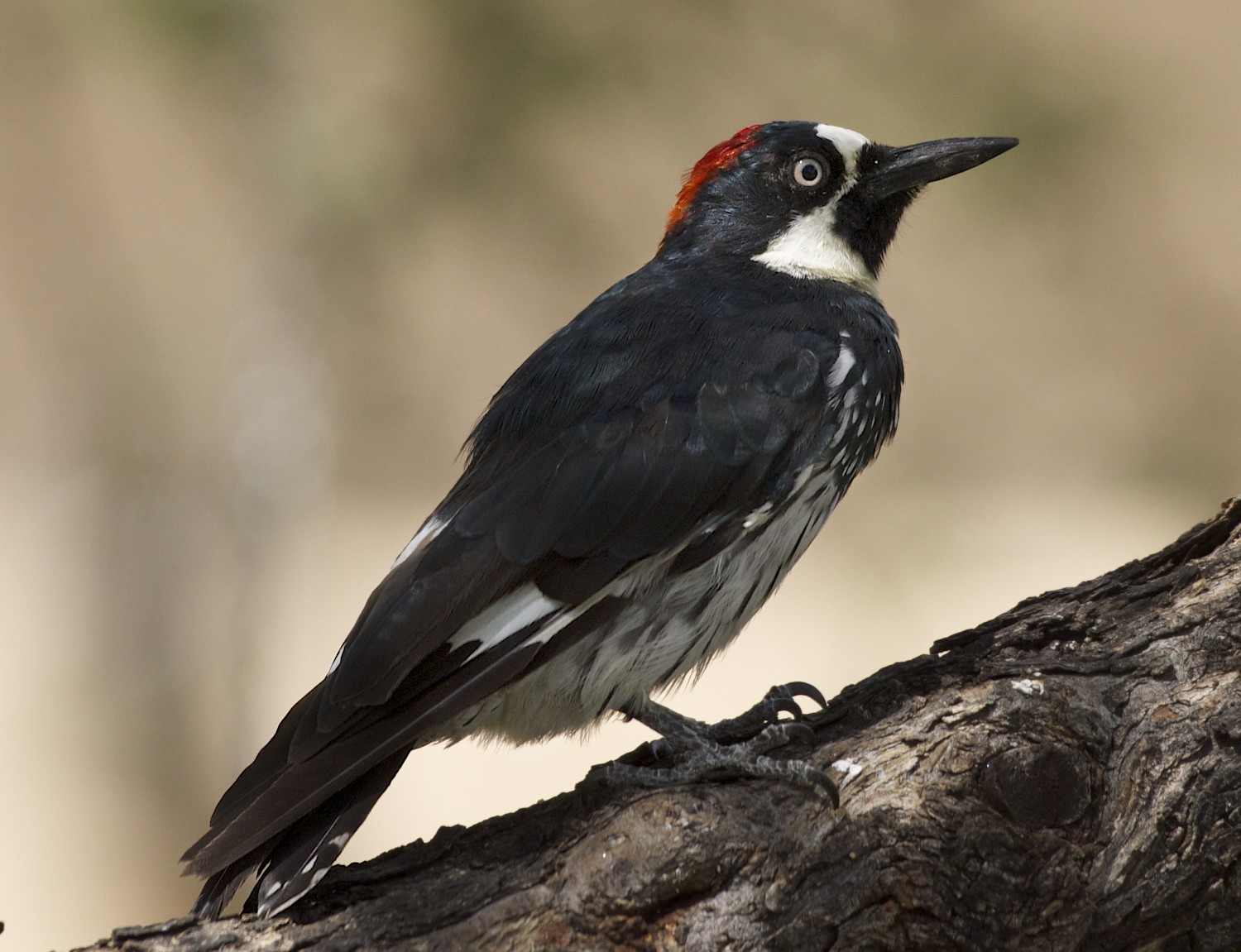
Also here's a bird, a really good-looking one.
Medieval Europe was firstly divided into fiefs, or feudal Kingdoms, more local and focussed than national governments. The larger, more established fiefs, say in France and Germany, where the aristocracy was older and the peasants also more numerous, were as intricate as they were expansive.
The ABA area, like Medieval Europe, has it several kings. They were among the first to lay claim to its rich ornithological heritage, following in the footsteps of the great British ornithologists of the 1800s, much like the first Germanic kings sought to emulate their Roman predecessors in more modern times. Although some of these kings, like R.T. Petersen, have passed on, and others like Ted Parker III were taken before their time, others still hold sway over the entire conglomerate of fiefs, many of whom started their craft in the 1960s and 1970s. Kenn Kaufman, David Sibley, Paul Lehmann, and Richard Crossley still roam North America with regal acclaim, and there are more with equal powers who don't have their names attached to field guides. They have, in turn, worked with many other highly skilled and increasingly well-known birders, passing on a legacy and dynasty as the supreme names and royalty in the ABA birding world. Having seen much of what North America has to offer, their noblesse oblige is now often the primary use of their time.

The Kingbird is Kenn Kaufmann's calling card, but there are others who also wear such a helm.
But most of a given feudal system operates on a more local level. Feudal Kings owned land where they never stepped foot, and in a similar way birders around Davenport, Iowa, have likely never hosted a visit from these magnates, though Kenn Kaufman probably knows all about the birds in that part of the state. Those regional birders still know whose face is on the birding currency, know the biggest wigs, the bird kings, while also responding more immediately to their local fiefdom and its players.
The ABA birding area is comprised of more than 60 fiefdoms (United States, Canadian principalities, etc.), and true to form these fiefdoms are divided among powerful nobleman, who in turn have many powerful, but less well-known nobles operating on their territory. The larger fiefs, say California or Texas, have many more noblemen and peasants. The nobles have likely been birding in that state for a long time or with state-wide recognized mastery. They know the territory inside and out, know its birds and know their timing. They begin many a stake-out birding tale with, "Back in the 1970s, when we were logging the first records of these and still didn't know where they nested..."
They post often and thoroughly to the listserv and they police it with equal vehemence--fulfilling the lords' obligation of administering justice among his subjects, no doubt. They also are often eBird moderators, especially in Arizona, for their individual fiefs, controlling what and how the knights and peasants get to bird in their domain, what is accepted, and what is a "high count for this date and location."

Perhaps you too have received notification and rebuke from these guys
I know who the Feudal lords of Maricopa County are; it's a clear, uncontested circle of thrones and they are a pretty amicable bunch (Bob and Janet Witzeman, to name a couple). The southeastern territories of Arizona are more hotly contested, like the Alsace and Lorraine territories between France and Germany, because of their strategic birding value.
As it was in days of old, the surest way for one to rise and fall in the birding world is based on reputation. Reputation is immortal. It takes a long time to build and can quickly be lost. It affects every bird-related part of the birder's life, the birder's family, the birder's capital, the birder's place in heaven. It is largely based on skill and accomplishment today as a birder just as it was 1000 years ago, but also depends, to a lesser extent, on one's personality, sense of ethics, justice, and also photo-documentation.
Beneath the lords, with strong, growing reputations and a few conquests to their name, are the knights. These are birders of some accomplishment and battle scars. They have had some solid Big Days, found plenty of vagrants, know their migrant schedules backwards and forwards, and have turned up a few county or even state records. They do not need the Field Guides and will not hesitate to charge headlong into an ID battle, though they still defer to their Feudal Lords most of the time. They help the peasants too, protect them, share their power (knowledge of birds and birding sites) to make them stronger. You see knights chasing after and turning up more rarities, posting to the listserv, maintaining their bird blogs and hosting Saturday morning bird-walks. They know the best sites for adventuring in their county, and probably the neighboring counties very well. They also dream of crusading after one Grail Bird or another in distant, misty lands. Of course, there are knights for hire too, mercenary birding warriors who will take out those lucky merchants and more affluent commoners and provide guidance to their avian humors.
In many cases there can be precocious knights whose accomplishments and abilities suggest they should be much more, that they should wield the same power and recognition as Feudal Lords. As in any era, these sorts of precocious promotions can be obfuscated by politics or deference to predecessors. Often times this brand of knight also gained his or her reputation by birding in many different areas with great success. Just as Galahad and Lancelot were great adventurers and likely better warriors than King Arthur, the transient nature of their questing also did not allow for them to be land-holding birding aristocracy, though their recognition was otherwise the same. Many the wildlife biologist finds him or herself in this conundrum. Their absolute love of battle...err love of birding, compels constant movement, and as such they cannot always devote enough time to their local kingdom as to their greater quest.

Many knights take up this shield. Many are destroyed by it. Can any ever really put it down?
And then there are the rest and the most of us, the birder peasants. Still learning our bird calls and alternate plumages, our migration schedules and vagrant frequencies, we are the most numerous and the least skilled of the birding hierarchy. We work the land foremost claimed by the birding nobility, filling their eBird coffers with our reports and chasing down those treasures, those rare sightings, often reported by the knights. We're a humble bunch, given our station and reputation, but also determined and fairly content. With enough feats of our own, we can break into the rank of knights, just as a tenacious Medieval commoner could distinguish himself in battle--perhaps by differentiating a state first Tennessee Warbler from Warbling Vireo--and earn the knighthood. We defer, by and large, to the rules and expectations of our local birding nobility.
But there is also a higher power, one to which even the mighty nobles, like the peasants, must bow. Only a few mighty or crazy birders dare to resist its mandates. If this were Medieval Europe, I would of course be referring to the institutional moral backbone of society, the Church, and not just because it has Cardinals or Prothonotaries.

For the birding society, who is the moral backbone, with its published code of ethics? Who sets the birding standards for noblemen and peasants alike, who looks at lists totals and foresees who shall be saved? Who provides common pursuits, common cause, and common culture among all the different, petty, and often bickering fiefs?
Of course, the birder's church is principally the ABA and the AOU. The ABA lists bring rule and order, as well as morals, into the birder's daily enterprises. It organizes pilgrimages to the great Holy Lands of the North American birding domain. It brings its own commandments, its own tenets and lists that must be completed for ultimate fulfillment, for happiness. Birding records committees operating in each state, like birding parishes, disseminate AOU rulings and structures. The clever birder aristocrats get some of their people onto these committees or occupy a chair themselves. Because they need it the most, peasants place the greatest faith and importance in the ABA and AOU. The knights and noblemen have varying adherence. Many attempt to forge powerful alliances or working relationships, while others stay more wary--perhaps fueled by their own doctrinal disagreements on species splits or lumps--and see these organizations as threats to their sovereignty. Many birders have their complaints with these birder churches, but almost everyone recognizes their importance and power, while many newer birders, having less faith in their own abilities, defer to these organizations with great faith. Of course, there are also some heretics who claim to see Goshawks in every urban area that has columbids.
.jpg)
Here is Caravaggio's rendition of an AOU list reviewer, painted during The Great Massacre of 1973
The Church and the nobility were not the only governors or social forces in Medieval Times, and likewise the peasants, the common birders, have another outlet. As the level of skill and a small surplus of goods and information developed in Medieval Europe, tradesmen started forming protective guilds in more urbanized areas. These guilds grew in strength, drawing in dues-paying members and offering special training, protected development, and some shielding from the whims of the capricious birding nobility, who can be withholding of information, owl roosts, and support, at times.
The Bird Watcher's Guild, also known as the Audubon Society, has many chapters and many similar iterations. While a given birder in this guild may encounter frustration with its slow pace, the bird walks and talks it sponsors increase the overall lowest denominator birding skill and experience of its members. While many members of these larger groups may not have the noble reputation of the birding aristocracy, the Guild itself has quite an established reputation, and also established capital. To have some otherwise rare say and influence on the North American birding landscape, many birders turn to such guilds for protection and representation. The guilds take all comers and abides by ABA rulings, but also will blacklist those who contravene guild policy.

Cross the guilds...and these guys come for you and your family in the night.
Photo courtesy of Paul Riss/Punk Rock Big Year
The dead horses have all been beaten to a pulp now; the point needn't be belabored any more. But a questions remains: what is to become Feudal Birding in the future?
Medieval Feudalism died out from a combination of things. Ever-increasing food production led to surpluses and increasing capital with the lower classes. Farmers' markets grew into trade fairs, which in turn attracted more investors and built up urban centers. As towns and freeman farmers became better able to pay their taxes directly to the king and also provide for their own defense, the need for middlemen as providers--the knights and vassals--diminished. Technological innovations also relegated most of the heavily armored knights, who took many years to produce on the battlefield, as longbow and crossbow wielding peasants could hold their own. Also a good bout of Bubonic Plague hurt Europe's population nicely and made the once over-saturated peasant labor-force much more of a commodity that could demand better working situations.

Onward and upward Peasant, and don't forget your cod-piece! **Note the other peasant up in the tree stealing a bird's nest.
The Avian Flu notwithstanding, there haven't yet been any birder-targetting plagues to shake up the game. But technology has already done so much to alter the face of birding and the nobility is still here and still strong. Cheap and powerful DSLR cameras, birding apps on smart phones, and massive internet communication has already enriched the lives of birding peasants. Birding is less and less of an exclusive pursuit, and for better or worse less and less expertise is required for it to be done successfully (successful birding meaning finding lots of birds). We still have our kings and queens, our highest nobility, but the opportunity for individuals to differentiate their greatness on preeminent pedestals is decreasing. So many people are turning up State records and Code 3, 4, or Code 5 birds now. States and counties are less and less prone to being dominated by a few powerful birders. In another 40 years who knows what the birding landscape will be: less legend and less mystery, but more species? Will it be better? Will it be worse?
The Feudal System was a largely organic development, a crude structuring born in part out of necessity and in part out of the natural pecking order, so to speak, that forms in communities and associations of any kind. It was modified and replaced by more complicated systems in an increasingly complicated and competitive world (though I'd also argue that it's not so far gone as we Americans would like to think). So long as birders insist on keeping their different lists for counties and states, for Big Days and Big Years, specific birding territory will not disappear. But as more rarities become less rare, some aspects of birding may become more pedantic relative to their older forms. If and when this Feudal structuring fades away--and whether or not it should--cannot really be foretold. In Europe anyway the post-Feudal nation states started imperialistic expansion into other continents. So whatever else happens, you better look out, Costa Rica.

Photo courtesy of the Daily Mail