Showing posts with label Lucifer Hummingbird. Show all posts

Sunday, August 30, 2015

Failed Chases and Fine Consolations

Slate-throated Redstart seems to be annual in Arizona now, at least there have been 1 or more reports in AZ for the last few years, typically with one from the Chiris and one from the Huachucas, Santa Ritas, or even Catalina mountains. At the rate they're turning up, I wouldn't be surprised if STRE is the next tropical warbler to establish small breeding populations like the Rufous-caps. But I am getting ahead of myself. STRE is still strictly a vagrant in the state, and one I have now unsuccessfully chased two times (if you don't have a lot of luck or skill, you gotta earn it with raw determination--be the Rudy of birding). The foothills of the Huachuca mountains, as well as the Sierra Vista valley, are pleasant enough but their relatively bland facade belays the richness of birding that is found within their drainages. It's all about the location.


The most recent (and documented) STRE reports have been coming out of Hunter Canyon, one of the shorter and more overgrown canyons in the Huachucas that actually links up with the more famous Miller Canyon next door. Whenever one has the time and stamina to make a chase to the Huachucas it is certainly worth doing. My rarity-chasing success record in these mountains isn't actually very good, but they're probably the best birding destination in the state. It's like going to a bourbon bar that happens to be out of whatever brown liquor you were after that day. You're still there anyway, and there are still 1000 other really good bourbons...so you might as well.


Dipping on the Slate-throat was a bit painful, I should add, because apparently I only missed the bird by about 30 minutes. Over the last few days it seems to have a habit of making two morning appearances any time between 7 and 10am and then disappearing. I missed its morning show, and was not treated to an encore in the time I waited. The main frustration came in knowing the bird was likely still around, but further up canyon/wash or down, in an inaccessible area. Sure enough, it was re-sighted this morning as I sat back in Phoenix (with lots of bourbon). But what else was hanging out in Hunter Canyon? Good friggin' stuff. 

On most days and in most places, Elegant Trogon would be the highlight of any hike, one that often must be earned with blood and tithing. This one almost pooped on me and you can still see the cloacal opening in the feathers--that's the kind of raw footage one gets at Butler's Birds.


Lurking (rather uncharacteristically) like 30 feet away from the Trogon was this peeking Rufous-capped Warbler, now an integrated resident in at least three different Arizona Canyons. The looks and photos did not do this bird justice this time around, but, again, normally the highlight of a any trip.


Hunter Canyon's wash was pretty dry despite recent monsoons in the area, but the surrounding vegetation was very lush and it housed an amazing number of migrant warblers, like some veritable avian hostel in south Germany. Almost all of the migrants were small, skulky, and yellow. I saw more Nashville and Wilson's Warblers in that one area than ever before, and there were Virginia's, Orange-crowned, Black-throated Gray, Yellow, and MacGillivray's as well.
Most of the birds, like the 1st year/1st winter MAWA below, were not dressed to impress, but how many of us really go the full nines when traveling?


Painted Redstarts, on the other hand, are very consistent in their plumage. The fact that every single one of these birds was a painful reminder of the Slate-throated I was not seeing did not deter much from the positives. PAREs are not only colorful. They will glean off of ponderosas like Nuthatches and rifle through leaf littler like Wrens. They do not much worry about people and they are a cornerstone of any alcohol-fueled argument that the western United States also has good Warblers. 


If this bird had a longer tail I could call it a Wrentit and save myself a southern CA trip in the future (not that such a trip should ever be avoided). Alas, it is only a Tit-o-the-Bush. Bushtit comes off as a very positive and single-minded bird in my experiences. In Hunter Canyon, as in many canyons with mid-elevation oak scrub, they were legion.


What is there to say about Arizona Woodpecker? It probably should be our state bird. It is brown-backed. They strip trees--especially burned trees--of their bark. They almost stripped me of my clothes, but that is another story.


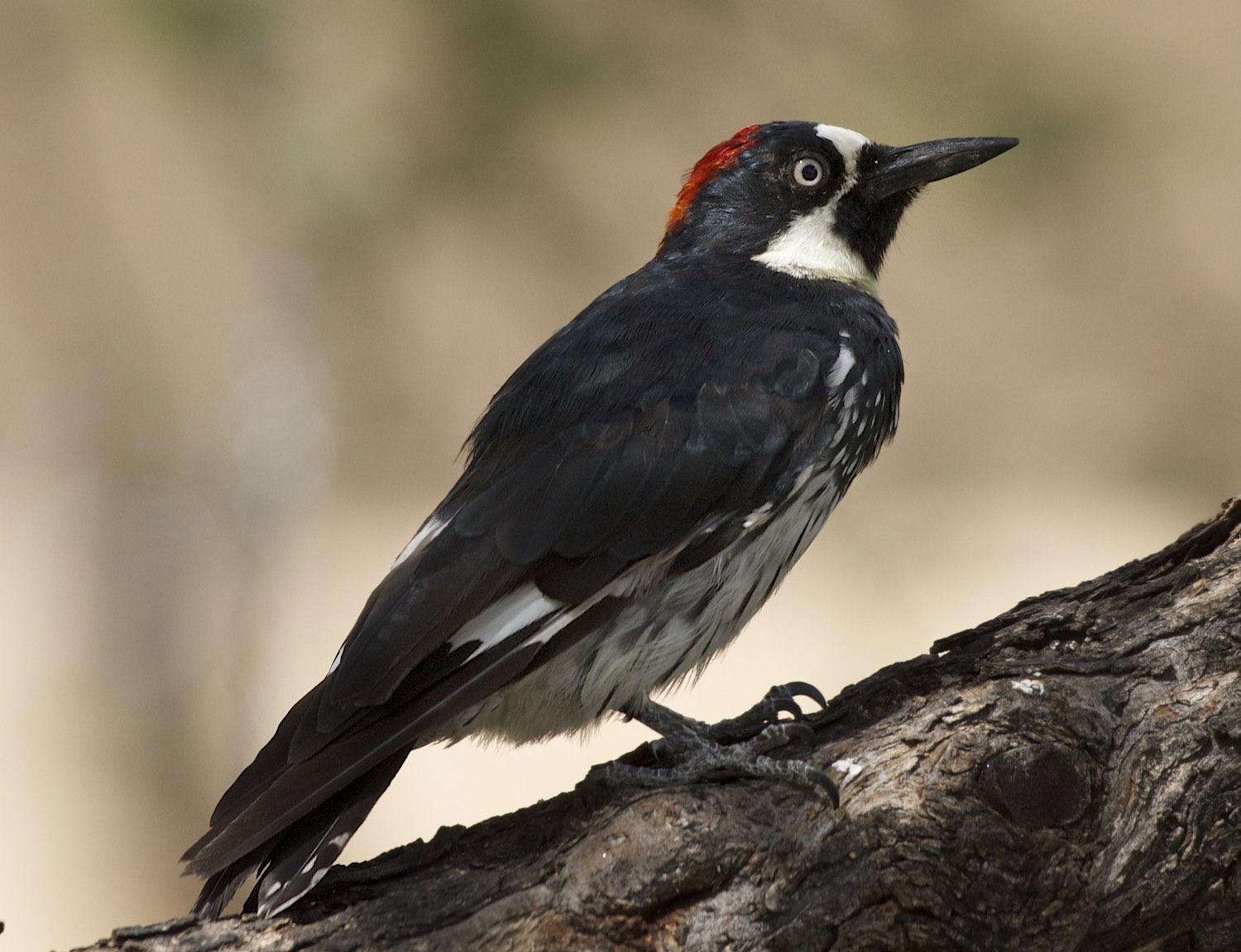
Hunter Canyon was pretty dead by later afternoon, and there were also some mean cumulonimbus rolling over the mountains. As such, I cut my losses with the STRE and decide to fortify for the drive back to Phoenix at the Ash Canyon B&B. If one needs to sit and eat warm sandwiches prior to braving the I-10, one should do it at a feeder station. Geri-birding has it advantages, chief among them being easy photo-shoots. I have been in a bit of a slump lately with bird photography so I figured I'd benefit from the handicap-assist. Acorn Woodpecker--the Goth-loving Clown Woodpecker--agrees. 


There was also a male Lucifer Hummingbird at the B&B, outstanding consolation number 3 of the day. The B&B feeders were pretty hotly contested by Anna's, Broad-bills, and Mags, but I happened to spy the LUHU hanging out mercifully away from the red plastic perches. I also turned two German birders onto it and I'm pretty sure one of them farted from excitement, which is appropriate.


I had been planning the Huachuca run for a few days prior, and in the mean time a 4th cycle Sabine's Gull had shown up at the Glendale Recharge Ponds. The handsome bird persisted for a couple of days and was a very nice bird for Maricopa County, especially in such swanky plumage. It wasn't enticing enough to override a trip to down south, but upon arriving back in Phoenix I made the local chase. Apparently the bird had departed Saturday morning and was not seen since (including through Sunday), so once again the birding day ended with a dip. Once again, there was also some consolation in the form of these blurry peeps. 


The bigger, whiter bird is a Sanderling--nothing to sneeze at in Maricopa--flanked by two Baird's Sandpiper bodyguards. Seeing a solitary Sanderling was odd. Sanderlings always come in packs or gangs. What this bird did back on the west coast, whatever caused him to become a Pariah must have been truly heinous. Even the Baird's Sandpipers split off from him pretty soon, and everyone agrees Baird's is a tolerant peep. 

  
Embarrassing fact: this post is the first time that Baird's Sandpiper and MacGillivray's Warbler have been photo-featured at all (to say nothing of 'well'). I need to get out more. 

Sunday, September 8, 2013

Hold the Door! A Late Summer Rarity Chase in Patagonia and the Santa Ritas

These last few weeks have brought some crazy birding in Arizona. The end of August saw a dead Hawaiian Petrel in Yuma--only the third record for the lower forty-eight states--a Brown Booby in Havasu, a Blue-footed Booby in Patagonia, Berylline, White-eared, Plain-capped Starthroat, and Lucifer Hummingbirds, Buff-collared Nightjars, Black-capped Gnatcatchers, Painted Buntings, and now, most recently, a Sinaloa Wren in the Huachucas. There are so many hotspots in Arizona already, and the end of August is prime time for migrants and vagrants. I was having a nice enough time shore birding in Phoenix (yes, it is possible!), but the allure of some of these rarities was too much. 

Several of my birding acquaintances were able to get down to Patagonia for the Booby, and they also picked up some great Hummingbirds, along with the August seasonal sparrows, Buntings, and so much other good stuff. Check out their tales and photos here and here.
I missed the first trip but was aching to get down there for the seasonal birds and any lingering vagrants. I was fortunate to get the time then last weekend and also fortunate to have some company from a co-worker who wanted to explore the beautiful terrain of southeast AZ. I knew I wouldn't get anywhere near the fabulous haul of birds and photos that my predecessors had, but it could be another ten years before a Blue-footed Booby shows up in Arizona!

The plan was to hit Patagonia Lake early--which meant leaving really early--and then the surrounding countryside, including the San Rafael Grasslands, before stopping by Madera Canyon and doing some feeder-watching before heading north back towards Phoenix.


Upon arriving at Patagonia Lake around 6am, we had singing Cassin's and Botteri's Sparrows in the grasslands, but the first birds we really saw were Vultures, prodigious amounts of Vultures. Perhaps because of their disgusting behaviors, repugnant appearance, and unscrupulous feeding habits Vultures are regarded as ill omens in many cultures and literature. Was our trip doomed from the beginning? Would this effort be the death of us?
Eh, probably not, and admiring the Vultures from a distance wasn't too bad either.

We walked around the Patagonia Lake visitor center, listening to Ash-throated Flycatchers and Sparrows going about their morning business. Some fly-by Cormorants gave us palpitations as we staked out the Patagonia shore, before we finally saw a large, brown and white bird over the tree line.


Yes!!! ABA Code 4 Blue-footed Booby.
It's a juvenile; its feet aren't even that blue, and it's tail primaries look like they're in terrible shape, but none of that diminished the sighting. We watched the young and hopelessly lost Booby plunge-dive several times, while I tried to snap photos as it made determined passes along the lake.
We arrived none too soon either, as it seems the Booby reports have dried up since last Sunday. The jokes to be made with this bird's name are legion, so I won't indulge, but suffice it to say this was one of the breast sightings I've had in Arizona this year.


After ogling the Booby, we spent some time exploring the mesquite bosque around Patagonia Lake. We had several calling Northern Beardless Tyrannulets in the mesquite, North America's smallest Flycatcher and one of the longest-named. They weren't exactly cooperative, but any Flycatcher will hold my attention and fascination as long as it's in view.


With all the recent, above average rainfall, much of the Patagonia lowlands and riparian area was flooded and inaccessible to tennis shoe-wearing dorks such as myself. We walked the ever-lovely Sycamore Creek trail a little ways, enjoying Vermillion Flycatcher and Bridled Titmice, along with a couple of Sora and Wilson's Warblers, but soon we ran out of dry ground.


As the sun climbed higher in the sky, we next headed to Harshaw Canyon and the San Rafael Grasslands, stopping at the famous Patagonia rest stop along the way for Thick-billed Kingbirds, and collecting Cassin's, Western, and Tropical on telephone wires in between. A female Painted Bunting in the creek behind the Paton House was also a treat. Unfortunately, I was having some camera issues and couldn't get my focus operating for the Kingbirds, but knowing they'd be around next year, I checked my list and headed on to the next larger target for the day.

Although the drive through Harshaw Canyon can be pretty treacherous after inclement weather, our trek to the San Rafael Grasslands was very pleasant, as were the handful of Eastern Bluebirds--another state bird, like the Painted Bunting--that we spied along the way.
Google Maps directions underestimate the distance of the Harshaw Canyon drive, and things aren't exactly clearly signed. But just as the tiniest hint of worry started to set in, Harshaw Canyon finally opened to this:


There are so many fabulous, diverse habitats in Arizona, but one of my favorites is grassland. It's not the most productive birding territory, nor even the most grand (like, say, the Grand Canyon), but the sheer expanses of grass and hills totally transport you, taking you to a tremendously quiet, gentle place, and leaving all anxieties behind. Walking around the grasslands, listening to the occasional trill of Grasshopper Sparrows and seeing nothing, other than mountains, in every direction, was incredibly peaceful. I felt like Julia Roberts in the Sound of Music, or a horse with a lot of cool grass in front of it.


Conveniently enough, Grasshoppers Sparrows were also one of my primary targets for the trip, a species I've been wanting to photograph for a while. The adults weren't overly accommodating, given my pains in getting there, but the ratty, juvenile bird below fortunately forgot how to 'sparrow' for a moment, and stayed perched in the open while I fired away.


After visiting the beautiful expanses of San Rafael, it was time to go see more beautiful birds. Madera Canyon, in the Santa Rita Mountains, is about as good a place for that as any in the nation. Feeders outside the Santa Rita Lodge and Chuparosa Inn have been especially productive with Hummingbird this year, and I was both optimistic and anxious to get a lifer Lucifer's or Berylline Hummingbird.


It's funny how jaded one can become with the riches of Hummingbirds in southeast AZ. We didn't have to wait too long for the Lucifer's Hummingbird to show, but in the meantime I pensively sat and took for granted the Broad-billed, Broad-tailed, Black-chinned, Magnificent, and Rufous Hummers that were warming around the Lodge. They are all great bird too, of course, but they can't hold a candle to the Lucifer's Hummingbird (pun points!).


On the way out of Madera Canyon, the last stop for the day was the Proctor Road loop. Chittering Sparrows and Buntings, along with Orioles and empids, made for nice winding down before the drive back to Phoenix. I was also surprised to see a pair of Yellow-billed Cuckoos in the Mesquite bosque, both because it seemed kind of late in the year (which, it turns out, isn't really the case), and because I almost never see them.


Spending a day down in southeast AZ is always fulfilling, and even while I feel the urge to chase birds less than I did a year ago, the pursuits in Patagonia and Madera were very rewarding.The Brown Booby is still over at Lake Havasu too, so there might just be one more late summer chase. Or two, or three...