Monday, May 25, 2015

Organ Pipe National Monument (More like Organ Grinder)

It's a beautiful site, hosting some of the most pristine Sonoran Desert habitat and rock formations in Arizona. Being two hours away from Phoenix, it's also not quite as demanding a trek as some other natural destinations for those originating in the middle of the state. 


Organ Pipe is reputed to be one of the better spots in AZ to find Ferruginous Pygmy Owl. I had a few friends head here two years back and have one such endangered owl calling from near a campsite restroom as soon as they got out of the car. In the five different visits I have made to this site, I have had no such luck. I've come in before sun-up and birded through the morning, in the afternoon, and in the evening without one little 'peep' or 'toot' for a small rusty owl. 
To be fair, this bird is endangered and sparsely distributed, so this it may not be of fair 'nemesis' status yet, but these annual searches throughout Organ Pipe each spring and summer have become pretty beleaguering. These attempts are additionally taxing because there's not a lot of bird diversity otherwise, so dipping on the owls also comes with few consolation prizes. So, without further adieu, let's look at what those consolation prizes are!

When driving around Arizona, I'm always on the lookout for the perfect saguaro. The Perfect Saguaro is the paradigm of pulchritudinous cactus. It has two arms, unevenly staggered, with a full trunk. Many saguaros have more than two arms, or none at all, or the arms are of uncouth length, or there are other growths atop the main trunk. This candidate at Organ Pipe is the closest I've come to finding The Perfect Saguaro. It's not there yet--it needs to fill out a bit more--but maybe in 10 years (when I finally find that stupid Owl) it'll be ready. I shall pin a bio-degradable blue ribbon on it. 


The saguaro and organ-pipe cacti are the most dominant and imposing lifeforms in the area, but there is plenty of dimunative-but-tough salt-brush, creosote, and cholla as well. This scrub provides the equivalent of a deciduous forest canopy, sort of inverted, and holds most of the avian life. Sado-masochistic Cactus Wrens and spherical Black-tailed Gnatcatchers are among the most audible and noticeable.


Organ Pipe's cup also doth overfloweth with myiarchus Flycatchers, with the numerous Ash-throated Flycatchers ceding the vocalization contest to their bigger, yellower, Brown-crested cousins.


The flowering saguaros sustain their own small ecosystems with many species of bee and other insects, as well as birds and bats all revolving around these dainty flowers. Scott's Orioles are big fans of the flowering saguaro, though they eschew the Woodpecker preference for living (and doing other things) in the same place they eat, so instead nest in the palo verde and mesquite, especially the trees have a nice mistletoe infestation.  


On the most recent return home from Organ Pipe, I made a quick stop at Base Meridian WMA in west Phoenix, still trying for that nifty Ridgway's Rail shot. This trip was also a bust, respective of the objective, even if there were hundreds of nesting Cliff Swallows and a weirdly active Lesser Nighthawk.
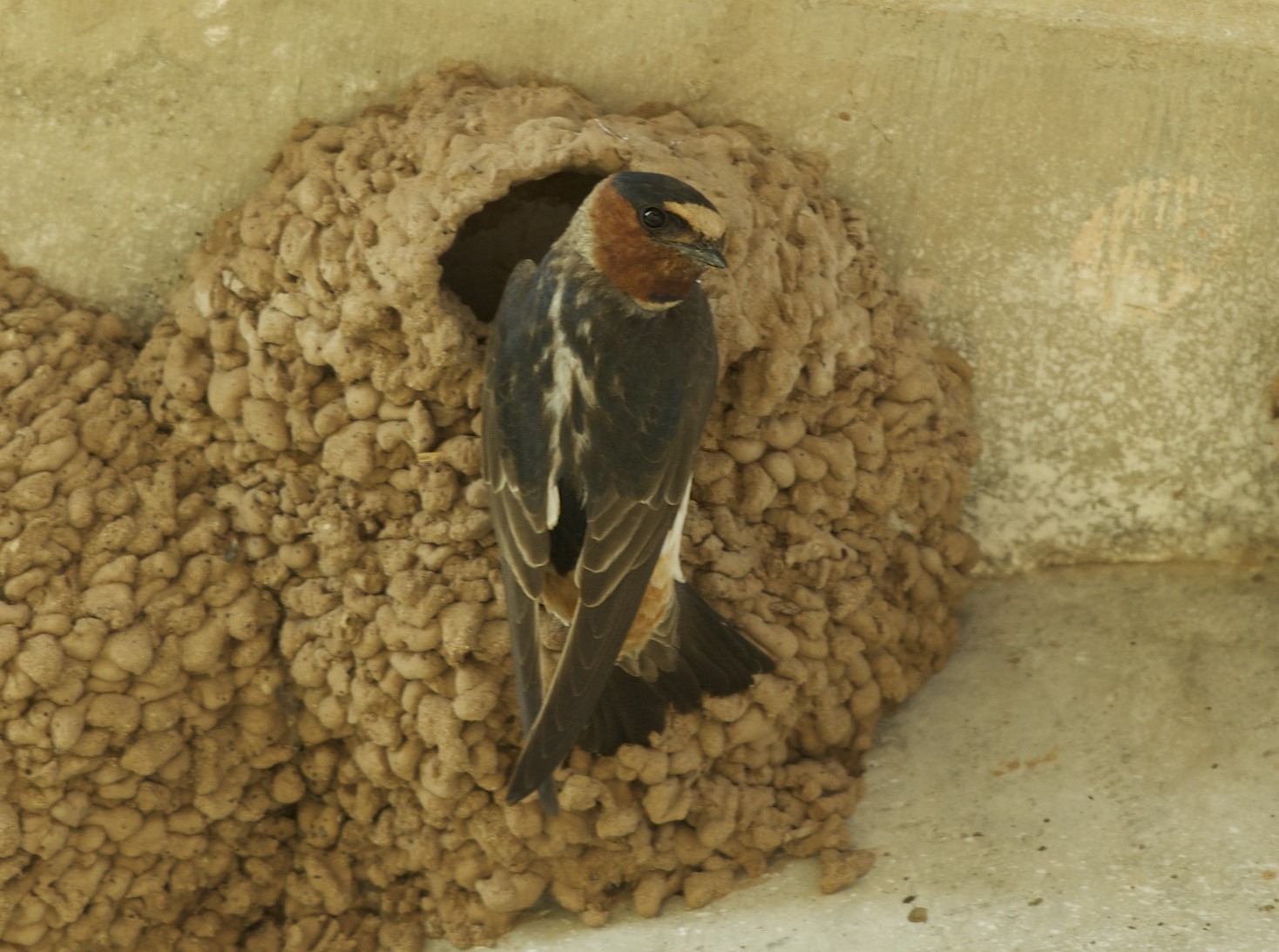

The B&M Meridian is great for Cuckoos later in the summer, as well as Least Bittern, and it also is/was one of the better areas in Phoenix to see Barn Owls. And Barn Owls are cooler than Ridgway's Rails anyway right? Well, that argument is moot if the Owl is dead, and the only bird I could find at B&M had caught such a case. This brings the tally of dead Barn Owls I have seen to 5, more than twice as many as I've seen alive.


And yet, despite these recent disappointments, I am not depressed. Despite the knowledge that bird-blog-culture-defining people are currently galavanting through the Maine forests and coastland, racking up lifers and tails most glorious, I am not disturbed with envy nor pangs of inadequacy. Why not? Because there are breeding Flame-colored Tanagers AND Tufted Flycatchers, to say little of Elegant Trogons and what not, in Ramsey Canyon right now, and I will be cutting loose to that feather-friendly Mecca on Thursday. How's that for consolation?

Thursday, May 14, 2015

Desert Birds for Dessert

The sorrow, the pain, the tragedy...this past weekend was not a birding weekend. I did spend a weeknight searching another deserty area around twilight in the hopes that I might discover Elf and Western-Screech, as well as Common Poorwill, closer to home (especially COPO, since I still need a picture), which took me to the Phoenix Mountain Preserve. But first, here's a miscellaneous Gray Vireo shot 'cause you never know WHAT is coming next on this site! Whew!


Although it had a healthy and heavily vocal Lesser Nighthawk population (and, in my opinion, the vocalizations of this bird really do not get enough recognition for how fun they are), it was once again a strike out with three nocturnal targets. It was also a little late in the season to hope for other migrant Owls. It was a very pinkish evening though, made me get in touch with my feminine side and what not.


With so much desert habitat here I know that ELOW and WESO are there, and I didn't tarry long into dark, but suffice it to say they're not as readily detectable as they are along the Salt River, which defeats the point of finding them closer to central Phoenix. What is readily detectable at the PMP is Gilded Flicker. 


Since this bird's plumage characteristics also occur in one or the other of the two widely distributed Northern Flicker populations, Gilded doesn't get a lot of special recognition by non-listers, but in many ways this saguaro-squatting fanatic is one of Arizona's most precious "specialty" (near-specialty) birds.


It doesn't have the eye-cataching appeal of a Red-faced Warbler or White-eared Hummingbird, nor the ghostly reputation of a Le Conte's Thrasher, but the GIFL, like these other birds, is also pretty hard to come by in North America outside of Arizona. They are where the saguaros are, and the saguaros aren't  everywhere. Of course, saguaros serve as multi-story tenement housing for all kinds of animals, and even multiple GIFLs, so if one finds a few big and gnarly saguaros, the GIFLs will be around.


There will also be Flycatchers, Ash-throated Flycatchers. Known in some of the more puerile birding circles as the "White-breasted Pee-pee Pants Flycatcher," this birds recognizable calls from the creosote scrub are ever-present vindication of the decision to go birding on a weekday.


Sometimes ATFLs look to their left as well, so here is a picture of that occurrence for superlatively thorough documentation of the species's behavior; making note of the head direction is something one can look for when discerning myiarchus species, though there may be better indicators as well. 

Friday, May 8, 2015

Binge Birding in the Santa Ritas

I mentioned some romping reckless birding a couple of weeks ago, where a lovely evening at a friend's house was followed by a drive down to the Santa Rita Mountains, an all-nighter sort of jaunt the likes of which would make cool cool college Butler cringe and think, "gross."
This rash decision making, and rash-making decision, was largely un-vindicated as well, since I did not get visuals on any of the nocturnal targets for which I left so early. But ya know what? I'm going to do it again anyway, and soon, because they are all still there, and probably a Buff-collared Nightjar too. 

Every dark night has its dawn, as various motivational posters around our offices remind us, and even if the dawn is still kinda gloomy and overcast, it does allow for  better overall birding. After visually-dipping on my Madera Canyon targets, I went down the block to Florida. Rufous-capped Warblers are still resident in the canyon, though seemingly higher up now than they were in previous years. I had poor looks at one individual and no photos, but the diversity at Florida Canyon was impressive. Because there's nothing more impressive than distant Canyon Towhees.


Or distant Harriers, harrying along on their way. This bird is a bit late in the season, perhaps lingering behind in search of her missing primary feathers.


In the area where I had luck with RCWAs in previous years, there was male Indigo Bunting, flagged by eBird as rare for the time and place. The bird may be a slightly wayward migrant, but rather curiously I heard the bird before seeing it, and it continued to sing throughout while I was in the area. This is uncharacteristic of migrant INBUs in my limited experience.


Lower Florida Canyon has a terrific mix of riparian vegetation and chaparral, where one can consistently see objectively good looking birds like Black-headed Grosbeak, as well as soon-to-be objectively good-looking birds, like 1st year Scott's Orioles.


Currently, the biggest buzz about Florida Canyon is not the resident tropical Warblers, but a nesting pair of Black-capped Gnatcatchers that are normally very visible near the parking area (and an on-again, off-again Rufous-backed Robin in the adjacent wash). I was not able to locate the BCGN nest (not that it would've done much good anyway), but the male and female were both actively foraging with a devil-may-care attitude, which was a cruel attitude for them to have with such poor lighting.


Inappropriate flashing is a problem with bird and nature photography as well as with city parks and gas stations late at night. But as I've been trying my hand more often at nocturnal birding, it has been something with which I've had to try and make some peace and practice, which means flashing birds in the daytime as well. The truth is, of course, that having a good flash is super useful. It gives you control over the most important and most variable element in photography--light. Too much flash just feels kinda unnatural though, especially at nicer parks or gas stations, and I also predominantly don't like the effect it has on daytime photos, but I do like the effect of getting a damn photo. Note the weak, broken eye-ring, shallow cap, and longer beak of this male BCGN as compared to BTGN. 


Now it would be foolish, committably insane even, to spend time in the Santa Ritas in late spring (or summer) and not make a concerted effort at seeing Trogons. Carrie Nation and other trails have consistent reports this year, but the Super Trail in Upper Madera Canyon has always been good to me. This time around it had to be hard-earned, and it wasn't until after a couple miles that I sighted a pair. In keeping with the damp, mellow aesthetic of the day, the birds I sighted were silent the whole time and the male pulled a quality disappearing act that belied his flamboyant coloration. Trying to track Mrs. Trogon through the dense vegetation and steep canyon walls was as exerting as it was rewarding. 


It was a little disappointing not to be treated to the enchanting, hoarse croaks of the Elegant Trogon, but  some counter-calling Greater Pewees  were compensatory. Ornithological America agrees; this bird should have been named Greatest Pewee.


Factoring in the misses and the zombified-state in which I returned to Phoenix, the trip was draining but fulfilling at the same time, gross in some ways but beautiful in others, joyful and yet somewhat dampened. But time spent in the Santa Ritas is always time well-spent; this trip was perhaps most analogous to a soggy Painted Redstart, very pretty but short of its potential.

Friday, May 1, 2015

Parkin' It

At B's Bs Ltd. Inc., we're always striving to bring the latest, edgiest material to the bird blogosphere. Often times striving happens in the wrong direction. At any rate, I've been on a recent nocturnal birding kick, enjoying great success on some occasions and enjoying great failures during others. Nocturnal birding has several great attractions: it's cooler, the lighting doesn't matter in a sense (overcast vs. sunny, etc.), one doesn't have to wear pants, be cognizant of where to go to the bathroom, or worry about appearance in general, and it can be done on weekdays. To this end, I have also been eager to explore and find good areas for nocturnal birding closer to home. The Salt River spots are excellent, but are still a good 25 minute haul that is somewhat of a stretch on work nights. 

I've mentioned Papago Park before as a great spot for crushing waterfowl and a few other desert species. It was my hope that the sparser mesquite and saguaro habitat here would still have enough of an allure that I might record ELOW and WESOs, as well as Common Poorwill. Papago Park is probably one of the best places to see and photograph Black-tailed Gnatcatchers. They're mad for the creosote there, and stay active for a bit even after sundown. 


Sunset is a special time in the desert. The warm light combines with the red and purple hues of the landscape in an existentially reassuring way. In an homage to the merciful son, many animals perform a sort of salute during this time by directing their most prominent feature towards the waning light.
I think we've all had that experience when we're so consumed with the beauty of something, like a sunset, that we deeply desire to back our butts into it. 


The Bighorn Sheep are in an enclosed area adjacent to Papago Park, which is a part of the Phoenix Zoo. They once lived on rocky bluffs throughout the state, and some populations have recently been reintroduced in the Santa Catalina Mountains near Tucson. These sheep are still in assisted-living.


They often move higher up the buttes near Papago as the sun sets, and they are not the only ones. Visually and vocally imposing Great-horned Owls also take to the high ground, espying rabbits, mice, and wayward children from their vertical vantage point. This guy seems to the one and the same with that owl from the Rats of N.I.M.H. movie.


When darkness settled in, the GHOW called constantly and was joined by the charming audio of Lesser Nighthawks. Ultimately and disappointingly, the vegetation was too sparse and the human traffic too high to support EFOW and WESO populations in detectable numbers (in a given year, I'm sure a few are around) and the same with COPOs. Nonetheless, birding at night puts one's senses on high alert, and makes for a very stimulating, recommendable experience. You never know what you'll run into.

Monday, April 27, 2015

Everyone's Favorite Highly-Adapted Micro Predator

It's been increasingly difficult to find good quality birding time in recent weekends. It's quite cruel that this always happens in late April and May, and to a much worse extent this year, because this time is also some of the best to be birding in Arizona. To make matters worse, I also tried to be sociable this weekend. It was always the plan to head down to Madera Canyon pre-dawn for some owling and then bird through the morning, and since I stayed up late (social moth instead of social butterfly?) it meant I pulled an all-nighter, something that hasn't happened since college. 
It was also overcast and rainy this weekend, something that causes birders and kite-enthusiasts to look towards the heavens in despair. 


It didn't seem like this would affect nocturnal birding, but it did limit the extent to which birds were calling and the extent to which I could hear them. The precipitation cleared by 4:45am or so, but that left only about 45 minutes in which to try and get visuals on the birds. Common Poorwill, Whiskered Screech Owl, and Mexican Whip-poor-will all registered, but I could not get visuals on any of them. 
That element was a disappointment, but for consolation here is a crushy Elf Owl to rub on one's face instead. I photographed this bird near its nesting cavity along the Salt River last Wednesday, and so it will now fall to the smallest owl in the world to compensate for the lack of all the other nocturnal birds. 


Here are a bunch of facts about Elf Owls. Some of them are true. Elf Owls are tied for the shortest Owl in the world, and are also the lightest, which makes them superlatively small. Elf Owls do not believe in Santa Claus. Elf Owls are super cute, but they are also voracious predators, with highly adaptive, highly sensitive vision and hearing that allows them to pinpoint prey in near pitch-black conditions. Elf Owls are known to enjoy the taste of human as well as horse flesh when it is seasonally available; thus the closure of Food City markets in Phoenix is a habitat loss concern. Elf Owls are in the minority that do not have ear tufts. Elf Owls think ear tufts are silly, and a clear compensation for something...err hem...Great-horned. 
Coincidentally or not, Elf Owls all ascribe to the adage, "It's not the size; it's how..."


Even though the nocturnal birding was less than fruitful this past weekend, there is still plenty to see and heard in the Santa Rita Mountains in the day, believe it or not. There'll be more from that trip coming later this week. Stay alive in the mean time; watch your back.

Sunday, April 19, 2015

Ordinarily Good Birding

Maricopa County has its various birdy attractions throughout the year. Certain thrashers and sparrows come to mind in winter, while Cuckoos, Bitterns, and Rails tend to captivate the later summer interest. But as April runs into May, there's only one place to be in Maricopa: the tender, elevated, loving slopes  of Mt. Ord. After taking last weekend off from birding, due largely to hangover fall-out and from quite possibly the worst week of work ever, the trek up Mt. Ord was an overdue return. This was the case because many of the elevation breeders have now returned as well. The scrub lowlands were teeming with Sparrows as well as smaller numbers of the coveted Gray Vireo. 


Blue-gray Gnatcatchers and Black-throated Gray Warblers are by far the most common birds this time on year on Ord. Between those two names it sounds rather dour, but even if these birds are not bursting with color, they are bursting with song, or at least bursting with song-esque sorts of noises.


The juniper/pine/oak habitat hosts many other breeders, including WEBL, LEGO, WBNU, RBNU, JUTI, HETA, and VGSW. I was even fortunate enough to hear a Northern Pygmy-Owl tooting from somewhere out in this mess. The bird quieted down as I approached closer and I could not locate it, despite waiting in the area fro another 30 minutes. I don't even know why I am mentioning this failure. 


There were some vocal Grace's Warbler's mixed up in the canopy, jostling for position and prominence with Redstart and Hutton's Vireos. Yellow-throated or Grace's? Who wins in a beauty contest? Who wins in a fight? Who wins at bingo?


The old corral and water tank off FR 1688 was typically birdy, but otherwise the greatest concentrations of species were off from the main road nearer the summit of Ord, around 7,000 feet. Here I got more than an earful and less of an eyeful of the skulky Virginia's Warblers. It's ok; an eyeful of warbler sounds unpleasant anyway, makes one's eyes all black-throated blue.


There were also some holdover Cassin's Finches near the summit, and one weird-o finch hanging out on its own. It was bulkier and had more olive-green on its breast and supercilium. It looked pretty good for female Purple Finch is all I'm saying...but that would be very rare and I have no documentation, so I'm not actually saying anything.
Watching Violet-green Swallows streak through the blue sky atop Ord's summits never gets old. Trying to photograph them in flight does.


In other news, no one has re-found the Eared Quetzal since its original discovery on Friday, which is why I am writing this blog post, instead of affably losing myself in the Santa Rita Mountains. Things are getting pretty flavorful down there though, with Trogons moving onto territory and Sinaloa Wrens still ratcheting to such an extent that a desperate one-day weekend trip may be next on the cards.