Thursday, March 15, 2012

Birds On Top Of Other Things

For some reason The Society for Putting Things on top of Other Things was always one of my favorite Monty Python sketches:

Often times when I see some songbird or raptor perched on top of a bush, tree, or telephone pole, I am reminded of the smug satisfaction in putting things on top of other things. My previous post was about birds in the shade. While shady birds can have their own charm, it's very nice when birds put themselves on top of other things, and thus put themselves in the open and out in the light.

This mighty Starling made it all the way to the top of a saguaro, the world's tallest free-standing cactus! Unfortunately these invasive birds are a common sight around Arizona, but that does nothing to detract from this Starling's satisfied bravado.


On the other hand, this Green Heron seemed quite unused to the idea of being on top of other things. I don't think he knew quit what to do next. Perhaps to him the whole thing "seemed a bit silly..."


The epitome of confidence, this Northern Mockingbird has no qualms at all about being on top of other things. This audacious bird clearly puts itself up on a pedestal, which is in part why they are so entertaining to watch.


Here's to putting things on top of other things! As far as bird photography goes, I only wish there could be more.

Wednesday, March 14, 2012

Shady Characters...

Part of the joy of birding is that birds come in all kinds of different sizes, colors, shapes, and shades. The avian kingdom seems to possess every color in the spectrum, and when you catch any bird in good light it can be absolutely resplendent!

Of course, the birds don't always make it easy. Many times they'll stay undercover or keep in the shade, frustrating the birder's desire for a glorious look. If you're photographing birds, shade and shadows can be even more problematic as they detract from the proper exposure and color of the subject. However, shade can also lend a certain calm, cool effect to a photo. It can provide a different appeal and perspective that can be very refreshing, especially if you find yourself photographing the same species over and over.


The Mourning Dove is one of the most recognizable birds in North America. Its call, its silhouette, its flight--they are all easy to pick out, and the bird's staggering numbers assure that even the most casual birder is more than familiar with these somber songsters.

This Dove is perched on an organ-pipe cactus, and the morning sun is filtering through the other cactus arms in warm streaks of light. The dark undersides of the ruffled feathers and the obscured face help describe the rough, dry, chilly mornings of the desert, or maybe that's just how I felt at the time...


This Green Heron is going for the two-face look, and truly his multi-colored plumage is always worth a double take. Like the dark side of the moon, the Green Heron's shaded half is something only a few humans in peak physical and mental condition ever get to see (and it is a well known fact that birders are the apotheosis of human conditioning). I totally dig the great red beard too. This guy would give any viking a run for his money.


The Ruby-Crowned Kinglet is small enough to shade itself under just a few leaves. The improvised parasols catch the sun and illuminate nicely, while just enough light gets through to reveal the strong wing bars and eye-ring of the Kinglet.


So bird in the shade. Bird in the sun. Whatever the lighting, birding is fun.

Tuesday, March 13, 2012

Rock n' Roll Wrennaissance

I have a rocky relationship with this species of Wren. When times are good, we'll often find each other hiking around Camelback or Squaw Peak Mountain, looking for bugs and enjoying the early morning weather. But then for no reason at all he'll disappear for months on end! No phone calls, no notes, not even a goodbye... 


Even if this inconsistency keeps us on the rocks, it's always a delight when the Rock Wren does show up. They prefer the rocky, arid, low mountain terrain that can be easily found throughout Arizona, but as their charming calls echo among the canyon walls, it can be tricky to pick out these camouflaged flirts.

With its soft browns, gentle eyes, and faint white spotting on the back, the Rock Wren is the paragon of demureness, the shy and understated quality found in many ground-dwelling birds. At least, that's a human perspective. To the Pimpla Sanguinipes, the Rock Wren is another beast entirely. This little digger wasp found himself between a rock and a hard place.


It's the Hard Rock Cafe...
This particular Wren was hanging out in the western, shady side of the Papago Park bluffs. It was a fun challenge to pick him out of the granite rocks that are strewn all over the trails. If you click on the bottom photo and zoom in, you can see the wasp's head on the Wren's granite countertop. I believe he left it there as a warning to his enemies. Rock on. 

Monday, March 12, 2012

Chirpin' with the Backyard Chirper

I recently did an interview with Timothy Martinez Jr. of the Backyard Chirper, a great company that makes wonderful feeders and other bird attractions. Tim runs the Chirper's blog, Into the Air, which hosts all kinds of discussions and articles on bird-related stuff. It also has a facebook where we freaks can flock together and share photos, feed our habits, etc.
It's a great enterprise well worth checking out. I answered some questions for the Chirper about beginning birding and that sort of thing, so if you're interested, head on over!

Hurry! The Red-Tail is watching...

Sunday, March 11, 2012

Hello Mellow Yellow Fellow

Dear Reader,

Be forewarned. For reasons beyond my control this is going to be a very yellow post. If you find the color yellow or its off-shooting hues to be offensive or irritating, turn back now.  If thou art brave and not yellow, proceed.


It was a pretty mellow morning of birding. By funny coincidence, all of the birds I photographed on Saturday happened to be yellow. The usual bevy of Hummingbirds, Gnatcatchers, and Sparrows were no where to be found, but the yellow birds seemed more than willing to take up the slack.  


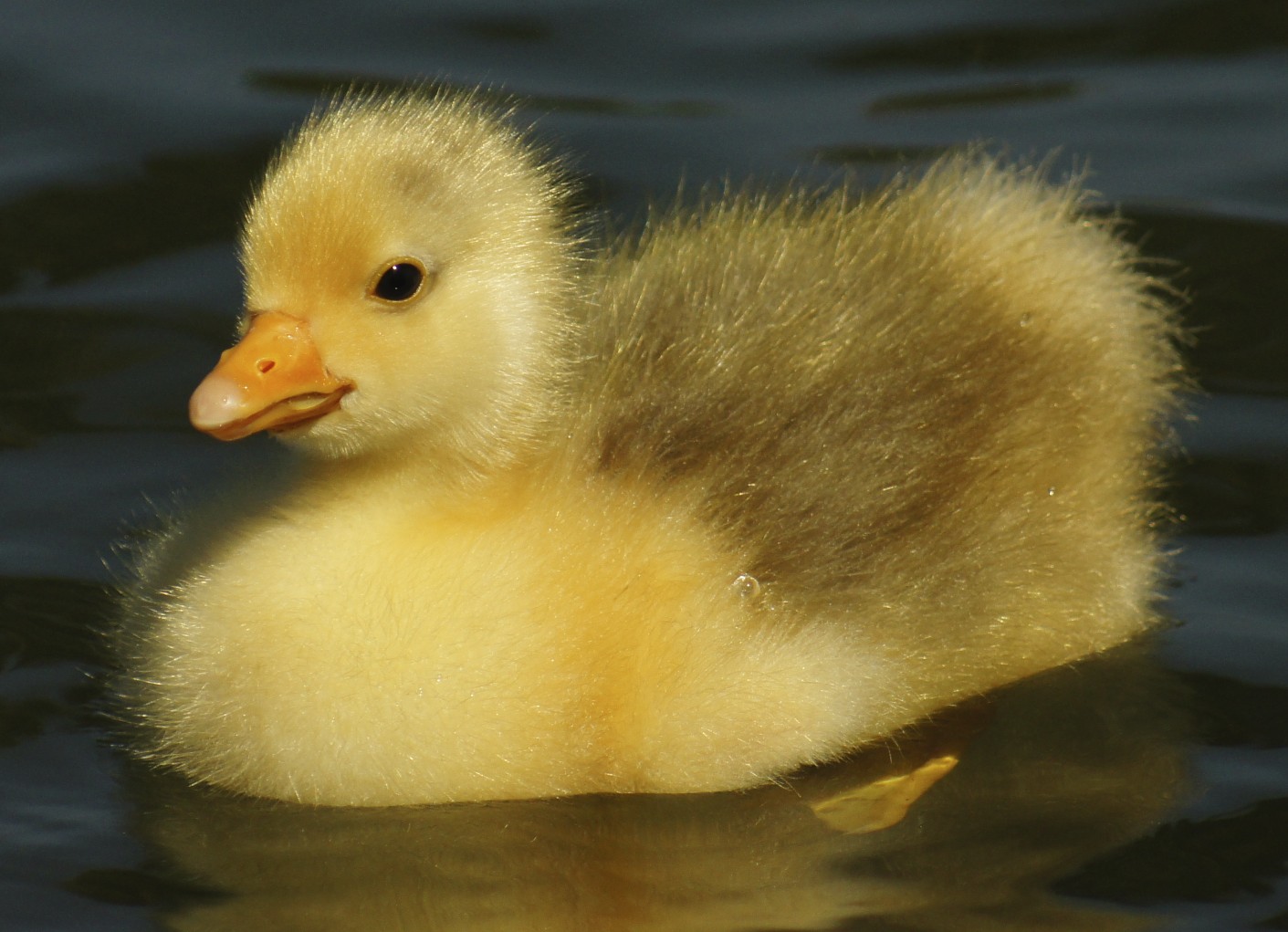
To supplement the muted birding, I decided to stop by Encanto Park, where I had seen some goslings a couple weeks ago. It took a little walking, but eventually we rediscovered the brood. There were eight chicks in all, and they seemed to have a Chinese Goose mother, though there were also five Embden Geese (don't know the gender) keeping a protective watch around them.


This is the first batch of new birds I've seen this early spring, and what's not to love? These fuzzy butterballs were floating around without a care in the world (granted, that's also the way their parents float around). Even the most rabid ravenous angry crazy wolverine would think twice about eating one of these puffballs, such is their cuteness.


It'll be fun to check up on these goslings over the next few months. This sort of things cushions against the loss of the wintering ducks, and it really has me looking forward to other spring perks, like Quail chicks. It was a brief but enjoyable bit of birding, even if it was a little bit monochrome.

Friday, March 9, 2012

Why'd The Artist Go To The Pond?

To get her Canvasback! HAhaha...ha

Err hem yes well...third time was the charm for me trying to photograph this Canvasback, or at least it's about as close to charm as I think I'll get. In each of my subsequent 3 visits I've been able to get a little bit closer to the duck, but I'm having a lot of difficulty getting the exposure right. Since the Duck dives very often, its head is usually soaked and no amount of exposure compensation seems able to curb that bright, purple reflecting light. The birds feathers also then clump and darken so too much negative compensation for the water glare ruins the feather detail. When dry and properly fluffed, the Canvasback's coloration can match the Redhead's in its brilliance, but they prefer to dig in the mud instead. 


Here the duck's nictitating membrane is obscuring the pupil, giving the bird a rather feline gaze.


I love how much more heavy-duty the Canvasback's beak is than other ducks'. Usually the beak seems to recede into the feathers, like a fingernail into the cuticle (see this Ring-Necked Duck for comparison). But the Canvasback beak overlaps up on top of the facial feathers with much more definition.


This drake is definitely king of the Papago Ponds. With only Ring-Necked Ducks and Coots for competition, he's easily the biggest duck on the water, and that beak can make one go from living to dead in about 4.3 seconds.


It's been awesome spending time with this beautiful bird. I saw only one other this winter and was beginning to worry I'd miss my chance with spring now underway (I haven't seen a Northern Pintail now for weeks). Mr. Canvasback turned up just in time.

Here, from February of 2013, is another Canvasback (now there are a half dozen) visiting the Papago Ponds.


Thursday, March 8, 2012

Beware! These Birds Are Seeing Red!

The Phoenix birding scene has been buzzing lately with reports of a very uncommon Red-Necked Grebe in Tempe Town Lake. The  lake itself is actually an engorged canal, fed both by the Rio Salado river and other canals that run through the Phoenix area. It hosts impressive numbers of waterfowl including Ruddy Ducks and Shovelers, and regularly pulls in unusual visitors like Eurasian Teal.


The Red-Necked Grebe had been seen and photographed throughout the week, so I decided to investigate and maybe add a new bird to my list. The Red-Neck didn't show, or rather, the Grebe. My neck got plenty red while scanning the water. There were plenty of other birds to observe, including Pied-Billed, Western, Clark's, and Eared Grebes, as well as Coots and Redheads. There was also a solitary Canvasback, a less common and more noticeable diving duck.

I made one bad miscalculation however, in failing to appreciate the size of the lake and the distance between the pedestrian bridges and the waterfowl. I'm getting too used to the little city ponds where everything is nice and close, relatively speaking. But you know, it is probably good I was so far away. As you can see from the pictures, these lake birds have rather evil looking red eyes, eyes of killers, eyes of relentless carnivores. Truly, I worried that every time one of the red-eyed predators dove underwater, it would reemerge and launch an attack...

This Eared Grebe is probably the smallest bird you'll find on the lake. But do not let down your guard. The apex predators--lions, tigers, bears--have killed far less humans than the little organisms in this world. No one will ever know how many lives the Eared Grebe has claimed.


Slightly less lethal but far more numerous is the American Coot. Compact and coal-colored, this red-eyed water-chicken descends upon the Phoenix area waterways in vast hordes, like the barbarians amassing outside of Rome.


The Clark's Grebe's and the similar looking Western Grebes (not photographed) keep well away from the bridges, but are definitely the bosses of the lake. Grebes are known for eating feathers, supposedly to help cushion their stomachs from fish bones. But really they do it to get a taste for other birds, which they eat by the baker's dozen, just for fun.


Redheads are beautiful birds and, as evidence by their not-blood-red-eye, are of a gentler breed. That doesn't mean you want to put your hands anywhere near that pastel blue beak though...I've lost 11 or 12 fingers making that mistake (I learn slowly).


But when it comes to the similarly colored Canvasback, forget about it! The largest of the diving ducks, this red-eyed ravager commands the utmost respect and distance. It is rumored that the U.S. government had to take a restraining order out on the Canvasback so it's not allowed within 500 feet of anything governmental...so dangerous is this bird.


Imminent danger aside, it was a lovely bit of power birding in the afternoon. With no sign of the Red-Necked Grebe I decided to head out and try beating the rush-hour traffic. It would've been too costly and lethal to stick around and catch the red-eye flight later on...

Tuesday, March 6, 2012

Saurus Siblings

I couldn't get a single bird photo today. Some heavy dust clouds rolled into Phoenix and blocked out the sun around 5:00 pm--I guess that's our version of a rainy day.
It seems like an appropriate time to post some miscellaneous pictures of cold-blooded critters one might also find scurrying around the Sonoran Desert.

These Chuckwallas can easily span 14 inches in length. While they are not threatening to people, they are one of the upper echelon predators out here, at least as far as lizards go. Their latin name is Sauromalus Obesus, which seems to mean something like 'mean fat lizard'. I think that sums it up pretty well.


With no size to his advantage, this Ornate Tree Lizard relies on quickness and camouflage to win meals and escape predators. I don't know this scientific name, perhaps something like, "slendicus blendicus"


Monday, March 5, 2012

Black-Tailed Gnatcatcher

Gnatcatchers are curious little birds. They seem to be as close as the natural world comes to creating a perpetual motion device and can be found throughout much of Arizona (and many other states) year round. The Blue-Gray and the Black-Tailed are the two common species in the Phoenix area, but they can be as frustrating to photograph at times as they can be difficult to tell apart.


When not in their breeding plumage, the Blue-Grays and Black-Tails both have a dull grayish white coat. The Black-Tailed Gnatcatcher can still be told apart by the dark underside to its tail, as this upright female is displaying.


The male Black-Tailed also sports a nice black cap when he's courting, though this leads to its own problems of taxonomical separation from the Black-Capped Gnatcatcher found in southeastern Arizona.


Gnatcatchers are warbler size, but nearly half of their body length is made up of the birds' tails, which they flick about and use to balance while hopping and running in dense foliage, as well as scare up insects.


I recently found a pretty good spot for observing both Blue-Grays and Black-Tails, so I'm hoping to follow up with more photos and behavioral observations. For some reason, this relatively dull birds hold a special fascination for me, perhaps only because it's so tricky to get a good long look at them.

Sunday, March 4, 2012

Birding is Fun

Hello Dear Reader,

Happy Sunday! Check out my once-a-month guest post over at Birding Is Fun and have a great day: http://www.birdingisfun.com/2012/03/southwestern-staples.html

Cheers!
Laurence Butler